-
We detected your language preference as English. Would you like to switch to the English version for a better experience?
Switch to English
Stay here


Coenzyme Q10, catalogued under CAS 303-98-0 and also known as ubidecarenone or ubiquinone, is a lipid-soluble benzoquinone endogenous to human mitochondria that has become one of the world's most established cardiovascular and healthy-aging nutraceutical actives. Commercial demand spans dietary supplements targeting statin-associated CoQ10 depletion and energy metabolism, pharmaceutical adjuncts in heart failure, and cosmetic antioxidants, giving the molecule a uniquely dual nutraceutical-pharma positioning that sustains resilient, multi-sector demand.
The global Coenzyme Q10 market is defined by a decisive shift from chemical synthesis toward microbial fermentation, which now supplies the majority of high-purity material, and by the overwhelming concentration of production capacity in China, with Japan and a handful of Western and Korean specialties players retaining premium, branded, and pharmaceutical-grade positions. Because raw-material supply is concentrated and the molecule's poor aqueous solubility challenges formulation, supplier qualification, bioavailability engineering, and regulatory alignment are central to B2B success with CAS 303-98-0.
This white paper provides an authoritative B2B assessment of Coenzyme Q10 covering its mitochondrial mechanism, fermentation and purification technologies, application matrix, and the layered global compliance and ESG landscape governing nutraceutical and cosmetic actives. Synthesizing capacity intelligence, regulatory trajectories under DSHEA, FDA GMP, EU food-supplement and novel-food rules, EFSA, MoCRA, and APAC health-food regimes, together with carbon and traceability expectations, the analysis equips ingredient buyers, formulators, and brand owners with a decision-grade reference and a regional supplier-ecosystem map for resilient sourcing in 2026.
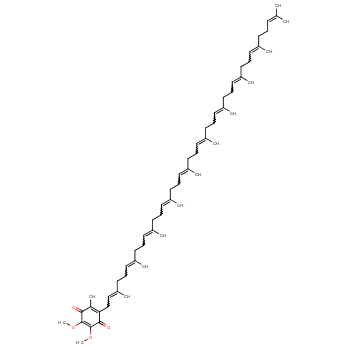
Coenzyme Q10 is a 1,4-benzoquinone bearing a decaprenyl side chain (C59H90O4), existing endogenously in the oxidized ubiquinone and reduced ubiquinol redox states, and presenting as a bright yellow, crystalline, lipophilic powder that is practically insoluble in water and sensitive to light, heat, and oxidation. Mechanistically, CoQ10 resides in the inner mitochondrial membrane where it functions as a mobile electron carrier in Complexes I, II, and III of the respiratory chain, enabling ATP synthesis, while its reduced form, ubiquinol, acts as a potent lipid-phase antioxidant protecting membranes and circulating lipoproteins from peroxidation. The therapeutic and nutraceutical rationale rests on replenishing tissue CoQ10 depleted by aging or statin inhibition of endogenous synthesis, thereby supporting cellular energy metabolism and cardiovascular antioxidant defense, a mechanism substantiated by extensive clinical and biochemical literature.
Historically produced by multi-step chemical synthesis, commercial Coenzyme Q10 is now predominantly manufactured through aerobic microbial fermentation using engineered strains such as Escherichia coli or yeast, followed by solvent extraction, crystallization, and purification to pharmaceutical- or food-grade crystalline powder. Fermentation offers superior cost, scalability, and a naturally derived positioning favored by clean-label brands, while continuous strain optimization and downstream purification control determine assay purity, all-trans isomer content, and the tight heavy-metal and residual-solvent limits required by pharmacopeial and supplement standards.
Global demand for Coenzyme Q10 is propelled by aging populations, the ubiquity of statin therapy creating a large adjunct-supplement market, and consumer awareness of mitochondrial and cardiovascular health, yielding steady, recession-resilient growth across nutraceutical and cosmetic channels. A structural shift is the migration of volume from chemically synthesized to fermentation-derived material, improving affordability and "natural" positioning, while a second vector is the premiumization toward ubiquinol and solubilized formats that address bioavailability and command higher margins. Demand is tempered by price sensitivity in commodity supplement tiers and by the need for credible clinical substantiation to support premium claims in regulated markets.
Manufacturing capacity for CAS 303-98-0 is overwhelmingly concentrated in China, which supplies the bulk of global fermentation-derived CoQ10, while Japan, South Korea, and select Western specialty firms retain leadership in branded, high-purity, and ubiquinol segments with strong intellectual-property and quality positioning. North America and Europe are the dominant consumption and formulation regions, importing standardized bulk powder and adding proprietary delivery, testing, and branding, whereas Southeast Asia and India are expanding both contract manufacturing and domestic supplement demand. Export flows thus run predominantly from Chinese fermentation hubs to Western brand owners and finished-dose manufacturers, with quality tier and documentation—rather than origin alone—governing supplier selection.
Coenzyme Q10 pricing is driven by fermentation feedstock and energy costs, production scale, and product differentiation, with commodity crystalline powder contested on price while ubiquinol, solubilized, and pharmaceutical grades command substantial premia justified by bioavailability and regulatory qualification. A durable bifurcation separates verified, assayed, low-impurity material suitable for regulated markets from unstandardized offerings, and buyers face assay-method variability that rewards third-party HPLC verification. In 2026, procurement leaders should anticipate feedstock- and energy-linked volatility, periodic Chinese capacity curtailments, and a rising floor from ESG and quality compliance costs.
Coenzyme Q10's regulatory posture is favorable yet market-specific: it is a long-established, generally recognized substance in supplements and cosmetics but is treated as a pharmaceutical active where clinical claims or drug status apply, requiring careful claim and dossier management. B2B participants must align the product's intended use—food supplement, drug, or cosmetic—with the correct framework in each jurisdiction and maintain contaminant, purity, and GMP documentation to satisfy import and product-safety authorities.
Fermentation-derived nutraceuticals such as Coenzyme Q10 carry a comparatively favorable ESG profile, yet expectations around renewable-energy fermentation, solvent recovery, and Scope 1–3 transparency are rising, with green trade considerations increasingly expressed through procurement criteria and ESG-linked financing. Producers demonstrating energy-efficient bioprocessing, waste-stream valorization, and credible emissions reporting are preferentially selected by sustainability-driven brands seeking defensible, audit-ready supply of CAS 303-98-0.
The carbon and resource footprint of CoQ10 is dominated by fermentation energy, glucose feedstock, and solvent-intensive purification, creating strong incentive for renewable-powered bioprocessing, high-titer strain optimization, and solvent recovery loops that cut mass-intensity and emissions per kilogram. Circular-economy practice centers on fermentation broth valorization, water recycling, and packaging minimization, while life-cycle assessment and Scope 3 supplier engagement help finished-brand owners meet net-zero commitments and anticipated carbon-border considerations for imported actives.
Traceability is a decisive ESG and quality control point for Coenzyme Q10, requiring batch-level linkage of fermentation, extraction, and purification with full analytical and GMP documentation to verify potency, non-GMO status where claimed, and contaminant safety. Leading suppliers adopt ISO 14001 and HACCP-aligned systems, third-party audits, and digital records capturing purity, heavy-metal, and stability testing, allowing brand owners to defend clean-label and sustainability claims and to comply with emerging supply-chain due-diligence regulations without compromising product integrity.
Coenzyme Q10 is traded as a low-volume, high-value crystalline powder or in solubilized premix, and its logistics resilience depends on light-protective, tamper-evident packaging and rigorous documentation to prevent oxidation or degradation during multi-leg international transit. Because the product is light, valuable, and oxidation-sensitive, air freight is common for urgent lots while sea consolidation with desiccant and opaque containment is preferred for cost-sensitive volumes, making logistics a documentation- and stability-critical element of global sourcing for CAS 303-98-0.
Under GHS, Coenzyme Q10 is not classified as a dangerous good and requires no hazardous transport labeling, although solvent-wet intermediate fractions may carry flammable classifications demanding ADR/IMDG declaration during bulk movement. Transit protocols emphasize dry, cool, light-excluded storage away from strong oxidizers and direct sunlight, accurate commercial and certificate documentation for customs valuation and supplement screening, and avoidance of moisture or heat that could compromise assay, ensuring compliant, uncontaminated delivery to formulation facilities worldwide.
For brands and ingredient distributors in the Coenzyme Q10 market, a resilient strategy must balance cost leadership from fermentation scale with bioavailability differentiation, market-specific compliance, and ESG credibility, because the category's maturity rewards disciplined operators who secure assayed, well-documented supply. The following prioritized actions translate this analysis into an executable global framework for CAS 303-98-0.
Coenzyme Q10 remains a foundational, dual-purpose nutraceutical and pharma active whose 2026 strategic value is defined by fermentation-scale economics, bioavailability differentiation, and disciplined quality and ESG leadership rather than by novelty. The concentration of capacity in China and the premium positioning of ubiquinol and solubilized formats create a bifurcated landscape in which assay verification and documentation are as decisive as price for global B2B success with CAS 303-98-0.
Enterprises that proactively manage sourced assay, market-specific compliance, and sustainable bioprocessing will convert category maturity into durable advantage, securing resilient supply amid feedstock volatility and green trade barriers. The regional ecosystem map below equips ingredient buyers with the macro structure to execute compliant, sustainable Coenzyme Q10 sourcing across North America, Europe, and Asia-Pacific.
Powered by Guidechem
This white paper is exclusively compiled by the Guidechem Intelligence Team based on global customs data, regulatory databases, and industry research. Guidechem is a leading global B2B chemical platform, dedicated to connecting global buyers with verified, high-quality manufacturers.
Relying on Guidechem's extensive global database, we have mapped the core participants in the current global Coenzyme Q10 supply chain:
Disclaimer: The content of this white paper is compiled based on public market data and regulatory information available as of 2026. Global chemical regulations are subject to dynamic adjustments. In actual export operations, enterprises must consult professional regulatory advisors or relevant competent authorities to obtain the latest compliance guidance.
|
 |
 |
 |
 |
 EN
 Agricultural News
 Food News
 Industrial News
 Cosmetic News
 Pharmaceutical News
 Science News


 2YRS

