
I. Executive Summary
Sodium carbonate (CAS 497-19-8), universally known as soda ash, is one of the highest-tonnage inorganic chemicals in global trade. In 2026 its demand profile is being reshaped by two growth engines: photovoltaic and container glass, and lithium carbonate refining for batteries. Traditional outlets in detergents, chemicals, water treatment and metallurgy remain large but mature, and buyers must weigh delivered cost, carbon intensity and certification together.
Production divides into synthetic ash from ammonia-soda and related routes, dominant in China, Europe and India, and natural ash recovered from trona and other sodium carbonate minerals, which underpins North American and a growing share of Turkish supply. Natural ash generally carries lower energy intensity and lower process emissions, a distinction that is entering procurement scoring as customers face Scope 3 reporting duties.
This paper covers the chemistry of alkalinity and hardness control, the ammonia-soda and natural-soda routes, the application matrix, regional capacity and trade flows, the compliance perimeter spanning EU REACH and CLP, US TSCA, FDA and drinking-water standards, ESG and carbon performance, packaging and bulk transport, and an expansion sequence for producers and buyers.
II. Product Deep Dive: Molecular Mechanisms and Production Evolution
2.1 Physicochemical Properties and Mechanisms
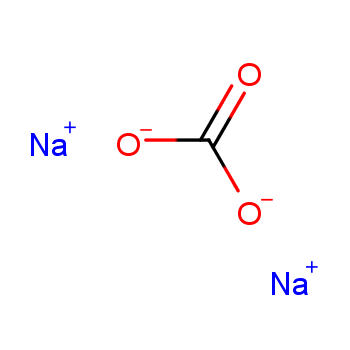
Sodium carbonate is the disodium salt of carbonic acid, with a molecular weight near 106 grams per mole, marketed as anhydrous light or dense ash and as hydrated crystals. In solution it hydrolyses to give an alkaline pH near 11.6 at typical use concentrations and buffers with bicarbonate, which is why it is the standard alkali for pH adjustment and acid neutralisation. It is freely soluble and absorbs moisture and carbon dioxide on storage.
- Alkalinity, Buffering and Hardness Control: Dissolved carbonate raises pH and converts calcium and magnesium bicarbonate hardness into insoluble carbonate and hydroxide precipitates, which is the mechanism behind both water softening and detergent building. The carbonate-bicarbonate equilibrium gives a usable buffer region that resists pH collapse during acid dosing, unlike caustic soda, where small overdoses cause large pH excursions. This buffering explains why soda ash is preferred in water treatment, flue-gas scrubbing and metallurgical flux applications.
- Solid Form, Hygroscopicity and Caking Behaviour: Light ash of bulk density near 0.5 to 0.6 grams per millilitre is produced for detergents and general chemical use, whereas dense ash near 1.0 gram per millilitre is preferred in glass making because it mixes intimately with silica and reduces dusting. Anhydrous material is hygroscopic and slowly converts to bicarbonate on exposure to humid air and carbon dioxide, promoting caking.
2.2 Synthesis and Manufacturing Technologies
Two production families dominate. The ammonia-soda process precipitates sodium bicarbonate from ammoniated brine with carbon dioxide and calcines it to soda ash, recovering ammonia with lime derived from limestone, while variants integrated with ammonia plants co-produce ammonium chloride. Natural soda ash is recovered from trona ores by solution mining or mechanical mining, followed by dissolution, clarification, crystallisation and calcination.
- Ammonia-Soda and Hou-Process Routes: Brine is purified, saturated with ammonia and carbonated with carbon dioxide from a limestone kiln, precipitating sodium bicarbonate that is filtered and calcined to light ash with recycle of the released gas. Ammonia is regenerated by treating the mother liquor with lime, leaving a calcium chloride brine requiring managed disposal. Variants coupled to synthetic ammonia plants crystallise ammonium chloride as a fertiliser co-product.
- Natural Soda Ash and Refining to Special Grades: Trona ore is solution-mined or mechanically mined, dissolved, clarified and crystallised as monohydrate, sesquicarbonate or bicarbonate before calcination to dense ash. Refining to food and pharmaceutical quality adds dissolution, filtration, carbon treatment, ion exchange and evaporative crystallisation under hygienic conditions. Energy consumption and carbon intensity differ materially between routes.
2.3 Core Application Matrix
- Glass Manufacture Including Solar and Container Glass: Glass making is the largest consumer, where soda ash acts as a flux that lowers the melting temperature of silica and controls the viscosity of the melt. Flat, container, fibreglass and photovoltaic glass all depend on consistent alkali supply with low iron content. Growth in solar capacity and lightweight packaging sustains structurally higher offtake.
- Lithium Refining, Chemicals and Metallurgical Uses: Refiners of lithium from brine and hard-rock sources use soda ash to precipitate lithium carbonate, tying part of demand directly to battery supply chains. It is also a feedstock for sodium silicates, bicarbonate, phosphates and chromates, a reagent in hydrometallurgical circuits, and a desulfurising flux in steel treatment. Purity requirements are moderate but supply reliability is critical, since these plants run continuously.
- Detergents, Water Treatment, Food and Pharmaceutical Uses: In detergents it serves as a builder and alkalinity source, although formulation shifts toward zeolites and polycarboxylates have reduced intensity per wash in some markets. Water treatment uses it for pH correction, alkalinity restoration and softening, requiring certification to drinking-water standards. As a food additive it is an acidity regulator and processing aid, and as a pharmaceutical excipient an alkalising agent, both requiring food-codex or pharmacopoeial compliance.
III. Global Market Supply-Demand Landscape and Export Trends
3.1 Demand Drivers and Market Shifts
Demand growth is concentrated in energy transition applications. Photovoltaic glass for solar modules, container glass for packaging, and lithium carbonate refining for batteries have become the marginal drivers, while detergent usage per wash has declined in mature markets. Regional exposure therefore differs: China leads in solar glass and lithium refining.
3.2 Capacity Distribution and Export Flows
Capacity is split between natural ash, concentrated in the United States and increasingly in Türkiye and parts of Africa, and synthetic ash, concentrated in China, Europe and India. The United States and Türkiye are structurally export-oriented, while Chinese export availability fluctuates with domestic demand and energy costs. Europe remains structurally short and imports to balance its synthetic base. Flows run from these sources into Latin America, Africa, South and Southeast Asia and the Middle East.
3.3 Market Bifurcation and Pricing Dynamics
Pricing is anchored by energy and raw material cost, with limestone, salt, ammonia and fuel dominating synthetic economics and evaporation energy dominating natural refining. Freight is material because the product is high-volume and low-value. The market bifurcates between bulk technical ash, traded on index-linked or quarterly contracts, and certified food, pharmaceutical and water-treatment grades, sold on specification and audit performance with durable premiums.
IV. In-depth Analysis of Global Compliance and Regulatory Barriers
Sodium carbonate is a high-tonnage inorganic substance with a comparatively benign hazard profile, so its compliance burden falls less on chemical registration than on end-use certification. The same consignment can be an industrial alkali, a drinking-water treatment chemical, a food additive or a pharmaceutical excipient, and each use carries distinct documentary requirements. Buyers must therefore specify the intended use and require the corresponding certification rather than relying on a generic specification.
4.1 European Market: REACH, CLP, and Sector-Specific Directives
- REACH Registration and CLP Classification: Sodium carbonate is a registered substance under Regulation (EC) No 1907/2006 with a full dossier covering high tonnage band manufacture and import. Its classification under Regulation (EC) No 1272/2008 is limited, principally to eye irritation, so labelling and safety data sheet obligations are straightforward but still mandatory.
- Food Additive, Water and Detergent Overlays: Where the material is sold as a food additive it must satisfy the food additive regulation and the purity criteria laid down for its authorisation as an acidity regulator. Drinking-water use requires evaluation against national approvals and the certification systems used by water utilities. Detergent applications fall under the detergents regulation with its ingredient requirements.
4.2 North American Market: TSCA, EPA, and FDA Regulations
- TSCA, FDA and Drinking-Water Certification: Sodium carbonate is listed as active on the Toxic Substances Control Act inventory, so ordinary commercial import needs no pre-manufacture notice, with routine certification at entry and reporting obligations where thresholds are met. Food use relies on its status as a substance generally recognised as safe for specified applications under good manufacturing practice, and food-grade shipments should carry confirmation of compliance with applicable food chemical specifications. Drinking-water use depends on certification to the relevant health-effects standard for treatment chemicals.
- EPA, Occupational and Transport Considerations: Federal environmental rules do not treat sodium carbonate as a hazardous waste or priority pollutant, so focus sits on dust control, worker exposure and effluent pH. Occupational exposure is managed as particulate not otherwise regulated, with nuisance dust limits and ventilation requirements. Transportation is not dangerous-goods regulated, although hygiene and segregation obligations remain for food and pharmaceutical grades.
4.3 The Critical Hurdle: Quality Control and Safety Limits
Compliance Warning: Do not assume industrial ash satisfies regulated uses. Require lot-specific assay expressed as sodium oxide equivalent, loss on ignition, insolubles, chloride, sulfate, iron and heavy metals such as lead, arsenic and mercury. Confirm the grade, since light and dense ash differ in bulk density, dusting and dosing behaviour, and confirm whether the consignment is certified for potable water, food or pharmaceutical use.
V. Green Trade Barriers and ESG in Manufacturing
The environmental profile of soda ash is dominated by carbon dioxide and energy rather than by toxicity. Synthetic routes release carbon dioxide from limestone calcination, although a substantial fraction of that gas is chemically fixed in the carbonation step, while fuel combustion and steam for calcination add further Scope 1 and Scope 2 emissions. Upstream salt, ammonia and freight dominate Scope 3, and customers with Scope 3 targets increasingly discriminate between natural and synthetic origins.
5.1 Carbon Footprint and Circular Economy
Decarbonisation levers include kiln efficiency and fuel switching, waste-heat recovery from calcination, electrification of low-temperature heat, and capture of the remaining kiln gas where geological or utilisation options exist. Natural refining can reduce energy demand through mechanical vapour recompression and improved heat integration. Circularity opportunities include recovery of sodium carbonate from process liquors and beneficial use of calcium chloride brine where markets exist. Producers publishing verified product carbon footprints under ISO 14067 and environmental management under ISO 14001 increasingly win scored tenders.
5.2 Sustainable Sourcing and Traceability
Traceability expectations centre on origin, energy source and responsible extraction. Buyers ask whether material is natural or synthetic, which energy sources power calcination and evaporation, and how brine and solid waste are managed. Certifications remain the practical currency: ISO 9001, ISO 14001 and ISO 45001, food safety certification for food grades, and excipient good manufacturing practice for pharmaceutical grades.
VI. Supply Chain Resilience and Export Logistics
Sodium carbonate is a non-hazardous, hygroscopic, dusty solid whose logistics challenges are caking, dust nuisance and cross-contamination rather than dangerous-goods compliance. Handling discipline determines whether material arrives free-flowing. Food and pharmaceutical grades additionally require hygienic handling that general-purpose bulk systems cannot provide.
6.1 Packaging Standards and Moisture/Contamination Control
- Packaging Specification and Moisture Control: Technical material moves in 25 and 50 kilogram bags, 1000 kilogram flexible intermediate bulk containers with polyethylene liners, and in bulk by road tanker, rail hopper car and dedicated bulk vessel. Moisture and carbon dioxide ingress drive caking, so liners must be sealed, containers kept dry, and stock rotated on a first-in basis under covered storage. Bulk discharge systems should be designed to minimise dust generation and prevent bridging in hoppers.
- Hygiene, Segregation and Documentation for Regulated Grades: Food and pharmaceutical grades require dedicated or validated-clean equipment, hygienic packing areas, pest control and documented container inspection before loading, especially where the same equipment handles industrial material. Shipments should carry lot-specific certificates of analysis, food-grade or pharmacopoeial statements, contaminant declarations and clean-cargo attestations. Segregation from ammonium salts, acids and incompatible chemicals must be maintained in warehouses and during transit.
6.2 Dangerous Goods Identification and Transit Protocols
Sodium carbonate is not classified as a dangerous good for transport under the United Nations model regulations, and most consignments move as ordinary cargo. Where shipped in bulk by sea it falls within the solid bulk cargo code as a Group C cargo, requiring standard stowage but no liquefaction precautions. Documentation typically comprises a safety data sheet, a certificate of analysis and, for regulated uses, the relevant grade certification.
VII. Enterprise Global Expansion Strategy Guide
Advantage in soda ash comes from cost position, product consistency and the ability to certify regulated grades. The sequence below reflects how suppliers and large buyers are structuring programmes: define the grade and certification architecture, decarbonise the asset base, then regionalise supply and logistics.
- Define a Grade and Certification Architecture: Separate technical, glass-making, water-treatment, food and pharmaceutical grades, with documented control of assay, insolubles, iron, chloride, sulfate and heavy metals plus segregation of production and packing by grade. Pair specifications with qualification protocols covering change control, audit access and retained samples. Certification depth converts a commodity alkali into a specification-protected product with defensible margin.
- Decarbonise the Asset Base and Publish Verified Data: Prioritise kiln efficiency, waste-heat recovery, fuel switching and, where viable, capture of process carbon dioxide, alongside energy integration in natural refining. Publish product carbon footprints calculated on a recognised basis and verified environmental management under ISO 14001, and disclose water stewardship and brine or solid-waste performance. Buyers facing Scope 3 targets increasingly allocate volumes on this evidence rather than on price alone.
- Regionalise Supply and Match Logistics to Customer Scale: Qualify at least two origins, ideally combining natural and synthetic sources, and match delivery mode to customer size, using bulk vessels and rail for large accounts and bagged deliveries for smaller users. Contracts should reference transparent indices with defined freight and energy pass-through and include safety-stock provisions.
VIII. Conclusion
Sodium carbonate's 2026 outlook is stronger than its maturity suggests. Solar glass, container glass and lithium carbonate refining have given a bulk inorganic chemical a credible growth narrative, while detergent and general chemical demand provides stability. The competitive axis is shifting from tonnage to cost position, carbon intensity and certification depth, and the natural-synthetic distinction is becoming a purchasing criterion rather than a geological footnote.
For buyers, the discipline is to specify grade, bulk density and certification, verify origin with carbon data, and qualify at least one alternative source. For producers, the durable strategy is energy efficiency and decarbonisation, documented grade segregation and certification, and logistics matched to customer scale. Participants who execute will hold volume as customers increasingly reward verified carbon performance and documented quality over spot price.
IX. Industry Resource Connection and Supplier Ecosystem
Powered by Guidechem
This white paper is exclusively compiled by the Guidechem Intelligence Team based on global customs data, regulatory databases, and industry research. Guidechem is a leading global B2B chemical platform, dedicated to connecting global buyers with verified, high-quality manufacturers.
Relying on Guidechem's extensive global database, we have mapped the core participants in the current global Sodium carbonate supply chain:
- North America: The North American tier is built on natural trona-based production with a strong export orientation, supported by rail, river and coastal terminals. Buyers prioritise consistent dense ash for glass making, certified water-treatment grades and reliable inland rail logistics.
- Europe: The European tier combines a mature synthetic base with structural import dependence, serving glass, detergent, chemical and water-treatment customers under REACH and food additive rules. Access depends on registration coverage, food and water certifications, and verified carbon data for Scope 3 reporting.
- Asia-Pacific and China: The Asia-Pacific tier holds the largest synthetic capacity and the fastest-growing demand, led by solar glass, container glass and lithium refining. It competes on cost and scale in technical grades while building capability in low-iron glass-making and battery-grade material.
Disclaimer: The content of this white paper is compiled based on public market data and regulatory information available as of 2026. Global chemical regulations are subject to dynamic adjustments. In actual export operations, enterprises must consult professional regulatory advisors or relevant competent authorities to obtain the latest compliance guidance.


 EN
EN
 Agricultural News
 Food News
 Industrial News
 Cosmetic News
 Pharmaceutical News
 Science News

 1YR
1YR

