-
We detected your language preference as English. Would you like to switch to the English version for a better experience?
Switch to English
Stay here


Creatine monohydrate (CAS 6020-87-7) is the globally dominant sports-nutrition and active-lifestyle ingredient, valued for its clinically established role in regenerating cellular adenosine triphosphate through the phosphocreatine system. As a naturally occurring guanidino compound found in vertebrate muscle, its supplemental form has transitioned from a niche bodybuilding input to a mainstream nutraceutical with expanding cognitive, healthy-aging, and clinical-nutrition applications. The 2026 market reflects robust, structurally growing demand anchored by evidence-based efficacy and broadening consumer demographics.
Commercial supply is concentrated among Chinese contract manufacturers with vertically integrated fermentation and crystallization capabilities, while branded Western marketers capture margin through proprietary blends and clinical positioning. Unlike prescription APIs, creatine monohydrate is regulated as a dietary supplement in the United States under DSHEA and as a food-supplement ingredient in the EU, creating a comparatively permissive yet quality-sensitive compliance environment. Differentiation increasingly rests on micronization, purity, and third-party assay certification rather than on molecular novelty.
For B2B participants, the strategic opportunity lies in securing cGMP-adjacent, food-grade supply with verifiable purity and low contaminant profiles, while navigating evolving clean-label and anti-doping expectations. This white paper examines creatine monohydrate's biochemistry, manufacturing maturity, application diversification, regulatory posture across regions, and the ESG and logistics considerations shaping a resilient go-to-market strategy in 2026.
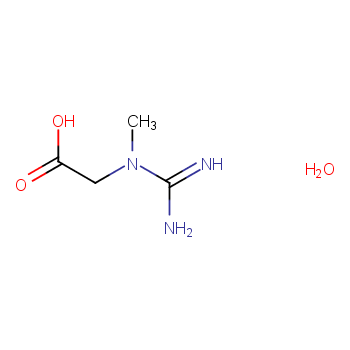
Creatine monohydrate is the monohydrate of N-carbamimidoyl-N-methylglycine, a zwitterionic, water-soluble crystalline powder with the empirical formula C₄H₉N₃O₂·H₂O and a molecular weight of 149.15 g/mol. It presents as an odorless, slightly bitter white crystalline solid stable under dry conditions but prone to gradual degradation to creatinine under elevated temperature and acidic or alkaline extremes. Its high aqueous solubility and renal excretion profile underpin both its ergogenic efficacy and its favorable safety record across long-term human use.
Industrial creatine monohydrate is produced almost exclusively by chemical synthesis rather than extraction, beginning with sarcosine and cyanamide in a controlled aqueous reaction to form creatine, followed by crystallization with one equivalent of water to yield the monohydrate. Modern plants emphasize reaction-yield optimization, recrystallization purity, and micronization to improve dissolution and blend homogeneity. Continuous-process and enzymatic routes are under investigation to reduce energy intensity and impurity formation such as creatinine and dicyandiamide.
Demand for creatine monohydrate is propelled by the global fitness-economy expansion, the destigmatization of supplementation among mainstream consumers, and scientific validation of non-athletic benefits that broaden the total addressable market. The post-pandemic consumer focus on immune, cognitive, and longevity wellness has pulled creatine into new demographic segments including women, older adults, and plant-based eaters with lower endogenous intake. Demand elasticity is moderate, with brand loyalty and repeat purchase supporting stable, compounding consumption.
Manufacturing capacity is heavily concentrated in Asia-Pacific, with China supplying the majority of global tonnage through integrated producers serving private-label and branded customers worldwide. India is scaling fermentation and synthesis capacity to capture export share, while European and North American participants focus on value-added blending, encapsulation, and branded marketing rather than bulk synthesis. Export flows run predominantly China-to-US and China-to-EU, with finished-goods re-export from Western brand owners back into APAC premium channels, illustrating a clear regional specialization in the value chain.
Pricing bifurcates between commodity bulk monohydrate, where Chinese overcapacity exerts downward pressure and thin margins, and premium micronized or certified-grade material commanding meaningful premiums tied to purity, third-party testing, and traceability. Volatility is modest compared with patented actives, but raw-material (cyanamide, sarcosine) cost swings and energy pricing at Chinese plants transmit into quarterly contract adjustments. B2B buyers should secure multi-year supply agreements with quality-escalation clauses to stabilize both cost and specification certainty.
Creatine monohydrate benefits from a comparatively favorable regulatory posture as a well-established dietary ingredient, yet compliance rigor centers on identity, purity, and labeling rather than pre-market authorization. Because it is sold as a supplement rather than a drug, claims are constrained and substantiation expectations are rising under aggressive enforcement by regulators and class-action plaintiffs. Enterprises must align quality systems with food-supplement good manufacturing practice and region-specific import requirements.
Although creatine monohydrate is a benign, naturally derived molecule, B2B buyers increasingly impose ESG criteria on suppliers through sustainable-procurement scorecards and ESG-rating agency scrutiny. Carbon-intensity disclosures covering Scope 1-3 emissions from synthesis, crystallization, and international freight are becoming contractual requirements for multinational brand owners. Circular-economy expectations and clean-energy adoption at manufacturing sites now differentiate preferred suppliers in Western procurement tenders.
The sarcosine-cyanamide route is energy and solvent intensive at scale, so OEM buyers favor producers with renewable-powered crystallization, solvent-recovery loops, and wastewater-treatment systems that lower life-cycle carbon intensity. ISO 14001-certified facilities documenting Scope 1-3 emissions and water-reuse ratios capture premium positioning, while by-product recycling of process salts supports circular-economy narratives attractive to ESG-committed customers. Continuous-process innovation further reduces batch waste and energy per kilogram produced.
Traceability from raw-material lot to finished ingredient is essential for clean-label assurance and rapid recall containment, with blockchain or ERP-linked batch records increasingly expected by top-tier brands. Suppliers demonstrating transparent sarcosine and cyanamide sourcing, ethical labor practices, and audited quality management under ISO 9001 strengthen their standing in Western tender processes. Verifiable documentation protects downstream brands from adulteration scandals and reinforces trust in an ingredient increasingly consumed by sensitive populations.
Creatine monohydrate is a non-hazardous, stable powder that poses limited logistics risk, yet supply-chain resilience depends on diversifying concentrated Chinese supply and securing quality-assured inventory buffers against demand spikes. Because the molecule is cheap to freight but sensitive to moisture caking, disciplined packaging and storage preserve functionality through long intercontinental transit. Enterprises should map alternate qualified suppliers and maintain safety stock to absorb port or regulatory disruptions.
Creatine monohydrate is not classified as a dangerous good under UN, ADR, IMDG, or IATA frameworks, simplifying global transit and reducing freight cost relative to hazardous actives. Nevertheless, carriers require accurate safety data sheets confirming non-hazard status, and food-grade handling mandates clean, pest-controlled containers and documentation compliant with destination food-import controls. Importers should pre-clear customs with certificates of analysis and free-sale or health certificates where the destination market requires them for supplement ingredients.
Expansion in the creatine monohydrate market rewards quality leadership, application diversification, and channel control more than raw tonnage. As the ingredient matures, sustainable differentiation comes from certified purity, novel delivery formats, and credible clinical or clean-label storytelling that resonates with educated consumers. The following strategic pillars guide B2B participants seeking durable global share.
Creatine monohydrate stands as a rare nutraceutical with deep scientific validation and expanding demographics, offering B2B participants a stable, growing platform built on efficacy rather than fad. Success in 2026 hinges on disciplined quality control, ESG-credible manufacturing, and format innovation that meets consumers where they are, rather than on competing solely on bulk price in a crowded Chinese supply base. Enterprises that elevate purity and traceability will capture premium share.
Looking ahead, the convergence of healthy-aging, cognitive-wellness, and performance markets positions creatine monohydrate for sustained double-digit category growth in select segments. By pairing resilient dual-source supply with compliant, story-driven branding, market participants can build defensible franchises that endure well beyond the current fitness-supplement cycle.
Powered by Guidechem
This white paper is exclusively compiled by the Guidechem Intelligence Team based on global customs data, regulatory databases, and industry research. Guidechem is a leading global B2B chemical platform, dedicated to connecting global buyers with verified, high-quality manufacturers.
Relying on Guidechem's extensive global database, we have mapped the core participants in the current global Creatine monohydrate supply chain:
Disclaimer: The content of this white paper is compiled based on public market data and regulatory information available as of 2026. Global chemical regulations are subject to dynamic adjustments. In actual export operations, enterprises must consult professional regulatory advisors or relevant competent authorities to obtain the latest compliance guidance.
|
 |
 |
 |
 |
 |
 EN
 Agricultural News
 Food News
 Industrial News
 Cosmetic News
 Pharmaceutical News
 Science News


 2YRS

