-
We detected your language preference as English. Would you like to switch to the English version for a better experience?
Switch to English
Stay here


Calcium carbide, CAS 75-20-7, is the ionic solid CaC2, industrially supplied as gray-to-black lumps or granules whose carbide content is commonly expressed through acetylene yield. Contact with water produces acetylene and calcium hydroxide in a strongly exothermic reaction, making moisture exclusion the defining requirement for production, storage, packaging, and transport. Commercial material also contains lime, carbon, sulfur, phosphorus, silicon, and metal-derived impurities inherited from feedstocks and the electric furnace. Buyers must therefore specify particle size, gas yield, phosphine and hydrogen sulfide potential, ash, fines, and handling performance rather than relying on nominal CaC2 content alone.
Manufacture combines calcined lime and low-ash carbonaceous reductant at very high temperature in an electric arc furnace, followed by tapping, cooling, crushing, screening, and hermetic packing. Electricity intensity, electrode management, feedstock quality, furnace campaign stability, and off-gas control determine both economics and environmental performance. The market supports acetylene generation, metallurgical desulfurization, calcium cyanamide manufacture, and selected chemical syntheses, with product grades adapted to each conversion route. Because water-reactive hazards persist throughout the chain, operational maturity and dangerous-goods competence are as important as unit price.
In 2026, cross-border suppliers face REACH and CLP obligations in Europe, TSCA and EPA interfaces in the United States, GHS communication, and modal transport rules for UN 1402. Calcium carbide is not a pharmaceutical API, so FDA, DMF, CEP, USP/Ph.Eur., cGMP, and ICH Q7/Q11 frameworks are generally outside normal industrial supply unless a narrowly defined downstream use creates separate requirements. ISO 9001 and ISO 14001 systems can strengthen quality and environmental governance, but neither substitutes for site-specific process safety or legal registration. Scope 1-3 Emissions, furnace electricity origin, lime calcination, carbon reductant sourcing, and sealed logistics increasingly influence procurement and green-trade assessments.
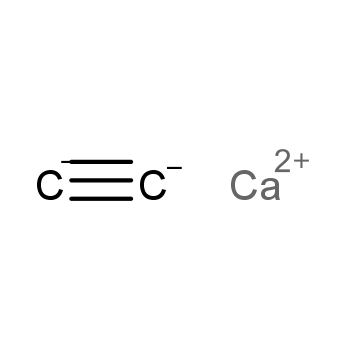
Pure calcium carbide consists of Ca2+ and acetylide C2(2−) ions, has a formula mass of 64.10 g/mol, and reacts rapidly with protic media. Hydrolysis follows CaC2 plus two water molecules to form acetylene and calcium hydroxide, releasing heat that can ignite the flammable gas if moisture ingress is uncontrolled. Industrial grades are heterogeneous solids whose reaction rate depends on carbide concentration, porosity, lump size, fines, passivation, and storage history. Trace calcium phosphide and sulfide can generate phosphine and hydrogen sulfide during hydrolysis, creating toxic-gas and acetylene-purity concerns.
Industrial calcium carbide is produced by reacting quicklime with carbon, commonly coke or anthracite, at temperatures around 2,000 °C or above in submerged electric arc furnaces. Feed drying and sizing stabilize furnace permeability, while lime reactivity, carbon fixed content, ash chemistry, and electrode position influence conversion and power demand. Molten carbide is tapped into molds or cooling areas, solidified under controlled conditions, and processed in enclosed crushing and screening systems. Modern plants recover or utilize carbon-monoxide-rich furnace gas, automate burden control, and suppress dust and fugitive emissions around tapping and packaging.
Demand reflects regional access to electricity, lime, carbon reductants, steelmaking capacity, acetylene-based chemistry, and competing petrochemical routes. Metallurgical customers value predictable desulfurization performance, while acetylene users prioritize gas yield and low phosphine and hydrogen sulfide formation. Energy-price volatility and decarbonization policy can alter furnace operating rates quickly because electricity and calcined feed are major cost components. Buyers increasingly seek indexed contracts, minimum yield guarantees, packaging accountability, and plant-level evidence on energy and emissions rather than relying on commodity labels.
Asia-Pacific, especially China, holds substantial integrated capacity linked to coal, lime, power, acetylene chemistry, and steel demand, while Europe and North America operate more selective regional supply and distribution networks. International flows favor dry bulk packaged in approved drums or containers, but freight economics and dangerous-goods restrictions limit the practical radius for lower-value grades. Port humidity, long dwell times, container damage, and transshipment multiply risk compared with ordinary mineral products. Resilient buyers qualify regional inventory points, alternate routes, packaging repair and rejection procedures, and suppliers with proven UN 1402 export experience.
Pricing separates high-yield, tightly screened acetylene grades, application-specific metallurgical products, and lower-specification industrial material. Electricity, electrode paste, coke or anthracite, quicklime, furnace utilization, package type, and dangerous-goods freight drive delivered cost. Fines may have lower handling value or a different application fit, so average lump price can obscure usable yield at the customer's operation. Total-cost analysis should include acetylene output, slag or lime residue, purification chemicals, moisture-damaged units, demurrage, rejected drums, worker controls, and disposal.
Calcium carbide compliance begins with correct substance identity, hazard classification, exposure scenarios, dangerous-goods status, and site permits for high-temperature operations and emissions. A supplier should maintain GHS-compliant safety data, batch traceability, test-method control, incident reporting, and change notification for feedstocks, furnace practice, particle size, and packaging. Industrial specifications commonly include acetylene yield, size distribution, fines, and impurity-related measures, with agreed sampling and dispute procedures. Quality management under ISO 9001 supports repeatability, while ISO 14001, process-safety management, and legal registers address the environmental and hazard profile.
Calcium carbide has an energy- and carbon-intensive profile driven by electric-furnace power, lime calcination, reductant consumption, electrodes, and upstream mining. ESG assessments should distinguish grid electricity from captive generation and should include carbon dioxide from limestone conversion rather than reporting furnace electricity alone. Air pollution, carbon-monoxide management, dust, slag, wastewater from downstream hydrolysis, and worker safety are material governance topics. Credible suppliers disclose measured boundaries, legal compliance, incidents, and intensity trends instead of unsupported low-carbon claims.
Scope 1 Emissions include on-site fuel and process sources under the selected boundary, Scope 2 Emissions cover purchased electricity, and Scope 3 Emissions include lime, carbon, electrodes, packaging, logistics, and waste. Furnace efficiency, higher feed conversion, lower-carbon power, heat recovery, and productive use of cleaned furnace gas can reduce intensity. Downstream calcium hydroxide residue may be recovered for suitable industrial uses only after characterization and regulatory review. Circular claims must account for contamination, transport, processing energy, and whether reuse genuinely displaces virgin material.
Traceability should connect limestone quarry and kiln lots, carbon reductant, electrode materials, furnace campaign, cooling block, screened fraction, drum, and shipment. Feedstock controls should address ash, sulfur, phosphorus, moisture, fixed carbon, lime availability, and responsible mining or labor practices. Procurement teams can request chain-of-custody evidence, ISO 14001 status, energy mix, permit performance, and corrective-action records from high-impact sites. Batch-level records also enable faster containment when an impurity or gas-yield deviation is discovered.
Resilience depends on keeping calcium carbide dry from packaging line to point of controlled use while complying with dangerous-goods routing and segregation. Contracts should define maximum age, package construction, net mass, size distribution, inspection, sealing, loading pattern, documentation, and rejection criteria. Warehouses require weather protection, dry floors, ventilation, ignition control, separation from water and incompatible materials, and trained emergency response. Import planning should allow for carrier restrictions, port acceptance, humidity exposure, customs inspections, and rapid action if seals or drums are damaged.
Calcium carbide is transported as UN 1402, Class 4.3, commonly Packing Group I, subject to the current ADR, IMDG, IATA, and national provisions applicable to the route and package. Dangerous-goods declarations, labels, marks, packaging approvals, segregation, stowage, quantity limits, and emergency information must be prepared by trained personnel. Air transport can be highly restricted, making compliant road, rail, or sea planning central to commercial commitments. The carrier, freight forwarder, shipper, and consignee should agree on moisture protection, damaged-package response, port dwell limits, and notification procedures before dispatch.
Successful expansion requires matching furnace capability and product fraction to the customer's generator, metallurgical injection system, or chemical conversion process. A market-entry team should verify legal registrations, dangerous-goods routes, package recovery or disposal, regional warehousing, and emergency support before quoting. Technical trials should use agreed sampling, gas-yield, impurity, and operational performance criteria under controlled conditions. Supply agreements then need energy-index logic, forecast bands, allocation rules, moisture-damage responsibility, and change notification.
Calcium carbide remains a strategically useful industrial reagent because it stores acetylide chemistry in a transportable solid and performs efficiently in acetylene and metallurgical systems. That utility is inseparable from severe water reactivity, high-temperature manufacturing, impurity-derived gas hazards, and regulated logistics. Robust procurement therefore combines application testing, representative sampling, hermetic packaging, trained handling, and transparent furnace and feedstock controls. Nominal composition and low ex-works price are insufficient measures of delivered value.
Competitive suppliers will improve electrical efficiency, off-gas utilization, feed conversion, emission control, traceability, and verifiable Scope 1-3 Emissions reporting while sustaining reliable gas yield. Buyers should favor ISO 9001/14001 governance supported by legal compliance, dangerous-goods competence, process safety, and regional contingency planning. Regulatory teams must keep REACH, CLP, TSCA, EPA, GHS, and transport classifications current for each market and use. An integrated technical, safety, logistics, and ESG qualification delivers the strongest foundation for long-term B2B supply.
Powered by Guidechem
This white paper is exclusively compiled by the Guidechem Intelligence Team based on global customs data, regulatory databases, and industry research. Guidechem is a leading global B2B chemical platform, dedicated to connecting global buyers with verified, high-quality manufacturers.
Relying on Guidechem's extensive global database, we have mapped the core participants in the current global Calcium carbide supply chain:
Disclaimer: The content of this white paper is compiled based on public market data and regulatory information available as of 2026. Global chemical regulations are subject to dynamic adjustments. In actual export operations, enterprises must consult professional regulatory advisors or relevant competent authorities to obtain the latest compliance guidance.
|
 |
|
|
 EN
EN
 Agricultural News
 Food News
 Industrial News
 Cosmetic News
 Pharmaceutical News
 Science News

 3YRS
3YRS

