-
We detected your language preference as English. Would you like to switch to the English version for a better experience?
Switch to English
Stay here


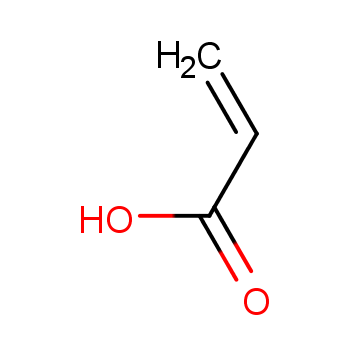
Acrylic acid is the unsaturated carboxylic acid monomer CH2=CHCOOH used to build superabsorbents, acrylate esters, dispersants, coatings, and adhesive polymers. A critical identity issue exists in the assigned record: CAS 9003-01-4 ordinarily identifies poly(acrylic acid), while neat acrylic acid monomer is commonly identified by CAS 79-10-7. These materials differ fundamentally in molecular weight, reactivity, hazards, transport status, and end use. No purchase order, SDS, certificate of analysis, customs declaration, or Guidechem inquiry should proceed until the supplier and buyer reconcile the name, CAS, grade, and stabilization state.
For the monomer addressed in this paper, value derives from high purity, controlled water and aldehydes, dependable inhibitor content, and safe management of spontaneous exothermic polymerization. Commercial production is integrated with propylene oxidation and downstream acrylate or superabsorbent assets, producing a cyclical but strategically important market. Storage must preserve inhibitor effectiveness, commonly requiring a specified dissolved-oxygen regime and a controlled temperature window. Heating, contamination, prolonged residence, or inhibitor depletion can initiate runaway polymerization with pressure generation and vessel failure.
The 2026 sourcing standard combines process safety with REACH, CLP, TSCA, EPA, GHS, dangerous-goods, and end-use compliance. Buyers increasingly examine low-carbon feedstocks, solvent and water intensity, inhibitor stewardship, and Scope 1-3 Emissions under broader ESG programs. ISO 9001/14001 certification is useful only when supported by batch traceability, mechanical-integrity records, emergency systems, and credible product-carbon data. Pharmaceutical concepts such as FDA, DMF, CEP, cGMP, ICH, USP, and Ph.Eur. apply only when the actual downstream use invokes them and cannot cure an incorrect chemical identity.
Acrylic acid couples an electron-deficient vinyl group with a polar carboxylic acid, enabling rapid free-radical polymerization and acid-base chemistry. Initiators generate radicals that add across the carbon-carbon double bond, propagating poly(acrylic acid) chains or copolymers, while neutralization controls charge density and solution behavior. The same reactivity that creates commercial utility also creates a runaway hazard because polymerization is exothermic and can accelerate with temperature. Corrosivity and vapor exposure add acute handling risks, making inhibitor control, contamination prevention, ventilation, and compatible metallurgy essential.
Modern acrylic acid is produced predominantly by two-stage catalytic oxidation of propylene, first to acrolein and then to acrylic acid. Reactor effluent is cooled and absorbed, after which extraction, distillation, and crystallization or equivalent purification remove water, acetic acid, aldehydes, heavy ends, and color bodies. Polymerization inhibitors are managed throughout recovery and finishing because hot concentrated monomer is intrinsically unstable. Process development focuses on catalyst selectivity, heat integration, oxygen control, corrosion resistance, inhibitor distribution, and avoidance of stagnant zones.
Demand is anchored by hygiene superabsorbents, coatings, adhesives, water treatment, detergents, and construction, with regional growth tied to manufacturing output and consumer-product penetration. Producers are pursuing bio-attributed or lower-carbon propylene pathways, but mass-balance and lifecycle claims require transparent chain-of-custody rules. Customers increasingly request lower residuals and tighter color while also seeking secure inhibitor practice and transport support. Capacity cycles remain pronounced because large integrated plants can create temporary oversupply, whereas outages quickly tighten regional availability.
North America, Europe, and Asia-Pacific all host integrated oxidation and derivative capacity, with China representing a major and growing production-consumption base. Export economics depend on propylene cost, plant utilization, tank availability, inhibitor management, and hazardous-liquid freight. Long ocean transit is not merely a logistics issue because temperature history and inhibitor condition affect stability. Resilient procurement balances local tank supply with qualified imports, alternate terminals, emergency response capability, and enough inventory to cover turnarounds without excessive storage age.
Acrylic acid pricing follows propylene, energy, operating rates, planned turnarounds, derivative demand, and regional freight. Glacial grade, dilute solutions, polymer grade, and special low-impurity specifications command different economics and cannot be compared solely by assay. Inhibitor package, tank heating policy, return logistics, and demurrage can materially change delivered cost. The assigned CAS mismatch is itself a pricing hazard: a quotation for poly(acrylic acid) under 9003-01-4 is not commercially comparable with monomer under 79-10-7.
Regulatory classification begins with correct identity, concentration, inhibitor, physical state, and intended use. For acrylic acid monomer, REACH, CLP, TSCA, EPA, GHS, occupational-safety, major-hazard, and dangerous-goods rules can all apply, while the polymer associated with CAS 9003-01-4 has a different profile. Importers must verify inventory status, tonnage coverage, exposure scenarios, and substance-specific restrictions in each jurisdiction. FDA food-contact provisions or pharmaceutical quality systems are relevant only to qualified downstream articles or processes and never convert industrial monomer into an approved drug ingredient.
Acrylic acid has a meaningful upstream carbon and resource footprint because conventional production begins with fossil propylene and uses high-temperature oxidation and energy-intensive separation. ESG evaluation must also include process-safety performance, corrosive exposure, volatile releases, water use, and polymer waste outcomes. ISO 14001 programs should integrate emissions permits, wastewater controls, spill prevention, and runaway-polymerization drills. Buyers need comparable, verified metrics rather than broad claims based only on a renewable-electricity certificate.
A cradle-to-gate inventory should cover propylene, catalyst manufacture, steam, electricity, cooling, inhibitor, yield losses, wastewater, storage, and transport. Scope 1-3 Emissions should be separated, with Scope 3 incorporating feedstock production and logistics under a disclosed allocation method. Heat integration, catalyst selectivity, flare reduction, renewable power, and lower-carbon propylene can reduce intensity. Recovered acrylic streams may contribute circular value, but contaminants and inhibitor history must be controlled before reuse.
Traceability should connect propylene feedstock, catalyst lot, production campaign, purification train, inhibitor addition, tank, loading event, and destination. Mass-balance renewable claims require independently governed bookkeeping that prevents double counting and states whether physical renewable carbon is present. Tank cleaning and previous-cargo records are essential because contamination can initiate polymerization or compromise downstream polymers. Supplier governance under ISO 9001 should include terminals and distributors, not only the primary plant.
Acrylic acid monomer is normally shipped stabilized in dedicated or demonstrably compatible tanks, isotanks, and approved packages under dangerous-goods controls. Temperature must remain within the supplier’s safe operating envelope: freezing can complicate inhibitor distribution, while overheating accelerates dimerization and polymerization. Equipment should avoid dead legs, incompatible metals or gasket materials, and contamination from previous cargoes. Every route requires emergency contacts, temperature checks, unloading procedures, and a plan for delayed or distressed containers.
Stabilized acrylic acid is typically transported as a regulated corrosive, flammable liquid under the applicable UN 2218 entry, subject to modal and national details. The consignor must verify proper shipping name, class, subsidiary risk, packing group, stabilization notation, package approval, and temperature provisions using current IATA, IMDG, ADR, and domestic rules. Carriers and receiving sites need product-specific emergency guidance because ordinary firefighting or indiscriminate heating can worsen polymerization risk. Poly(acrylic acid) under CAS 9003-01-4 may have a different transport determination, reinforcing the need to correct identity before dispatch.
Global expansion requires separate commercial tracks for monomer, linear polymer, crosslinked carbomer, and formulated solutions. The first gate is master-data correction so ERP, SDS, label, tariff, and customer specifications all describe the same substance. Monomer suppliers should then compete on safe-delivery capability, purity consistency, derivative integration, and verified carbon performance. Regulatory and process-safety teams must approve new destinations before commercial commitments are made.
Acrylic acid is an essential unsaturated carboxylic acid monomer whose value and hazard both arise from its reactive vinyl and acid functions. Safe B2B trade depends on stabilized production, rigorous temperature and contamination control, correct dangerous-goods execution, and emergency preparedness. The assigned CAS 9003-01-4 instead points to poly(acrylic acid), a discrepancy that must be resolved before supply. Identity governance is therefore the first and most consequential compliance control for this record.
Once identity is corrected, buyers can evaluate REACH, CLP, TSCA, EPA, GHS, FDA end-use relevance, and regional transport duties against the actual substance. They should also verify ISO 9001/14001 operation, transparent Scope 1-3 Emissions, tank traceability, inhibitor management, and supplier continuity. DMF, CEP, cGMP, ICH, USP, or Ph.Eur. references belong only in substantiated application-specific packages, not commodity claims. A disciplined regional sourcing model can then balance cost, safety, carbon, and derivative-market resilience.
Powered by Guidechem
This white paper is exclusively compiled by the Guidechem Intelligence Team based on global customs data, regulatory databases, and industry research. Guidechem is a leading global B2B chemical platform, dedicated to connecting global buyers with verified, high-quality manufacturers.
Relying on Guidechem's extensive global database, we have mapped the core participants in the current global Acrylic acid supply chain:
Disclaimer: The content of this white paper is compiled based on public market data and regulatory information available as of 2026. Global chemical regulations are subject to dynamic adjustments. In actual export operations, enterprises must consult professional regulatory advisors or relevant competent authorities to obtain the latest compliance guidance.
 |
|
 |
 |
|
 EN
 Agricultural News
 Food News
 Industrial News
 Cosmetic News
 Pharmaceutical News
 Science News


 1YR

