
I. Executive Summary
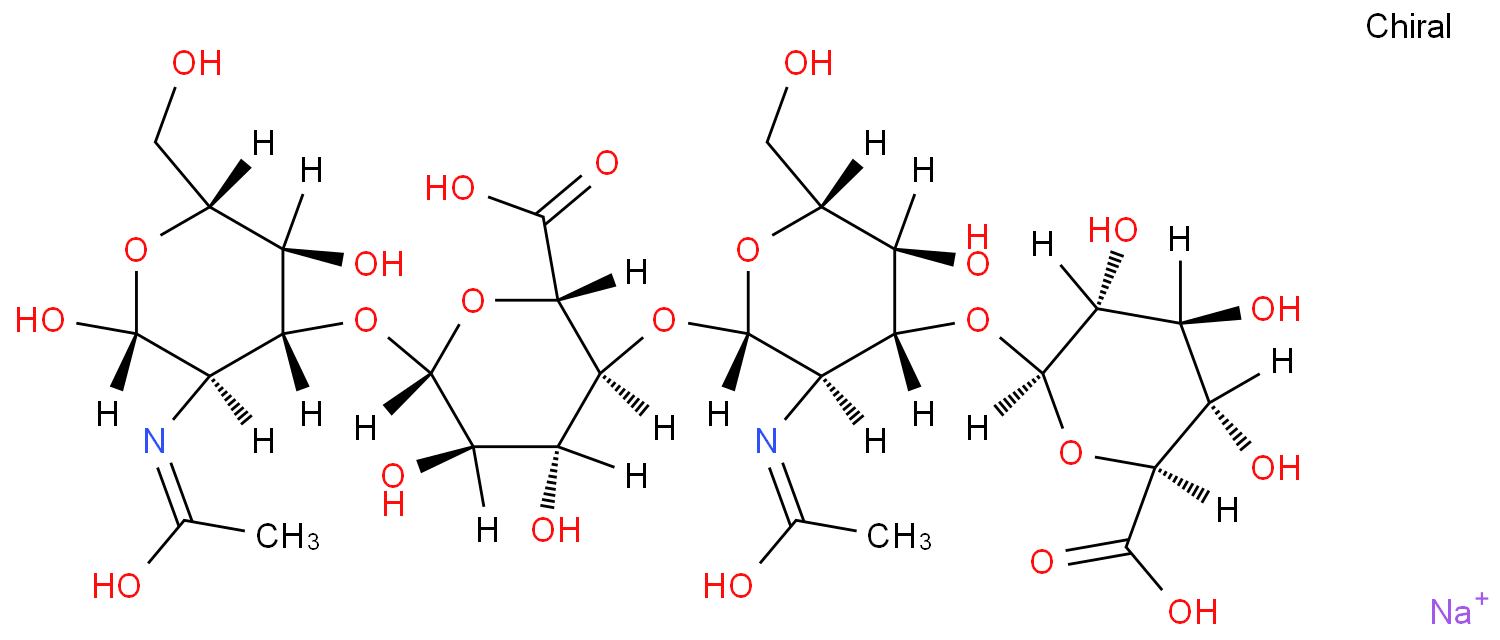
Sodium hyaluronate (CAS 9067-32-7) is the sodium salt of hyaluronic acid, a linear non-sulfated glycosaminoglycan of alternating D-glucuronic acid and N-acetyl-D-glucosamine units joined by beta-1,4 and beta-1,3 bonds. Native to synovial fluid, vitreous humor and the dermal extracellular matrix, it is now a platform biomaterial in medical aesthetics, ophthalmology and orthopaedics. For B2B buyers it is not one commodity: value is set by weight-average molecular weight and its distribution, endotoxin and bioburden levels, residual protein and host-cell DNA, and the documentation tier attached to each grade.
Three demand engines pull the market. Aesthetic medicine consumes crosslinked and native polymer for fillers, skin boosters and mesotherapy; orthopaedics consumes high-molecular-weight grades for intra-articular viscosupplementation; ophthalmology consumes sterile, low-endotoxin grades as viscosurgical devices and ocular lubricants. Pharmaceutical formulation is a fourth engine, exploiting hyaluronate as a mucoadhesive, a sustained-release matrix and a CD44-targeting ligand. Because the same molecule is regulated as a cosmetic, a food ingredient, a Class III device material or a drug substance depending on route and claims, no single specification can serve every customer.
Supply has moved from animal extraction to precision fermentation in animal-origin-free microbial hosts, eliminating TSE and BSE risk and enabling vegan, halal and kosher positioning. Fermentation capacity is concentrated in East Asia, while medical grades are released in Europe, North America, Korea and Japan under ISO 13485 quality systems. The 2026 agenda for exporters is grade segmentation, dual-region qualification against USP and Ph.Eur. monographs, and dossiers containing drug master files, CEP support where available and ISO 10993 biocompatibility data. Price alone no longer wins tenders.
II. Product Deep Dive: Molecular Mechanisms and Production Evolution
2.1 Physicochemical Properties and Mechanisms
Hyaluronate is a polyanionic, highly hydrated random-coil polyelectrolyte. Above the overlap concentration its chains entangle into a shear-thinning viscoelastic network whose viscosity and elastic modulus scale with molecular weight and concentration. That rheology, not covalent chemistry, delivers lubrication, shock absorption and space filling. Signalling is equally size dependent, since high-molecular-weight polymer is space-filling and inflammation-dampening while depolymerised fragments engage Toll-like receptors and may promote inflammation and angiogenesis.
- Molecular-Weight-Dependent Rheology and Viscoelastic Design: Weight-average molecular weights from oligomers near 5 kilodaltons to native chains above 2 megadaltons span a thousand-fold viscosity range, so elastic modulus, cohesivity, extrusion force and water binding are all chain-length functions. Specifications fix molecular weight, polydispersity and intrinsic viscosity; injectable gels add crosslink density, degree of modification and gel fraction.
- Receptor-Mediated and Physicochemical Modes of Action: Hyaluronate binds CD44, RHAMM and LYVE-1, organises pericellular matrix, and supports chondrocyte and keratinocyte migration during repair, while binding many times its own weight in water through carboxylate and sodium hydration. In joints it restores synovial elastoviscosity; in the anterior chamber it maintains surgical space and protects the corneal endothelium.
2.2 Synthesis and Manufacturing Technologies
Two platforms exist: animal-tissue extraction, now largely historical in medical supply, and microbial fermentation, which accounts for essentially all new capacity. Downstream purification, molecular-weight tailoring and pyrogen control carry most of the regulatory burden, so producers who master them consistently out-compete those chasing titre alone.
- Precision Fermentation and Strain Engineering: Recombinant GRAS hosts such as Bacillus subtilis, Corynebacterium glutamicum, Lactococcus lactis and Komagataella phaffii increasingly replace natural Streptococcus producers, reducing pathogenic-organism impurities and simplifying containment. Engineering targets hyaluronan synthase, UDP-glucose dehydrogenase and the glucosamine branch, while fed-batch control of oxygen, pH and carbon feed steers both titre and chain length.
- Downstream Processing, Depolymerisation and Release Testing: Clarification, carbon treatment, ion exchange, ethanol precipitation and ultrafiltration remove cells, protein, nucleic acid and endotoxin; thermal, alkaline, oxidative or hyaluronidase-catalysed depolymerisation then yields low-molecular-weight grades. Release panels cover molecular weight by size-exclusion chromatography, assay, residual protein and DNA, endotoxin by LAL or recombinant Factor C, bioburden, sterility and elemental impurities.
2.3 Core Application Matrix
- Aesthetic and Regenerative Medicine: Non-crosslinked sodium hyaluronate is the starting polymer for BDDE-, PEGDE- and DVS-crosslinked implantable gels used in fillers, skin boosters and biostimulator protocols, engineered through rheology, cohesivity, degree of modification and residual crosslinker limits. Device-grade supply requires ISO 13485 quality systems, ISO 10993 biocompatibility data and validated terminal sterilisation.
- Ophthalmic Surgery and Ocular Surface Care: Cohesive and dispersive ophthalmic viscosurgical devices maintain the anterior chamber and protect the endothelium during cataract surgery under ISO 15798, while dilute solutions serve as preservative-free lubricants for dry-eye disease. These grades carry the strictest sterility, endotoxin and intraocular-tolerance requirements in the portfolio.
- Pharmaceutical Excipient and Advanced Delivery: Hyaluronate also serves as viscosity enhancer, mucoadhesive and sustained-release matrix in ophthalmic, nasal, topical and injectable formulations, and as a backbone for drug conjugates, hydrogels and microneedle arrays. Wound dressings, anti-adhesion barriers, veterinary intra-articular products and food-grade applications add further volume, each with its own monograph.
III. Global Market Supply-Demand Landscape and Export Trends
3.1 Demand Drivers and Market Shifts
Demand is reshaped less by volume than by grade mix. Aesthetic procedure volumes keep expanding across Asia-Pacific, the Middle East and Latin America, while Chinese regulators tighten registration of injectable devices, favouring documented suppliers over traders. Ageing demographics and osteoarthritis guidelines sustain viscosupplementation despite European reimbursement pressure, and screen-driven dry-eye prevalence lifts lubricant consumption. In cosmetics, hydration and barrier-repair positioning has made hyaluronate a baseline ingredient, commoditising low grades while funding fermentation scale.
3.2 Capacity Distribution and Export Flows
Fermentation capacity is concentrated in China, whose eastern provinces host the densest producer cluster, while Korea, Japan, Europe and the United States retain smaller medical-grade plants with sterile fill-finish capability. Bulk cosmetic and food grades move east-to-west and intra-Asia in 20 to 25 kilogram drums; medical grades move as kilogram-scale, cold-chain, documentation-intensive shipments between qualified GMP sites. Bulk powder is normally declared under Chapter 39 polymer headings, whereas pre-filled syringes and sterile gels face medical-device import controls.
3.3 Market Bifurcation and Pricing Dynamics
The market is bifurcated. Cosmetic and food grades behave as commodities priced against glucose, ethanol and energy and are currently exposed to overcapacity. Medical, ophthalmic and injectable grades are priced far higher against documentation depth, endotoxin and sterility specifications, validated depyrogenation, device-registration support and audit readiness. Quotation volatility in 2026 comes mainly from the width of the accepted molecular-weight window and the length of committed offtake, since narrow windows and short campaigns raise changeover and testing costs.
IV. In-depth Analysis of Global Compliance and Regulatory Barriers
Regulatory exposure here is unusual because the same substance is simultaneously an industrial polymer, a cosmetic and food ingredient, a medical-device material and a pharmaceutical active or excipient. The task is not to obtain one approval but to assemble the right dossier for the declared end use and to prevent lower grades leaking into higher-risk applications.
4.1 European Market: REACH, CLP, and Sector-Specific Directives
- REACH and CLP Positioning: As a polymer, sodium hyaluronate is generally outside REACH registration for the polymer itself, although monomers and intentionally added substances remain in scope; suppliers should confirm obligations with ECHA rather than assume exemption. Under CLP the material is normally not classified as hazardous, but safety data sheets must be maintained and any residual solvent, crosslinker or preservative reflected in mixture classification.
- Cosmetics, Medical Devices and Pharmacopoeial Control: Cosmetic use falls under Regulation (EC) No 1223/2009, requiring a responsible person, CPNP notification, a product information file and safety assessment, plus ISO 17516 microbiological limits and ISO 11930 preservation efficacy testing. Injectable gels are Class III devices under Regulation (EU) 2017/745, requiring notified-body review, UDI, EUDAMED registration, ISO 13485 certification, ISO 10993-1 biocompatibility data and validated sterilisation; medicinal uses add Ph.Eur. monograph compliance, ICH Q7 GMP and CEP support where available.
4.2 North American Market: TSCA, EPA, and FDA Regulations
- FDA Device, Drug and Excipient Routes: Viscosurgical devices and dermal fillers reach the US market through 510(k) clearance, de novo classification or premarket approval, with combination-product rules where a drug is incorporated; the substance is listed on the TSCA inventory and subject to standard import certification. Pharmaceutical customers expect a Type II drug master file, USP monograph conformity, ICH Q7 manufacture, USP sterility, endotoxin and particulate-matter testing, and FDA establishment registration and listing.
- Cosmetics, Supplements and Food-Contact Rules: The Modernization of Cosmetics Regulation Act adds facility registration, product listing, safety substantiation and serious adverse-event reporting for cosmetic products containing hyaluronate, while supplement use runs under DSHEA and 21 CFR Part 111 GMP with FTC oversight of claims. Food-contact and food-ingredient uses require confirmation of the applicable FDA clearance and NSF certification where relevant.
4.3 The Critical Hurdle: Quality Control and Safety Limits
Compliance Warning: The most common failure is grade substitution: cosmetic-grade material offered or diverted into injectable, ophthalmic or parenteral use without sterility, endotoxin, bioburden, elemental-impurity and biocompatibility evidence. Treat declared molecular weight as a claim to verify by size-exclusion chromatography, since rheology and tissue residence depend on it; confirm animal-origin-free and TSE/BSE status in writing; require residual crosslinker, solvent and protein data appropriate to the end use; and keep unbroken cold-chain and batch genealogy records, because any traceability gap will surface during a device or drug inspection.
V. Green Trade Barriers and ESG in Manufacturing
Fermentation-derived biopolymers are energy- and water-intensive, and because hyaluronate is a high-visibility ingredient, buyers increasingly request greenhouse-gas and water data during qualification. Producers able to quantify their footprint with a recognised methodology and show year-on-year improvement now win listings decided on price only a few years ago. Environmental performance has become a documented tender criterion rather than a marketing claim.
5.1 Carbon Footprint and Circular Economy
Emissions concentrate in steam for sterilisation-in-place and evaporation, electricity for aeration and chilling, the thermal load of spray drying or lyophilisation, and ethanol distillation. Scope 1 covers on-site combustion, Scope 2 purchased electricity and steam, and Scope 3 glucose or sucrose cultivation, solvents, single-use filtration consumables, packaging and freight. Abatement levers include higher-titre strains, heat integration and mechanical vapour recompression, renewable electricity, ethanol recovery and water reuse across diafiltration. Reporting should follow the GHG Protocol and ISO 14064 with independent assurance.
5.2 Sustainable Sourcing and Traceability
Traceability now extends far beyond the certificate of analysis. Buyers request fermentation batch genealogy, strain identity and containment records, animal-origin-free and vegan declarations, GMO status aligned to EU rules where relevant, allergen statements, and halal and kosher certification for food and personal-care channels. Governance expectations include ISO 9001 and ISO 14001 certification, Responsible Care or equivalent systems, supplier codes aligned to OECD due diligence, and screening against the German Supply Chain Due Diligence Act and the EU Corporate Sustainability Due Diligence Directive.
VI. Supply Chain Resilience and Export Logistics
Hyaluronate is hygroscopic and degrades under moisture, heat and shear, so packaging and transit design belong to the specification. Sterile and device grades add aseptic processing, container-closure integrity and cold-chain obligations that must be validated end to end. Resilience planning therefore starts at the primary pack and finishes with landing documentation at the customer's dock.
6.1 Packaging Standards and Moisture/Contamination Control
- Moisture and Contamination Control for Powder Grades: Powders are packed in heat-sealed polyethylene liners with desiccant inside foil-laminate bags and fibre drums, filled under low humidity with nitrogen headspace to limit moisture uptake and oxidative chain scission. Each pack carries lot, grade and net-weight coding, and shelf life must be validated under defined temperature and humidity conditions.
- Sterile, Injectable and Liquid Presentations: Sterile powders and gels are presented in Type I glass vials, pre-filled syringes or sterile bags with validated terminal sterilisation or aseptic filling, supported by extractables and leachables studies, container-closure integrity testing and ISO 11607 barrier validation. Liquid formats need freeze and microbial protection, tamper-evident secondary packaging and unambiguous grade labelling.
6.2 Dangerous Goods Identification and Transit Protocols
Most powders and aqueous solutions carry no UN number and travel as non-dangerous goods by road, sea and air, although finished gels and pre-filled syringes are regulated as medical devices on import. Real risk sits in temperature and time: sterile grades move refrigerated or frozen with dry ice, using calibrated data loggers and qualified insulated shippers under good distribution practice. Shipments should use clearly allocated Incoterms and declare grade, molecular weight and end use so customs classification is defensible; serialised labels, tamper seals and device UDI carriers are expected on medical grades.
VII. Enterprise Global Expansion Strategy Guide
Winning exporters treat documentation as product. The following sequence has proved durable for suppliers moving from commodity fermentation output into regulated international channels.
- Grade-Segmented Portfolio with Documentation-First Entry: Define cosmetic, food, ophthalmic, pharmaceutical and device lines with distinct specifications, release panels and packaging, and invest in the assets customers request: drug master files, CEP support, ISO 13485 certification, ISO 10993 biocompatibility packages and ICH-aligned stability data. Target OEM filler and viscosurgical-device manufacturers, whose qualification cycles create durable switching costs.
- Dual-Region Manufacturing and Qualification Footprint: Pair a cost-competitive Asian fermentation base with a European or North American sterile finishing and release-testing site, qualifying both to the same specification so supply can shift on regulatory or tariff events. Maintain validated tech-transfer protocols, shared reference standards and a safety-stock policy for long-lead sterile campaigns.
- Co-Development, ESG and Risk-Sharing Contracts: Offer joint development of molecular-weight grades, crosslink density and rheology targets with device OEMs, under long-term agreements with index-linked pricing and volume commitments. Publish verified Scope 1 to 3 emissions data, hold recognised management-system certifications, and confirm freedom to operate and process IP protection before committing capacity.
VIII. Conclusion
Sodium hyaluronate has matured from a single-molecule commodity into a family of engineered, grade-differentiated biomaterials whose value is set by molecular weight, purity, sterility and documentation rather than tonnage. Suppliers demonstrating fermentation-derived, animal-origin-free provenance, tight molecular-weight control and complete dossiers will keep capturing medical and ophthalmic margins, while undifferentiated producers compete on price in an oversupplied cosmetic market.
Through 2026 three forces dominate: tightening device regulation in China, Europe and the United States that raises the documentation bar; accelerating ESG disclosure that makes verified Scope 1 to 3 data a tender prerequisite; and continued fermentation scale-up that pressures commodity prices. Organisations responding with grade segmentation, dual-region qualification and co-development partnerships will turn compliance into a commercial moat, whereas those treating hyaluronate as a bulk chemical will see regulated-market access narrow year by year.
IX. Industry Resource Connection and Supplier Ecosystem
Powered by Guidechem
This white paper is exclusively compiled by the Guidechem Intelligence Team based on global customs data, regulatory databases, and industry research. Guidechem is a leading global B2B chemical platform, dedicated to connecting global buyers with verified, high-quality manufacturers.
Relying on Guidechem's extensive global database, we have mapped the core participants in the current global Sodium hyaluronate supply chain:
- North America Ecosystem: The buyer base is dominated by medical-device OEMs, ophthalmic and aesthetic product companies and pharmaceutical formulators working under FDA device and drug pathways. Suppliers serving this region must be prepared for drug master files, USP-conformant release testing, establishment registration, MoCRA cosmetic obligations and rigorous supplier audits.
- Europe Ecosystem: Demand centres on notified-body-controlled Class III device manufacturers, viscosurgical-device producers and dermo-cosmetic brands operating under the EU MDR and Regulation 1223/2009. Expect requirements for ISO 13485 quality systems, ISO 10993 biocompatibility data, UDI and EUDAMED registration, Ph.Eur. monograph conformity, REACH and CLP documentation and verified environmental declarations.
- Asia-Pacific and China Ecosystem: The region combines the world's largest fermentation capacity with the fastest-growing medical-aesthetics demand, centred on China, Korea and Japan. China supplies bulk cosmetic, food and increasingly medical-grade polymer under tightening NMPA device registration, while Korea and Japan anchor high-specification device and ophthalmic finishing.
Disclaimer: The content of this white paper is compiled based on public market data and regulatory information available as of 2026. Global chemical regulations are subject to dynamic adjustments. In actual export operations, enterprises must consult professional regulatory advisors or relevant competent authorities to obtain the latest compliance guidance.


 EN
 Agricultural News
 Food News
 Industrial News
 Cosmetic News
 Pharmaceutical News
 Science News


 13YRS

