-
We detected your language preference as English. Would you like to switch to the English version for a better experience?
Switch to English
Stay here


Every coating, detergent, emulsion and foam product owes its performance to one deceptively simple class of chemistry: surface active agents, universally abbreviated as surfactants. These amphiphilic molecules simultaneously lower the surface tension of water, stabilize interfaces between oil and water phases, and enable wetting of substrates that would otherwise repel a liquid formulation. Formulators in paints and coatings, detergents, agrochemicals, and personal care all face the same pain points: pigment dispersions that flocculate, coatings that crawl or crater on contaminated substrates, emulsions that cream or break, and foams that either will not form or will not go away. Selecting the right surfactant class, charge type, and HLB balance is the decisive lever for solving all of these problems at once.
Surfactants are the workhorses of interfacial chemistry. A single molecule carries a hydrophilic (water-loving) head and a hydrophobic (oil-loving, water-repelling) tail, and that dual character is what allows them to migrate to air-water, oil-water, and solid-liquid interfaces. Once there, they modify adhesion, spreading, dispersion stability, and foam behavior. In waterborne coatings — now the dominant platform driven by VOC regulations — surfactants act as wetting agents, dispersants, emulsifiers for polymer latexes, and defoamers, often within the same formulation.
| Function | Target Applications | Key Specifications | Compliance Status |
|---|---|---|---|
| Interfacial tension reduction, wetting, emulsification, dispersion, foaming/defoaming | Waterborne paints and coatings, pigment and filler dispersions, latex emulsion polymerization, industrial and household detergents, agrochemical emulsifiable concentrates | Charge class (anionic/cationic/nonionic/amphoteric), HLB value, CMC, active content typically 30-100%, biodegradability | EU REACH registered; EU Detergents Regulation (EC) 648/2004 biodegradability requirements; US TSCA listed; VOC exempt as defined by EU Directive 2004/42/EC and US EPA Method 24 |
| Substrate wetting and defect control (cratering, orange peel, crawling) in low-VOC coatings | Architectural coatings, industrial maintenance paints, printing inks, textile and leather auxiliaries | Dynamic surface tension (max bubble pressure method), foam profile, ionic character compatibility with binders | Compliant with ISO 8502 substrate cleanliness workflows; APEO-free grades standard for EU ecolabels |
The defining physical property of a surfactant is its ability to adsorb at interfaces. Water molecules at an air-water surface experience a net inward pull, producing surface tension of about 72 mN/m at 25 °C. A surfactant molecule displaces water molecules at the surface, anchoring its hydrophobic tail in the air phase while its hydrophilic head remains solvated. This disrupts the cohesive network of water and lowers the surface tension dramatically — often to 25-35 mN/m at relatively low concentrations. The same adsorption logic applies at oil-water interfaces (lowering interfacial tension to enable emulsification) and at solid-liquid interfaces (enabling wetting and dispersing).

Surfactant molecules orient at an interface: hydrophobic tails point into the oil or air phase, hydrophilic heads remain in water.
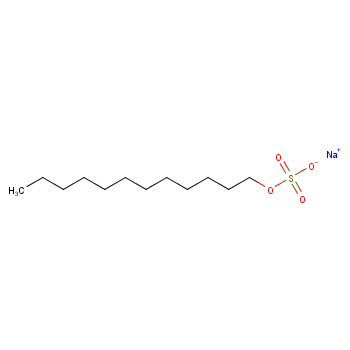
Below a threshold concentration, surfactants exist as individual dissolved molecules (monomers). When the surface and interfaces become saturated, additional molecules self-assemble in the bulk into organized aggregates called micelles — typically spheres or rods with hydrophobic cores shielded from water by an outward-facing hydrophilic shell. The concentration at which micelles begin to form is the critical micelle concentration (CMC), a fingerprint property of every surfactant. For sodium lauryl sulfate (CAS 151-21-3), a benchmark anionic surfactant, the CMC in pure water is approximately 8.2 mM at 25 °C.
Above the CMC, nearly all performance-relevant phenomena plateau: surface tension no longer drops, detergency and solubilization of oils jump sharply (because micelles can encapsulate oily soils), and interfacial coverage is complete. This is why practical dosing is nearly always expressed as a multiple of the CMC — typically 10 to 100 times — rather than as an absolute percentage. Ionic strength matters as well: added electrolytes screen head-group charge, lowering the CMC and the Krafft temperature, which is why builders (sodium carbonates, phosphates, zeolites) boost detergent performance.

How oil and water mix with SLS: micelles encapsulate oily droplets, keeping them suspended in the aqueous phase.
The most widely used selection tool for nonionic and emulsifier surfactants is the HLB scale developed by Griffin, ranging from about 1 (oil-soluble) to about 20 (water-soluble). The HLB value predicts function: values of 3-6 favor water-in-oil (W/O) emulsions, 8-18 favor oil-in-water (O/W) emulsions, 13-15 indicate detergent action, and 15-18 indicate solubilization. For surfactant mixtures, the HLB blends approximately linearly with weight fraction, allowing formulators to fine-tune emulsion stability. In coatings, substrate wetting agents are typically very high HLB, low-foam structures, while dispersants are designed with strong anchoring groups (amine, carboxylate, phosphate) grafted onto hydrophobic backbones.

Hydrophobe versus hydrophile: every surfactant is a tail-head hybrid whose balance determines solubility, CMC, and application.
In a waterborne paint, the surfactant system must perform three distinct jobs. First, as wetting agents, they reduce the dynamic surface tension fast enough that the liquid spreads over low-energy substrates such as plastics or oily metals before the film solidifies; dynamic surface tension is measured by the maximum bubble pressure technique and must stay below the substrate's critical surface tension. Second, as dispersants, they adsorb onto pigment surfaces (TiO2, iron oxides, organic pigments), imparting steric or electrostatic stabilization that prevents flocculation, color float, and gloss loss. Third, as defoamers or antifoams — often silicone or mineral-oil based — they destabilize air entrained during manufacture and application. Too much of the wrong surfactant is itself a defect source: excess foam, water sensitivity of the dried film, and surface cratering are classic surfactant-related film defects.
Surfactants are classified by the electrical charge of their hydrophilic head group when dissociated in water. The four classes — anionic, nonionic, cationic, and amphoteric (zwitterionic) — each carry characteristic strengths, weaknesses, and price points, and the choice among them governs compatibility with the rest of the formulation. Blending classes (for example, anionic plus nonionic) is a standard strategy to combine detergency with tolerance for hard water and electrolytes.
Anionic surfactants carry a negative charge on the head group, most commonly sulfonate, sulfate ester, or carboxylate. They are the highest-volume class worldwide — the backbone of laundry detergents and the primary emulsifiers and dispersants in coatings and latexes — because they combine strong detergency, excellent foam, and low cost. Key sub-families include linear alkylbenzene sulfonates (LAS), alcohol sulfates such as sodium lauryl sulfate (CAS 151-21-3), alcohol ether sulfates (SLES), and alkyl ether carboxylates. Their limitations are sensitivity to hard water (calcium and magnesium salts precipitate or weaken them), a minimum working temperature called the Krafft point below which they crystallize out, and incompatibility with cationic species such as certain biocides and conditioning polymers.
Nonionic surfactants have no ionizable head; their hydrophilicity comes from neutral, hydrated groups such as polyoxyethylene (ethoxylate) chains, sugar moieties (alkyl polyglucosides), or polyhydric alcohols (sorbitan esters, polysorbates). They are the second-largest class and the first choice where electrolyte tolerance, low foam, or co-emulsification is needed. Alcohol ethoxylates (CAS 68439-50-9) dominate industrial wetting and detergent formulations. Unlike anionics, they do not have a Krafft point; instead they exhibit a cloud point — a temperature above which the ethoxylate dehydrates and the surfactant separates out, a property deliberately exploited in some low-foam applications. Historic nonylphenol ethoxylates (APEOs) have been phased out in the EU due to endocrine-disruption and aquatic-toxicity concerns, replaced by alcohol ethoxylates and modified siloxanes. Their main limitation is slower biodegradation for highly ethoxylated grades and weaker foam than anionics.
Cationic surfactants carry a positive charge, typically a quaternary ammonium group. Their signature property is adsorption onto negatively charged surfaces — skin, hair, textiles, and microbial cell walls — which makes them irreplaceable as fabric softeners, corrosion inhibitors, flotation collectors, and antistatic agents, and gives many of them biocidal activity. Representative products include cetyltrimethylammonium chloride (CTAC, CAS 112-02-7) and distearyldimethylammonium chloride (DSDMAC). They are poor detergents for particulate soils, generally incompatible with anionic surfactants (forming insoluble ion pairs), and subject to aquatic-toxicity classification under EU CLP, so dosing and discharge require care.
Amphoteric surfactants carry both positive and negative charges in the same molecule — typically a quaternary ammonium paired with a carboxylate or sulfonate — and their net charge flips with pH. Around their isoelectric point they behave almost nonionically; at low pH they act cationic. This dual character gives them exceptional mildness, excellent compatibility with all other classes, foam-boosting synergy with anionics, and stability across wide pH and salinity ranges. Cocamidopropyl betaine (CAS 61789-40-0) is the commercial archetype. Their main drawback is cost per active kilogram, which relegates them to secondary or co-surfactant roles in detergents while they shine in personal care, mild cleaners, and demanding industrial formulations. Learn more about the chemistry of amphiphilic molecules in the Guidechem surfactant encyclopedia entry.

Classification of surface active agents by head-group charge and representative examples.
The table below compares representative commercial surfactants spanning all four charge classes. Use it as a shortlist generator: match the charge class to the rest of the formulation first, then refine by HLB, foam profile, and regulatory footprint. Sourcing and supplier information for each CAS number is available on Guidechem.
| Surfactant (Class) | CAS Number | Water Solubility / Behavior | Stability & Tolerance | Typical Applications |
|---|---|---|---|---|
| Sodium lauryl sulfate — SLS (anionic) | 151-21-3 | High; strong foamer, CMC ~8.2 mM | Sensitive to hard water; stable in alkaline media | Detergents, emulsion polymerization, benchmark wetting agent |
| Sodium dodecylbenzene sulfonate — LAS (anionic) | 25155-30-0 | High (as sodium salt) | Good alkali and oxidizer stability; Ca salts less soluble | Largest-volume detergent surfactant; dispersant in coatings |
| Alcohol ethoxylates, C12-14, 7-9 EO (nonionic) | 68439-50-9 | Soluble below cloud point (~50-90 °C by EO level) | Excellent electrolyte and hard-water tolerance | Industrial cleaners, coatings wetting agents, agrochemical adjuvants |
| Alkyl polyglucoside, C8-10 / C12-14 (nonionic) | 68515-73-1 | High; no cloud point in use range | Outstanding biodegradability; alkali stable | Ecolabel detergents, low-VOC coatings, APG dispersant aids |
| Cetyltrimethylammonium chloride — CTAC (cationic) | 112-02-7 | High; strongly surface-adsorbing | Stable across pH; incompatible with anionics | Corrosion inhibitors, antistatics, biocidal cleaners |
| Cocamidopropyl betaine (amphoteric) | 61789-40-0 | High over wide pH | Compatible with all classes; mild | Mild cleaners, foam booster, coatings-compatible biocide adjunct |
| Polysorbate 20 — Tween 20 (nonionic) | 9005-64-5 | Very high; HLB ~16.7 | Excellent electrolyte tolerance; moderate foam | O/W emulsifier, pigment wetting, self-emulsifying systems |
A disciplined selection workflow prevents most surfactant-related failures in coatings and detergent development. The sequence below reflects standard industry practice.
Step 1 — Define the interface problem. Identify whether the failure mode is wetting (dynamic surface tension too high), dispersion instability (flocculation, rub-out color change), emulsion instability (creaming, coalescence), or foam (air entrapment, application defects). Each maps to a different surfactant sub-type: wetting agent, dispersant, emulsifier, or defoamer.
Step 2 — Filter by formulation chemistry. Confirm the binder or surfactant charge class is compatible: never mix cationic and anionic species directly; verify pH stability windows (betaines flip charge near their isoelectric point) and electrolyte loads (anionics need builders or soft water).
Step 3 — Screen by HLB and CMC. For emulsions, start near the target HLB for the required emulsion type and run a pair test (high-HLB plus low-HLB blend). For wetting, measure dynamic surface tension at expected application shear rates. Dose at 5-20 times the CMC for detergency and solubilization tasks.
Step 4 — Set working levels. Typical use ranges in practice: wetting agents 0.1-1.0% active on coating formulation weight; dispersants 0.5-2.5% active on pigment weight (the " dispersant demand " of high-surface-area organics can be far higher); detergent active levels 10-25% in consumer liquids; defoamers 0.1-0.5%. Run a ladder study, because over-dosing surfactant creates its own defects.
Surfactants sit at the intersection of chemical control laws, detergent-specific biodegradability rules, and VOC limits for coatings applications. The table summarizes the key frameworks a formulator must satisfy in major jurisdictions. Guidance on specific surfactant product families can be found through the Guidechem chemical encyclopedia.
| Jurisdiction / Framework | Instrument | Key Requirements for Surfactants |
|---|---|---|
| European Union — general chemicals | REACH Regulation (EC) 1907/2006; CLP Regulation (EC) 1272/2008 | Registration of substances manufactured/imported ≥1 t/y; classification of aquatic toxicity (many cationics are Acute/Chronic 1); SDS obligations down the supply chain |
| European Union — detergents | Detergents Regulation (EC) 648/2004 (as amended by Regulation (EC) 907/2006) | Ultimate aerobic biodegradability of all surfactants (OECD 301 tests); ingredient labeling with INCI-style nomenclature; surfactants failing ultimate biodegradability may only be used with a derogation |
| European Union — coatings end use | Decopaint Directive 2004/42/EC | VOC content limits per product subcategory; most surfactants are non-volatile and VOC-exempt, but the full formulation must be computed per the directive's rules |
| United States — industrial chemicals | Toxic Substances Control Act (TSCA); EPA Method 24 (VOC of coatings) | TSCA inventory listing or PMN for new surfactants; Method 24 determines VOC/water/solids content for compliance demonstration of coatings |
| United States — worker safety | OSHA Hazard Communication (29 CFR 1910.1200); ACGIH TLVs | SDS and labeling for concentrated surfactant raw materials (eye/skin irritation classifications common) |
| Restriction — APEOs | EU REACH Annex XVII entry 46; REACH Regulation (EU) 2016/26 on nonylphenol | Nonylphenol and nonylphenol ethoxylates restricted to 0.1% w/w in most consumer and industrial formulations; alcohol ethoxylates are the standard replacement |
| Test standards | OECD 301/302 biodegradability; ISO 4311 (CMC of anionics); ISO 304 / ASTM D1331 (surface tension); ASTM D1173 (Ross-Miles foaming) | Standardized methods used to demonstrate biodegradability, CMC, surface tension reduction, and foam performance for regulatory and QC purposes |
All dispersants used in coatings are surfactants, but not all surfactants are dispersants. A surfactant is any amphiphilic molecule that lowers interfacial tension; a dispersant is a surfactant (or polymer) engineered with anchoring groups that adsorb strongly and irreversibly onto specific pigment surfaces, providing steric or electrostatic stabilization. A simple wetting surfactant only helps the initial incorporation of pigment; a true dispersant keeps it deflocculated for the product's lifetime. Using a plain surfactant where a polymeric dispersant is required leads to color float, flooding, and gloss loss on storage.
Above the critical micelle concentration, all available interfaces are already saturated with surfactant molecules, so adding more surfactant simply populates additional micelles in the bulk solution instead of the surface. Because surface concentration no longer increases, surface tension plateaus. This is why over-dosing surfactant beyond roughly 10-100 times the CMC wastes raw material and creates side defects (foam, water-sensitive films, irritation) without any additional interfacial benefit.
For the grind stage, anionic and nonionic polymeric dispersants dominate for TiO2 and most organic pigments; cationic species are avoided because they react with the commonly anionic latex binder and many dispersants. For substrate wetting, low-foam nonionics (modified ethoxylates, organosiloxanes) are preferred, chosen by dynamic surface tension against the target substrate. For the letdown and defoaming stage, silicone or mineral-oil antifoams are used. Always verify that residual surfactant does not exceed the level that causes film water sensitivity — a standard accelerated test is water-spot or blister testing of the dried film.
Most modern surfactants are designed for ready biodegradability: linear alkylbenzene sulfonates, alcohol ethoxylates, alkyl polyglucosides, and soap all pass OECD 301 ultimate biodegradation tests. In the EU, the Detergents Regulation (EC) 648/2004 legally requires ultimate aerobic biodegradability for surfactants in detergents and cosmetics rinse-off products. The historic exceptions — branched alkylbenzene sulfonates (slowly degrading) and nonylphenol ethoxylates (endocrine-active metabolites) — have been phased out, with APEOs restricted under REACH Annex XVII. Cationic surfactants degrade well but are acutely toxic to aquatic organisms before degradation, so wastewater treatment control is important.
|
 |
 |
 |
 |
 EN
EN
 Agricultural News
 Food News
 Industrial News
 Cosmetic News
 Pharmaceutical News
 Science News

 1YR
1YR

