-
We detected your language preference as English. Would you like to switch to the English version for a better experience?
Switch to English
Stay here


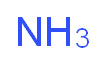
To determine whether ammonia (NH3) is polar or nonpolar, the decisive feature is the single lone pair retained on nitrogen. As set out in the NH3 Lewis Structure Guide, nitrogen forms three σ bonds to hydrogen and keeps one non-bonding pair, giving four electron domains.
The electron-pair geometry is therefore tetrahedral with nitrogen conventionally described as sp3-hybridized, while the molecular shape counting atoms alone is trigonal pyramidal with H–N–H angles of 107.8°, compressed from 109.5° by lone-pair repulsion. Each N–H bond carries a dipole toward nitrogen (ΔEN = 0.84); because the molecule is pyramidal rather than planar, the three dipoles have a nonzero resultant μnet = 1.471 D along the C3 axis.
The industrially significant point is that one structural feature does triple duty. The nitrogen lone pair defines the pyramidal geometry, so the bond dipoles cannot cancel; it is the site that accepts a proton and makes ammonia a base; and it is the hydrogen-bond acceptor that gives ammonia exceptional water solubility. Polarity, basicity and solubility all trace to the same electron pair.
Ammonia is rarely chosen as a solvent; it is chosen as a nitrogen source, a refrigerant and occasionally a non-aqueous ionising medium. Its polarity matters mainly through solubility, corrosivity and material-compatibility behaviour.
Polarity and basicity together give ammonia extraordinary water solubility, on the order of tens of percent by weight, with partial conversion to ammonium hydroxide. That drives its agricultural value as a nitrogen source, its use in nitric acid production and selective catalytic reduction of NOx, and equally its hazard as a corrosive alkali that attacks moist tissue.
Liquid ammonia serves as a non-aqueous ionising solvent. Its moderate permittivity, high basicity and ability to stabilise solvated electrons make it the classical medium for dissolving alkali metals and for dissolving-metal reductions. This is a direct expression of the 1.471 D dipole combined with a chemically available lone pair.
In refrigeration (R717), polarity becomes an engineering liability. Ammonia's high water affinity and its incompatibility with copper and brass dictate material selection and leak-management practice, but its excellent thermodynamic efficiency and zero ozone-depletion and negligible global-warming potential keep it in wide industrial use.
For fertiliser and chemical manufacture, the practical specification axis is not polarity but composition and contaminants: water, oil carry-over, non-condensable gases and, for refrigeration service, residual moisture. Water content is especially consequential because it shifts corrosion behaviour and the freezing characteristics of the liquid phase.
For procurement, the certificate of analysis should state the grade, assay basis (NH3 versus ammonium), water content, oil and non-condensable gases, and the delivery configuration — rather than a generic “high purity ammonia” designation. Materials-of-construction constraints should be stated in the enquiry.
The comparison below places ammonia against hydrides and pyramidal molecules with which it is routinely compared. It highlights how strongly the polarity verdict depends on whether bond dipoles and the lone-pair contribution reinforce or oppose one another.
| Compound | Dipole Moment | Approx. Gas εr | log P / XlogP | Water Solubility Behavior | Industrial Sourcing |
|---|---|---|---|---|---|
| NH3 | 1.471 D | ≈1.006 | XlogP ≈−0.7 | Very high (≈34% w/w); alkaline | Very high; fertiliser and refrigerant grades |
| NF3 | 0.235 D | ≈1.0013 | Not meaningfully comparable | Very low | Specialty gas; electronics grades |
| H2O | 1.85 D | ≈1.006 (vapour, 100 °C) | XlogP ≈−0.5 | Solvent itself | Utility and pharmacopoeial grades |
| CH4 | 0 D | ≈1.0008 | XlogP ≈0.6 | Very low | Very high; pipeline, CNG and LNG |
| BF3 | 0 D | ≈1.0011 | Not meaningfully comparable | Reacts with water | Specialty gas; catalyst and doping use |
NH3 and NF3 are the clearest pair in the table. Both are pyramidal with the same lone pair, but fluorine's high electronegativity pulls the bond dipoles opposite to the lone-pair contribution, so the moments nearly cancel and NF3 is left with only 0.235 D. Geometry alone therefore cannot predict polarity direction or magnitude — the substituent electronegativity matters just as much.
“Everything interesting about ammonia comes out of one lone pair. It makes the molecule pyramidal, so the dipoles do not cancel. Then it takes a proton, which is what makes ammonia a base. Then it hydrogen-bonds to water, which is why a gas dissolves at tens of percent by weight. Polarity and basicity are not two separate properties here — they are one structural fact seen from two angles.”
In the European Union, ECHA lists CAS 7664-41-7 / EC 231-635-3 as a REACH-registered substance with harmonised classification covering its corrosive and toxic properties. Anhydrous ammonia is also subject to major-accident and process-safety regimes where stored above threshold quantities, so inventory and risk documentation are part of normal supply management.
In the United States, OSHA lists a PEL of 50 ppm (35 mg/m³) as an 8-hour TWA; NIOSH lists a REL of 25 ppm TWA with a 35 ppm short-term limit and an IDLH of 300 ppm. Because ammonia is corrosive to moist tissue and detectable by odour well below the danger threshold, both detection and PPE selection must be planned for refrigeration, fertiliser handling and any enclosed transfer area.
Ammonia is also environmentally regulated through its nutrient load rather than its toxicity: ammonia is highly toxic to aquatic life, so discharges are controlled through consent limits, nitrification/denitrification treatment and, in agriculture, through manure and fertiliser management rules.
From a sustainability standpoint ammonia is gaining attention as a carbon-free energy carrier and hydrogen vector, with green-ammonia projects targeting fertiliser decarbonisation and fuel use. The environmental case rests on the hydrogen source and on rigorous NOx and slip control when ammonia is combusted or used in SCR systems.
Buyers should specify grade (anhydrous, aqueous or refrigeration), assay basis, water content, oil carry-over, non-condensable gases and ionic contamination, together with delivery configuration, pressure, and explicit materials-of-construction requirements excluding copper, brass and galvanised surfaces.
Because ammonia is a toxic, corrosive liquefied gas, the commercial discussion should also address ventilation and detection provisions, emergency water-deluge and eyewash capability, and the major-accident or process-safety documentation triggered by on-site inventory. For refrigeration service, water and oil limits usually govern acceptance rather than nominal purity.
Looking for commercial bulk supplies or technical documentation for Ammonia (CAS 7664-41-7)?
Ammonia is polar. The molecule is trigonal pyramidal with H–N–H angles of 107.8°, so the three N–H bond dipoles sum to 1.471 D rather than cancelling.
Both are pyramidal, but in NF3 the highly electronegative fluorines pull the bond dipoles opposite to the lone-pair contribution, so the two nearly cancel and only 0.235 D remains.
About 1.006 as a gas near atmospheric pressure and about 16.9 for the saturated liquid at 25 °C, rising as the temperature falls toward the boiling point.
Yes, though more weakly than water. Each molecule offers three donor sites and one acceptor site, whereas water is balanced at two each, which is why water builds a far more extensive cooperative network.
Because its polarity and lone pair let it hydrogen-bond with water and accept a proton to form ammonium. Solubility and basicity have the same structural origin.
OSHA lists 50 ppm as an 8-hour TWA; NIOSH lists 25 ppm TWA with a 35 ppm short-term limit and an IDLH of 300 ppm. Local requirements may be stricter.
Ammonia corrodes copper, brass and galvanised surfaces, particularly in the presence of trace moisture. Steel and stainless wetted parts are therefore specified for anhydrous service.
|
 |
 |
 EN
EN
 Agricultural News
 Food News
 Industrial News
 Cosmetic News
 Pharmaceutical News
 Science News