-
We detected your language preference as English. Would you like to switch to the English version for a better experience?
Switch to English
Stay here


As an important inorganic color pigment, iron-based pigments dominate the inorganic color pigment market in annual production. With the increasing global awareness of environmental protection, the non-toxic, odorless, and pollution-free characteristics of inorganic iron pigments have gradually replaced organic pigments and toxic inorganic pigments like lead and chromium series, becoming the preferred choice. Black iron oxide pigments are mainly used in the construction industry as fillers for phenolic anti-rust paints and primers for heavy anti-corrosion coatings. In rubber and plastic coloring, they not only reinforce aging resistance but also protect organic materials from UV degradation. Additionally, it is widely used in coloring artificial marble, ceramics, and cement flooring.
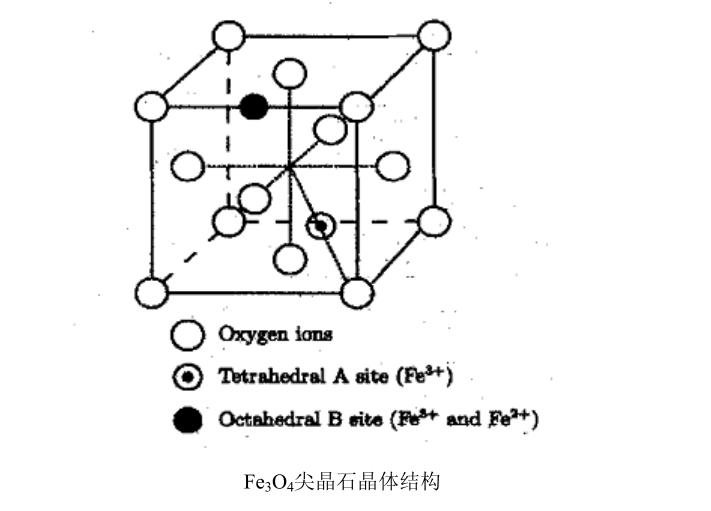
Black iron oxide formula is Fe3O4 and the black iron oxide CAS number is 1309-38-2. It is a black powder, an additive of Fe2O3 and FeO, insoluble in water, and possesses high magnetic properties, coloring strength, and hiding power. As an industrial raw material, black iron oxide is also extensively used in watercolors and inks, with magnetic toner for copiers being acicular iron oxide black. Furthermore, due to its non-toxic and non-polluting characteristics, France and Japan use it in high-end cosmetics. In today's electrified and informationized society, magnetic materials have extensive applications. Fe3O4, as a multifunctional magnetic material, has broad prospects in fields such as tumor treatment, microwave absorbing materials, catalyst carriers, cell separation, magnetic recording materials, magnetic fluids, and pharmaceuticals. The structure of black iron oxide is shown below:

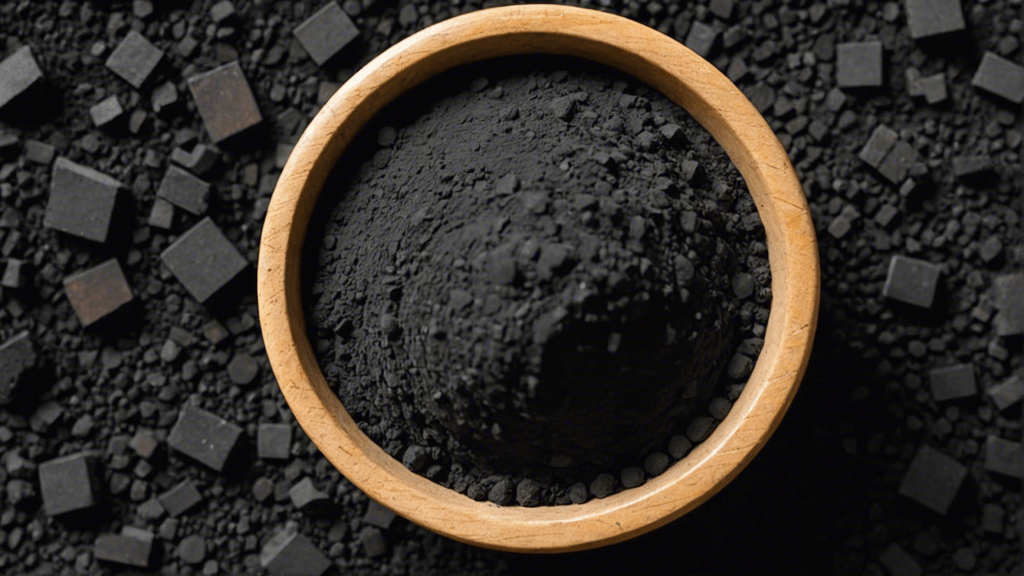
Black iron oxide, also known as magnetite (Fe3O4), is a natural mineral formed from iron and oxygen. It is the most magnetic of all iron oxides and has various industrial uses. Here are some of its main characteristics:
Chemical Formula: Fe3O4
Black mineral, black streak
Powder soluble in hydrochloric acid
Decomposes into iron oxide at 1538℃
Color: Black or dark brown
Luster: Metallic to dull
Crystal System: Isometric
Melting Point: 1538℃ (lit.)
Density: 4.8-5.1 g/mL at 25℃ (lit.)
Specific Gravity: 1.19
Magnetism: Strong magnetic
(1) Ceramics: Black iron oxide is used as a source of iron, especially important in glazing where price and true black color are critical. It provides color to glazes when fired at high temperatures and is available in grades with high purity and low heavy metal content.
(2) Coloring Agent: Black iron oxide powder is also used as a coloring agent in various non-ceramic products.
(3) Cosmetics: Some black iron oxide pigments are widely used in the cosmetics industry. They are considered non-toxic, moisture-resistant, and non-bleeding. Cosmetic-grade black iron oxide is synthetically produced to avoid impurities typically found in natural black iron oxide.
(4) Anti-corrosion: Black iron oxide is used for anti-corrosion purposes, including in anti-corrosion coatings for many bridges and iron towers.
(5) MRI Contrast Agent: In magnetic resonance imaging (MRI), black iron oxide is used as a contrast agent to shorten proton relaxation times (T1, T2, and T2). Superparamagnetic contrast agents consist of water-insoluble crystalline magnetic cores, typically magnetite (Fe3O4), with average core diameters ranging from 4 to 10 nanometers. These crystalline cores are usually coated with a layer of dextran or starch derivatives, and the total particle size is expressed as an average hydrated particle diameter.
Currently, the preparation methods for black iron oxide include co-precipitation, direct synthesis, oxidation of ferrous hydroxide, ammonia oxidation, aniline method, iron yellow reduction method, and hydrothermal method. Co-precipitation preparation involves adding a precipitant to a solution containing Fe3+ and Fe2+ ions to uniformly precipitate the iron ions, dehydrating the precipitate to obtain the target product, a common material preparation method.
First, mix ferrous sulfate solution with liquid alkali (NaOH) to generate Fe(OH)2, then add a suitable amount of iron yellow residue (Fe2O3) proportionally, and conduct an addition reaction at 95~100℃ for about 6~8 hours to produce black iron oxide.
Large-scale factories in China use the addition method, sequentially adding iron yellow residue during the reaction. The process does not require air oxidation, has a long reaction time, high energy consumption, and results in shallow coloring strength.
After purifying the ferrous sulfate solution, neutralize it with liquid alkali to generate Fe(OH)2, then heat to 85~95℃ while introducing air for oxidation (also serving as stirring), to prepare black iron oxide slurry. The product is obtained after filtering, washing, drying, fine grinding, and blending. This direct oxidation method innovates over the traditional addition method, producing products with better coloring performance. However, due to the high usage and cost of liquid alkali, production costs are relatively high.
Add ammonia to the purified ferrous sulfate solution, controlling the pH of the solution around 9~10 to obtain a gel-like liquid containing Fe(OH)2 and (NH4)2SO4. Then heat to 70~80℃ while introducing air for oxidation (also serving as stirring) to produce black iron oxide slurry. The product is obtained after filtering, washing, drying, fine grinding, and blending; the filtrate can be evaporated to produce ammonium sulfate. Although the quality of black iron oxide produced by this method can meet national first-class product standards, reducing production costs and recycling the by-product (NH4)2SO4 as fertilizer, it may cause environmental pollution due to the inevitable volatilization of free ammonia during production. Hence, with increasing environmental protection requirements, this method will face certain restrictions.
Black iron oxide, as an important inorganic color pigment, plays a significant role in various fields. Its excellent performance and wide application prospects make it an indispensable part of the pigment industry. With continuous technological advancements and increasing demand, black iron oxide will continue to demonstrate its outstanding performance in various fields, bringing more color and beauty to people's lives and work.
[1] Liu Jijun, Li Mingyu, Lu Feng, et al. Study on Influencing Factors of Co-precipitation Preparation of Black Iron Oxide [J]. Modern Chemical Industry, 2018, 38 (02): 139-143. DOI:10.16606/j.cnki.issn0253-4320.2018.02.033.
[2] Zhu Jing'an. Optimization of Black Iron Oxide Production Process [J]. Guangdong Chemical Industry, 2012, 39 (13): 55-57.
[3] https://pubchem.ncbi.nlm.nih.gov/compound/Iron-Oxide-Black
[4] https://iron-powder.com/black-iron-oxide/
 |
 |
 |
 |
|
|
 EN
EN
 Agricultural News
 Food News
 Industrial News
 Cosmetic News
 Pharmaceutical News
 Science News

 4YRS
4YRS

