-
We detected your language preference as English. Would you like to switch to the English version for a better experience?
Switch to English
Stay here


In the field of cosmetics, dodecyl gallate plays a crucial role as a common antioxidant, widely used in skincare, makeup, and personal care products to provide excellent stability and texture.
Dodecyl gallate, also known as lauryl gallate, is a compound found in some foods and cosmetics. It is an ester of dodecanol and gallic acid. It occurs naturally in plants like Alchornea glandulosa but can also be synthetically produced commercially. Commonly used as an antioxidant, it helps prevent spoilage and extends the shelf life of products. Recognized as safe by the U.S. Food and Drug Administration (FDA) as a food additive, it is approved for use in food by the European Union. Its E number is E312. It can be found in foods like plant oils, fats, cheese, and mashed potatoes.
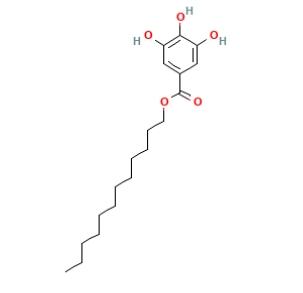
Phenolic antioxidants' molecular structures are shown in the diagram. Like other phenols, the antioxidant activity of dodecyl gallate, tertiary butylhydroquinone (TBHQ), BHA, and BHT primarily depends on their ability to scavenge free radicals. Compared to tocopherols, ascorbic acid, and other antioxidants, these phenolic derivatives' antioxidant properties do not diminish during cooking. According to FDA regulations, these antioxidants can be added individually or in combination to foods, with the addition amount reaching up to 0.02% by weight of fats or oils in the food.

Dodecyl gallate exhibits effective chain-breaking and preventive antioxidant activity. The o-galloyl moiety is responsible for both activities. Dodecyl gallate prevents xanthine oxidase from generating superoxide radicals, an activity stemming from its ability to inhibit xanthine oxidase. According to the Lineweaver-Burk plot, dodecyl gallate is a non-competitive superoxide anion generation inhibitor. Dodecyl gallate also inhibits uric acid formation. Lineweaver-Burk plot analysis of inhibition kinetics revealed that dodecyl gallate is a competitive inhibitor of this oxidation. Mitochondrial lipid peroxidation induced by iron(III)?-adenosine 5′-diphosphate/nicotinamide adenine dinucleotide is inhibited by dodecyl gallate, while its parent compound, gallic acid, does not exhibit this inhibitory activity. Dodecyl gallate protects mitochondria function and human erythrocytes from oxidative stress, whereas gallic acid has little effect. The hydrophobic dodecyl moiety is primarily associated with preventive antioxidant activity.
As an antioxidant, dodecyl gallate combats free radicals, unstable molecules that damage skin cells, leading to wrinkles and fine lines. By neutralizing these free radicals, dodecyl gallate helps protect your skin, promoting a smoother, younger-looking appearance. However, research is ongoing.
With antibacterial properties, it helps reduce the bacteria that clog pores and lead to acne. In addition to its effective antioxidant activity, dodecyl gallate exhibits specific antibacterial activity against Gram-positive bacteria. Time-kill curve studies indicate that this amphiphilic gallate ester has bactericidal activity against methicillin-resistant Staphylococcus aureus (MRSA) strains. Dodecyl gallate inhibits whole-cell oxygen consumption and NADH oxidation in membrane preparations. The antibacterial activity of this gallate partially stems from its ability to inhibit the membrane respiratory chain. Regarding alkyl gallates, their antibacterial spectrum and potency partly depend on the molecule's hydrophobic portion.
Moreover, dodecyl gallate can regulate sebum production, an oily substance that can cause acne when overproduced.
Dodecyl gallate helps extend the shelf life of oil-based moisturizers and serums, preventing them from spoiling. This ensures the efficacy of the products and prevents potential skin irritation. Additionally, some studies suggest that dodecyl gallate may provide mild antibacterial properties, which could help prevent bacterial growth in these products.
Dodecyl gallate can be found in some cosmetics, especially oil-based products like lipsticks and creams. It acts as an antioxidant, preventing cosmetics from breaking down or discoloring due to oxidation. Over time, this helps maintain the consistency, color, and overall quality of the products.
While research is ongoing, some studies suggest that dodecyl gallate may have potential benefits for anti-aging creams. Its antioxidant properties may help clear free radicals, which contribute to skin aging. However, more research is needed to confirm these effects and determine the optimal concentration for topical application.
Dodecyl gallate is used in cosmetics as an ingredient for its antioxidant properties. It helps prevent the oxidation of fats in products. While generally safe, there are some considerations:
Dodecyl gallate can cause allergic contact dermatitis in some people. This is a rash that may occur after contact with the substance. Symptoms of allergic contact dermatitis include redness, itching, swelling, and blistering. If you experience any of these symptoms after using cosmetics containing dodecyl gallate, discontinue use and consult a doctor.
Research on the safety of dodecyl gallate is limited, especially when used in cosmetics. More research is needed to determine the long-term effects of exposure to this ingredient.
Dodecyl gallate is typically used in cosmetics at very low concentrations. If you have sensitive skin, you may be more prone to react to dodecyl gallate. If you're concerned about dodecyl gallate or any other cosmetic ingredient, you can perform a patch test on a small area of your skin before full-body use. To do a patch test, apply a small amount of the product to the inside of your forearm and wait for 24 hours. If you experience any redness, itching, or burning, discontinue use of the product.
Dodecyl Gallate is a permitted food additive, acting as an antioxidant and preservative, especially in oil-based foods. Here's how it functions:
Preventing Spoilage: Dodecyl Gallate slows down the oxidation of fats and oils in food, extending their shelf life and preventing them from spoiling. This helps avoid the off-flavors and potential health risks associated with rancid fats.
Preserving Flavor and Color: Oxidation can alter the flavor and color of food. Dodecyl Gallate helps maintain the desired flavor profile and visual appeal of foods containing fats and oils.
Cheese: Dodecyl Gallate in cheese helps prevent discoloration and flavor changes in high-fat cheeses.
Mashed Potatoes: Dodecyl Gallate can be used to prevent mashed potatoes from browning over time.
Margarine: In some countries, Dodecyl Gallate is approved for use in margarine to maintain its quality and prevent oxidation.
The antioxidant properties of Dodecyl Gallate extend its applications beyond cosmetics and food:
Pharmaceuticals: It can be used as an antioxidant stabilizer in certain medications.
Industrial Applications: Dodecyl Gallate serves as an antioxidant in various industrial products, such as plastics and rubber, preventing oxidative degradation.
Dodecyl Gallate is one of the widely used antioxidants in cosmetics and food. Compared to other antioxidants, Dodecyl Gallate offers unique advantages. One key advantage is its effectiveness. Dodecyl Gallate performs exceptionally well in preventing spoilage and preserving freshness. Additionally, it may provide a milder effect compared to some harsh preservatives, potentially reducing irritation to the skin. However, some studies suggest potential allergic reactions, emphasizing the need for further research into its pros and cons.
Dodecyl Gallate, along with propyl gallate and octyl gallate, has been used since 1947 as antioxidants to prevent unsaturated fatty acids from causing discoloration and off-flavors in products. According to Hausen and Beyer, dodecyl gallate has the highest sensitizing potential, and propyl gallate is the most commonly used gallate in the cosmetics industry. Propyl gallate is a common food additive with antioxidant properties. This means it helps prevent fats and oils from spoiling. While generally considered safe, some studies suggest it may have complex effects on the body. Propyl gallate is absorbed in the intestines and interacts with our systems in various ways, but more research is needed to fully understand its long-term effects.
The widespread use of Dodecyl Gallate in cosmetics showcases its importance and versatility in beauty products. As a stabilizing, fine-textured ingredient, it provides reliable support for the quality and effectiveness of cosmetics. However, ongoing attention and research are needed to understand its potential environmental and health impacts, and to seek more eco-friendly and safe alternatives. Through continuous innovation and regulation, we can ensure that the cosmetics industry meets consumer needs while also safeguarding the environment and health.
[1] https://pubmed.ncbi.nlm.nih.gov/12033824/
[2] https://www.sciencedirect.com/topics/medicine-and-dentistry/dodecyl-gallate
[3] https://en.wikipedia.org/wiki/Dodecyl_gallate
[4] https://pubchem.ncbi.nlm.nih.gov/compound/Dodecyl-gallate
|
 |
 EN
EN
 Agricultural News
 Food News
 Industrial News
 Cosmetic News
 Pharmaceutical News
 Science News

 3YRS
3YRS


