-
We detected your language preference as English. Would you like to switch to the English version for a better experience?
Switch to English
Stay here


Dodecyl gallate, as an important chemical compound, has attracted widespread attention and research. Its applications in various industries and daily necessities are becoming more and more widespread, and its unique properties and functions have brought convenience and innovation to many fields. The purpose of this article is to explore the definition, properties and applications of lauryl gallate in different fields in order to gain a deeper understanding of the importance and impact of this compound.
Dodecyl Gallate, as a significant chemical compound, has garnered widespread attention and research interest. Its increasing application across various industries and everyday products underscores its unique properties and functionality, bringing convenience and innovation to numerous fields. This article aims to delve into the definition, characteristics, and diverse applications of Dodecyl Gallate, offering deeper insights into the importance and impact of this compound.
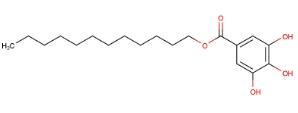
Dodecyl Gallate is found in various products, including:
Primarily used as an antioxidant in processed foods, especially oils, fats, margarine, and soups. It prevents spoilage by safeguarding food from oxidation.
Some cosmetics contain Dodecyl Gallate, such as lipsticks, creams, lotions, and soaps.
Dodecyl Gallate is sometimes employed in ointments, emulsions, and waxes, serving as an antioxidant to preserve drugs.
Dodecyl Gallate serves as an antioxidant in food, particularly in oils, fats, cheese, and mashed potatoes. It is permitted for use in margarine in the United States. It exhibits similar antioxidant effects to propyl gallate but with higher concentrations. The lengthened alkyl chain enhances its fat solubility. Dodecyl Gallate prevents oxidative deterioration, which can lead to rancidity, discoloration, loss of flavor, and nutrients. By extending the shelf life of food, Dodecyl Gallate reduces the need for artificial preservatives, maintaining the quality and taste of food over an extended period.
The antioxidant properties of Dodecyl Gallate hold significant value in various industrial applications. It aids in preventing oxidative degradation:
Cosmetics: Prevents ingredient oxidation, thereby enhancing product stability and shelf life.
Plastics and Polymers: Delays the degradation of these materials, improving their durability and performance.
Rubber Products: Slows down rubber degradation, extending their lifespan and functionality.
While not as widespread as in food, Dodecyl Gallate can play a role in pharmaceutical formulations. It can:
Enhance Stability: By preventing oxidation of active ingredients, it extends the shelf life of certain drugs.
Improve Solubility: In some cases, Dodecyl Gallate can aid in better dissolution of specific drugs, enhancing their absorption in the body.
Dodecyl Gallate salts (propyl gallate, octyl gallate, and dodecyl gallate) serve as antioxidants and preservatives in compounds added to food or cosmetics to prevent spoilage caused by the oxidation of fats and oils. The exact prevalence of dodecyl gallate allergies in the United States is unclear because screening for dodecyl gallate sensitivity is not routinely performed. These chemicals are not included in NACDG screening trays or TRUE tests.
Allergic contact dermatitis to dodecyl gallate is a type of allergic reaction characterized by itching, redness, and inflammation of the skin caused by direct contact with a substance. Dodecyl gallate is a common ingredient in cosmetics, food, and some drugs, and individuals allergic to it may experience a reaction after coming into contact with these products. The reaction can occur within 48 hours of contact. Allergic contact dermatitis associated with the use of cosmetics may be due to allergens not routinely assessed through standard patch testing protocols. Propyl, octyl, and dodecyl gallates are common antioxidants and preservatives, and literature reports allergic contact dermatitis related to them. A systematic review of the literature by Zachary et al. explored reported cases of allergic reactions to gallate salts as of April 2016. The study retrieved products containing gallate salts from food and cosmetics databases. Seventy-four cases of contact dodecyl gallate allergy to gallate salts were reported. Additionally, various commercially available cosmetics and foods contain gallate salt chemicals. Propyl gallate is the most common allergen among gallate salts, often causing facial and/or hand dermatitis. If you experience any of these symptoms after using a product containing dodecyl gallate, it is important to see a doctor for diagnosis and treatment.
Dodecyl gallate is used as an antioxidant in margarine and many edible oils. This allergen is typically destroyed when heated, making it safe for consumption by individuals allergic to it. Thus, contact primarily associated with dodecyl gallate is salad and sandwich dressings. Heating these foods in an oven before consumption may make them safer.
While Dodecyl Gallate has potential benefits, it's essential to use it responsibly. Since there's no recommended daily dosage for regular use, it's best to avoid direct incorporation into your daily life. However, by familiarizing yourself with products that commonly contain Dodecyl Gallate, you can make informed choices. Look for reputable brands and be mindful of potential allergies. If uncertain about a particular product, healthcare professionals can advise on maximizing its benefits while minimizing any risks.
In this article, we've delved into the definition, characteristics, and applications of Dodecyl Gallate, highlighting its significance in both industrial and everyday life. However, it's crucial to recognize the potential environmental and health impacts during its usage and seek more sustainable and eco-friendly alternatives. Through ongoing research and innovation, we can better understand and harness the potential of this compound, contributing to the development and progress of human society.
[1] Xu, M., Chen, J., Wang, Y., et al. Determination method of Dodecyl Gallate content. Biomass Chemical Engineering, 2011, 45(1): 25-28. DOI:10.3969/j.issn.1673-5854.2011.01.005.
[2] https://www.atamanchemicals.com/dodecyl-gallate_u26213/
[3] https://www.liebertpub.com/doi/10.1097/DER.0000000000000263
[4] https://www.sciencedirect.com/topics/medicine-and-dentistry/dodecyl-gallate
[5] https://www.chemotechnique.se/get_pdf.php?l=en&p=641
 |
|
 EN
EN
 Agricultural News
 Food News
 Industrial News
 Cosmetic News
 Pharmaceutical News
 Science News


 1YR
1YR