-
We detected your language preference as English. Would you like to switch to the English version for a better experience?
Switch to English
Stay here


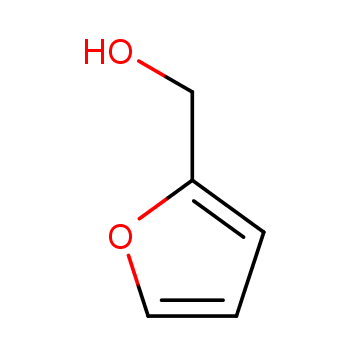
Furfuryl alcohol (FAL) is a significant organic compound widely utilized across various industrial sectors. It is chemically known as 2-furanmethanol and is typically produced through the hydrolysis of pentosans from plant materials to furfural, followed by catalytic hydrogenation. FAL finds extensive applications in resins, coatings, pharmaceuticals, and agricultural chemicals due to its excellent solubility and reactivity, serving as a crucial intermediate for various synthetic materials. This article will delve into the properties, production methods, and industrial applications of furfuryl alcohol, offering readers a comprehensive understanding of the wide-ranging uses of this versatile chemical.
Furfural, also known as FF, is derived from various biomass waste materials such as bagasse, corn stalks, wheat straw, and rice straw, making it one of the most value-added platform molecules originating from biomass.
Furfuryl alcohol (FAL), also known as 2-hydroxymethylfuran or furfural alcohol, is a colorless to pale yellow transparent liquid with lively properties. It is prone to oxidation under conditions of light exposure, heating, and air contact and should be kept away from acidic substances, air, and oxygen. Furfuryl Alcohol boiling point is 170 ℃ (lit). Being the most important derivative of furfural, FAL possesses hydroxymethyl characteristics, allowing for the preparation of various high-value chemical derivatives through polymerization, hydroxymethylation, and alkyl oxidation reactions. It serves as a crucial monomer in the synthesis of furan resins, playing a key role in industrial production, and finds wide applications in thermosetting polymer-based composite materials, cement, including high-quality molds, solvents, synthesis of tetrahydrofuran, vitamin C, lysine, and other fine chemicals.
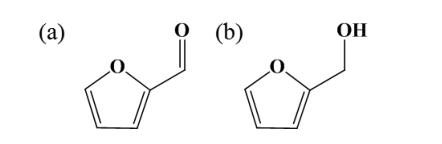
The market value of furfuryl alcohol is 8-12 times that of furfural, with over half of the furfural being used for synthesizing and converting furfuryl alcohol. The demand for furfuryl alcohol is continuously increasing, indicating vast development potential.
A key component in furan resins. Furfuryl alcohol is critical in the production of furan resins, renowned for their excellent chemical properties and heat resistance, making them ideal materials for various applications, including:
Foundry binders: Used in making molds for metal casting.
Composite materials: Employed in aerospace, automotive, and construction industries for high-strength-to-weight ratio.
Corrosion-resistant coatings: Protecting pipelines, storage tanks, and other structures from chemical damage.
Enhancement of wood properties. Furfuryl alcohol can be used for wood modification, improving:
Stability: Reducing expansion and contraction due to moisture changes.
Hardness: Making wood more resistant to wear.
Durability: Increasing resistance to decay and insect damage. Furfuralization enhances wood's resistance to subterranean termite attack.
No-bake casting binders. While its overall usage in casting is lower compared to other materials, furfuryl alcohol plays a crucial role in no-bake casting binders. These binders offer several advantages, including:
Fast curing: Allowing for quick turnaround time during casting.
Low gas emissions: Reducing health and environmental concerns.
Good mechanical strength: Produced molds can withstand high temperatures of molten metal.
Furfuryl alcohol has been utilized as a hypergolic fuel for rocket engines. Hypergolic fuels ignite upon contact with the oxidizer without the need for an ignition system. However, its use in this application is relatively limited due to the availability of more efficient and safer alternatives.
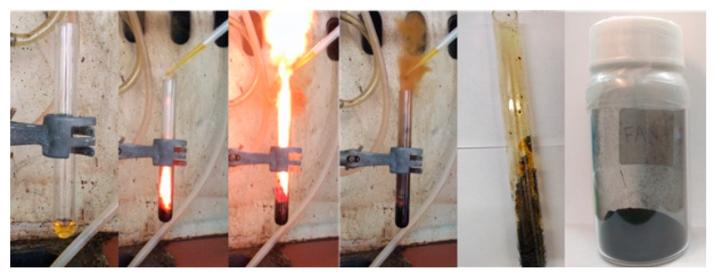
Apart from organic chemistry or polymers, furfuryl alcohol's notable applications also relate to high-oxygen rocket propellants and fuels. In the latter case, renewable alcohols (organic fuels) and fuming nitric acid (strong oxidizer) undergo an energy reaction upon contact (i.e., hypergolic reaction) to release heat and gases, propelling the rocket into space. Furfuryl alcohol is considered a cost-effective, non-petroleum-derived biofuel used in fuel rockets. The reaction of fuming nitric acid and furfuryl alcohol results in vigorous reaction, as depicted in the figure below. Coarse carbon residue forms inside the "rocket" test tube. Collection and washing of residues yield fine carbon powder. Note the brown nitrogen oxide gases released due to nitric acid decomposition by furfuryl alcohol.
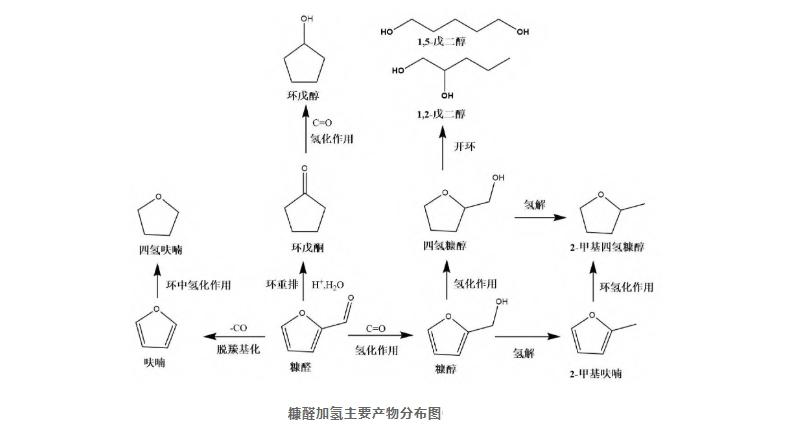
Tetra hydro furfuryl alcohol, due to its high boiling point, good water solubility, and degradability, is widely used in industries as a green solvent. Additionally, tetrahydrofurfuryl alcohol is also employed in pesticide production for agricultural applications and can be used to prepare epoxy coatings and paints for the automotive industry. However, the hydrogenation of furfural to produce tetrahydrofurfuryl alcohol requires stringent conditions: high temperature, large hydrogen usage, and good catalyst stability. Moreover, furfural tends to polymerize under high-temperature conditions, leading to catalyst deactivation. Therefore, studying the direct hydrogenation of furfuryl alcohol to tetrahydrofurfuryl alcohol under mild conditions holds significant practical significance.
(1) Ru(II)-based homogeneous catalyst prepared by Gowda et al., achieved 100% furfuryl alcohol conversion and 99% tetrahydrofurfuryl alcohol selectivity at 130℃ and 5 MPa hydrogen pressure for 4 hours.
(2) Hronec et al., prepared Ni-based catalyst supported on Al2O3, attained 88.5% tetrahydrofurfuryl alcohol selectivity at 130℃ and 4 MPa hydrogen pressure.
(3) Ru/MnOx catalyst developed by Zhang et al., achieved 90% furfuryl alcohol conversion and 82.5% tetrahydrofurfuryl alcohol yield at 120℃ and 3 MPa hydrogen pressure for 4 hours.
(4) Merat et al., reported the use of Pd/C catalyst for catalytic hydrogenation of furfuryl alcohol under low-pressure conditions. Under low-pressure conditions, the selectivity of tetrahydrofurfuryl alcohol was higher, but the catalyst activity was lower. However, when the same catalyst was used for the reaction under high-pressure conditions, the selectivity of tetrahydrofurfuryl alcohol decreased, making Pd/C catalyst unsuitable for the hydrogenation of furfuryl alcohol to produce tetrahydrofurfuryl alcohol.
(5) Liu Chenguang et al., disclosed a catalyst for preparing tetrahydrofurfuryl alcohol, which is prepared by subjecting a metal salt solution to a series of process treatments with γ-alumina. The composition of the catalyst is approximately 10%-70% by mass fraction of nickel oxide, 20%-80% by mass fraction of alumina, 0.5%-5% by mass fraction of alkali metal and alkaline earth metal oxides, and 0.5%-5% by mass fraction of transition metal oxides. The preparation method includes dissolving the above compounds in distilled water to form a metal salt solution, then immersing the metal salt solution into γ-alumina, and finally performing hydrogen reduction in a tubular furnace through steps such as drying, calcination, and cooling, to obtain the desired catalyst. The process conditions for the catalyst to prepare tetrahydrofurfuryl alcohol include a catalyst dosage of 0.5%-5% of the solution mass, reaction temperature ranging from 100°C to 200°C, reaction pressure between 2 to 8 MPa, and reaction time of 2 to 6 hours.
(1) Inhalation: Coughing, sore throat, dizziness, headache, nausea.
(2) Skin Contact: May be absorbed. Dry skin, reddening.
(3) Eye Contact: Redness, pain.
(4) Ingestion: Burning sensation, headache, nausea.
Immediately flush eyes with plenty of water under the eyelids for at least 15 minutes. If contact lenses are present, remove them first. Seek medical attention promptly if irritation persists.
Immediately flush skin with plenty of water for at least 15 minutes. Seek medical attention promptly.
Move to fresh air. If breathing stops, perform artificial respiration. If the victim has ingested or inhaled the substance, do not use mouth-to-mouth method; use pocket masks or other suitable respiratory medical devices equipped with one-way valves for artificial respiration. Seek medical attention promptly.
Do not induce vomiting. Call a doctor or poison control center immediately. Most important symptoms and effects: There are no reasonably foreseeable hazards. Symptoms of overexposure may include headache, dizziness, fatigue, nausea, and vomiting.
(1) Inhalation: Use ventilation, local exhaust, or respiratory protection devices.
(2) Skin Contact: Wear protective gloves and clothing.
(3) Eye Contact: Wear a face shield or goggles, combined with respiratory protection.
(4) Ingestion: Do not eat, drink, or smoke during work.
Wear personal protective equipment/face protection. Do not get in eyes, on skin, or on clothing. Use only in a chemical fume hood. Do not breathe mist/vapors/spray. If swallowed, seek medical assistance immediately. Keep away from open flames, hot surfaces, and ignition sources.
Keep container tightly sealed and store in a dry, cool, and well-ventilated area. Keep away from heat, sparks, and flames. Store in nitrogen. Incompatible substances: strong oxidizers.
Furfuryl alcohol is a significant organic compound with extensive industrial applications. It plays a crucial role in industries such as resins, coatings, and more. Its unique chemical properties and multifunctionality make it an indispensable intermediate in industrial synthesis. Understanding the properties and applications of furfuryl alcohol not only aids in better utilization of this compound but also provides a solid foundation for further research and development.
[1] Guo Hao, Cui Xiaozhou, Li Yingqi, et al. Research on the performance of furfuryl alcohol hydrogenation catalyst under mild conditions[J]. Zhejiang Chemical Industry, 2024, 55(02): 29-34.
[2] Li Junting. Research on the regulation of CeO2 surface acid-base sites and catalytic hydrogen transfer of furfural to furfuryl alcohol[D]. Tianjin University of Technology, 2023. DOI:10.27360/d.cnki.gtlgy.2023.001313.
[3] https://www.inchem.org/documents/icsc/icsc/eics0794.htm
[4] https://www.researchgate.net/figure/Fuming-nitric-acid-and-furfuryl-alcohol-reacted-energetically-upon-contact-to-form-a_fig1_347898571
[5] https://www.mdpi.com/2073-4360/11/6/1069
[6] https://www.mdpi.com/2079-4991/11/1/1
[7] https://www.fishersci.com/store/
[8] Chalmpes N, Bourlinos A B, Talande S, et al. Nanocarbon from rocket fuel waste: The case of furfuryl alcohol-fuming nitric acid hypergolic pair[J]. Nanomaterials, 2020, 11(1): 1.
 |
 |
 |
 |
|
|
 EN
EN
 Agricultural News
 Food News
 Industrial News
 Cosmetic News
 Pharmaceutical News
 Science News

 4YRS
4YRS

