
What is AsF3?
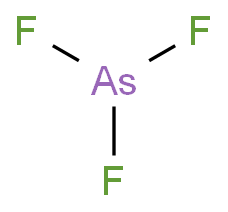
Arsenic trifluoride, with a chemical formula of AsF3, is a compound that exists as a colorless, volatile liquid with a pungent odor. It is highly toxic and corrosive, posing significant health risks upon exposure. Arsenic trifluoride is soluble in non-polar solvents such as benzene and carbon tetrachloride but insoluble in water. This compound is primarily used in the semiconductor industry for doping silicon and germanium, as well as in the synthesis of organoarsenic compounds. Is AsF3 polar or nonpolar?
What is Polarity?
Polarity refers to the distribution of electrons in a molecule or compound. In chemistry, the polarity of a molecule arises from differences in electronegativity between its constituent atoms. Electronegativity is the ability of an atom to attract electrons towards itself in a covalent bond. When atoms with different electronegativities form a bond, the electrons are unequally shared, leading to the development of partial charges within the molecule.
The polarity of a molecule influences its physical and chemical properties, including solubility, melting point, boiling point, and reactivity. Polar molecules tend to interact strongly with other polar molecules, whereas nonpolar molecules exhibit weaker interactions. Is AsF3 polar or nonpolar?
Polarity of AsF3
Is AsF3 polar or nonpolar? Arsenic trifluoride exhibits polar covalent bonds due to the electronegativity difference between arsenic and fluorine. Why is AsF3 polar?
(1) Dipole Moment
Fluorine is highly electronegative, causing the fluorine atoms in arsenic trifluoride to attract electrons more strongly, resulting in a partial negative charge on fluorine and a partial positive charge on arsenic. The molecule has a net dipole moment due to the unequal distribution of electron density, making it polar.
(2) Electronegativity
| Element Electronegativity |
| As |
2.18 |
| F |
3.98 |
The electronegativity difference (3.98 - 2.18 = 1.80) between arsenic and fluorine leads to polar covalent bonds.
Despite the tetrahedral arrangement of fluorine atoms around the arsenic atom, the molecule's asymmetry results in a net dipole moment, making arsenic trifluoride a polar molecule.
Therefore,
arsenic trifluoride (AsF3) is a polar molecule.
Applications of AsF3 Polarity
Arsenic trifluoride is primarily utilized in the semiconductor industry as a dopant for silicon and germanium crystals. It facilitates the controlled introduction of arsenic atoms into the crystal lattice, altering its electrical properties for use in electronic devices. Additionally, arsenic trifluoride is employed in the synthesis of various organoarsenic compounds, which find applications in pharmaceuticals, agriculture, and materials science.
Highlights of Arsenic Trifluoride
| Arsenic Trifluoride Cas 7784-35-2 |
| Chemical Formula |
AsF3 |
| Molecular Shape |
Tetrahedral |
| Relative Molecular Mass |
131.92 g/mol |
| Solubility |
Insoluble in water, soluble in organic solvents |
| Melting Point |
-55.3 °C |
| Boiling Point |
63.5 °C |



 EN
EN
 Agricultural News
 Food News
 Industrial News
 Cosmetic News
 Pharmaceutical News
 Science News


