-
We detected your language preference as English. Would you like to switch to the English version for a better experience?
Switch to English
Stay here


Calcium oxide (CaO), commonly known as quicklime, is an inorganic compound that plays a vital role in various industrial processes. It is a white, caustic, alkaline, and crystalline solid at room temperature. Calcium oxide is primarily produced by heating limestone (calcium carbonate, CaCO₃) in a kiln, a process called calcination. This compound is known for its ability to react with water to form calcium hydroxide (Ca(OH)₂), a key ingredient in cement and other building materials. As an ionic compound, CaO exhibits distinct properties compared to covalent molecules. Unlike covalent substances, the polarity of CaO is better understood in terms of its ionic nature.
Polarity refers to the distribution of electrical charge over the atoms in a molecule. In simple terms, a polar molecule has a region with a partial positive charge and another region with a partial negative charge, creating an electric dipole. Polarity arises when there is an unequal sharing of electrons between atoms in a bond, often due to differences in their electronegativities. The greater the difference in electronegativity between two atoms, the more polarized the bond becomes, leading to a dipole.
Is cao polar or nonpolar? For ionic compounds, like calcium oxide, polarity is not typically described in the same way as it is for covalent molecules. Instead of considering a net dipole moment as in polar covalent compounds, ionic compounds exhibit an electrostatic attraction between positively charged cations and negatively charged anions.
While polar molecules typically have regions of partial positive and negative charges, ionic compounds like CaO consist of ions, which are full charges rather than partial ones. In this case, calcium (Ca²⁺) is positively charged, and oxide (O²⁻) is negatively charged. The large difference in electronegativity between calcium and oxygen in CaO leads to a transfer of electrons, forming these charged ions.
Is cao polar or nonpolar? To understand the "polarity" of calcium oxide, we can examine it from three key perspectives: molecular structure, electronegativity, and ionicity.
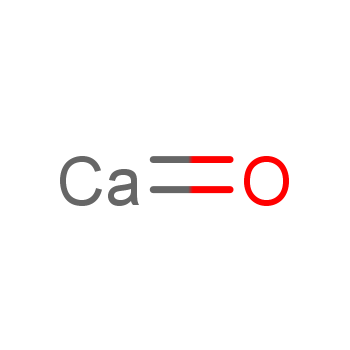
Molecular Structure: Calcium oxide is an ionic compound, meaning it is composed of oppositely charged ions (Ca²⁺ and O²⁻) that are held together by strong electrostatic forces. Unlike covalent compounds, which have a distinct molecular geometry, CaO does not have a discrete molecule with a dipole moment. The concept of molecular polarity does not directly apply in the same way for ionic compounds.

Electronegativity: The electronegativity of calcium (1.00 on the Pauling scale) is much lower than that of oxygen (3.44 on the Pauling scale). This large difference in electronegativity leads to the transfer of electrons from calcium to oxygen, resulting in the formation of calcium cations (Ca²⁺) and oxide anions (O²⁻). This transfer of electrons makes CaO an ionic compound rather than a covalent one, and it is the electrostatic attraction between these oppositely charged ions that holds the compound together.
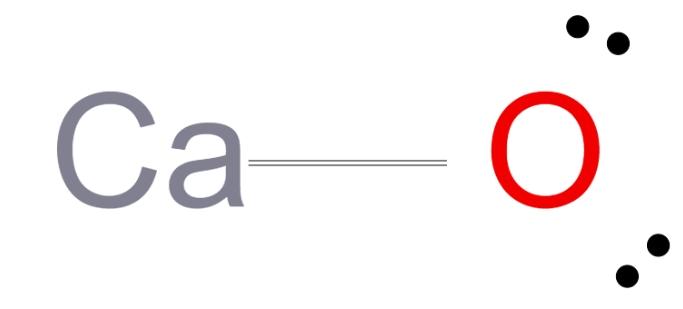
Ionic Bonding: The formation of CaO through ionic bonding means that it does not possess the dipole moment typically associated with covalent molecules. Instead, the electrostatic attraction between ions dominates, making the concept of polarity in the same sense as for covalent molecules not entirely applicable.
| Calcium Oxide (CaO) | |
| Molecular formula | CaO |
| Molecular shape | Ionic |
| Relative molecular mass | 56.08 g/mol |
| Melting point | 2570 °C |
| Boiling point | Sublimation point: 2,850 °C |
| Compound | Polarity | Applications |
| Calcium Carbonate (CaCO₃) | Ionic, insoluble in water | Used in construction, manufacturing, and as a dietary supplement. |
| Magnesium Oxide (MgO) | Ionic, similar to CaO | Used in refractory materials, insulation, and medicine. |
After exploring the polarity chemistry of CaO, have you gained a deeper understanding of whether it is "polar or nonpolar"? CaO is predominantly an ionic compound, which means it does not fall under the usual categorization of polar or nonpolar molecules. Its structure is defined by ionic interactions rather than covalent bonding, and as a result, it does not possess a net dipole moment. If you're interested in similar compounds or related supply chain resources, Guidechem offers a comprehensive list of global Calcium oxide suppliers, where you can find the right procurement plan to meet your research and production needs.
 |
|
 |
 |
 |
|
 EN
EN
 Agricultural News
 Food News
 Industrial News
 Cosmetic News
 Pharmaceutical News
 Science News

 1YR
1YR


