
What is Carbon disulfide (CS2)?
Carbon disulfide (CS2) is a covalent compound primarily composed of carbon and sulfur. This colorless liquid has a high reactivity due to its polar nature, making it an essential component in various chemical industries and applications. The compound features a linear molecular structure, with each atom bonded to the other through a double bond. CS2's polarity arises from the difference in electronegativity between carbon and sulfur, which results in a partial positive charge on the carbon atom and a partial negative charge on the sulfur atom. This unique property influences the compound's physical and chemical behavior.
What is polarity?
Polarity describes the uneven distribution of electrons within a molecule or compound, leading to the formation of positive and negative poles. This phenomenon occurs when there is an unequal sharing of electrons between atoms, usually due to differences in electronegativity. Polar molecules have distinct properties, such as increased solubility in water, higher boiling and melting points, and unique interactions in biological systems.
Polarity of Carbon disulfide (CS2)
Carbon disulfide (CS₂) is a nonpolar molecule. Here's an explanation based on its molecular structure, dipole moments, and electronegativities:
1. Molecular Structure
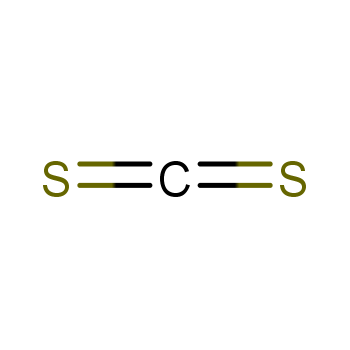
Carbon disulfide has a linear molecular geometry, with the carbon atom in the center and two sulfur (S) atoms on either side, forming a straight line (S=C=S). This linear shape is due to the sp hybridization of the carbon atom.

2. Dipole Moments
While the C-S bonds are polar due to the difference in electronegativity between carbon and sulfur, the molecule is symmetrical. The two C-S bond dipoles are equal in magnitude but oriented in opposite directions, so they cancel each other out. This results in no net dipole moment for the molecule as a whole.
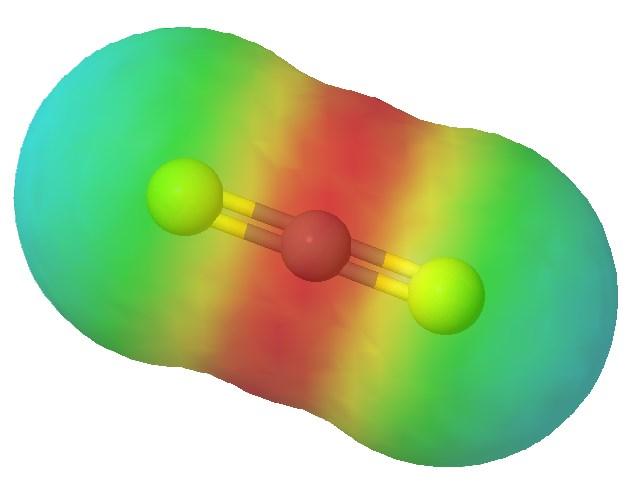
3. Electronegativities
- Sulfur has an electronegativity of 2.58, and carbon has an electronegativity of 2.55, making the C-S bond slightly polar.
- However, due to the symmetry of the molecule, these small bond polarities are cancelled, leaving the molecule nonpolar overall.

Carbon disulfide (CS₂) is a nonpolar molecule due to its linear geometry, which causes the dipole moments of the C-S bonds to cancel each other out, resulting in no net dipole moment.
Application of Carbon disulfide (CS2) Polarity
The nonpolar nature of carbon disulfide (CS₂) influences its applications in various fields, particularly in chemistry, industry, and environmental studies. Here are some key applications that leverage its nonpolar properties:
1. Solvent in Organic Chemistry
CS₂ is commonly used as a nonpolar solvent in organic chemistry. Its ability to dissolve nonpolar and weakly polar substances makes it ideal for reactions involving nonpolar compounds, extractions, and chromatographic separations.
2. Synthesis of Chemicals
Carbon disulfide serves as a precursor in the synthesis of various chemicals, including:
- Thiocarbamates: These compounds are useful in agriculture as pesticides and herbicides.
- Dithiocarbamates: Used in rubber processing as accelerators and vulcanization agents.
- Carbon Disulfide Derivatives: Used in the production of other sulfur-containing chemicals.
3. Extraction of Metals
CS₂ is utilized in the extraction of certain metals from ores, particularly in the hydrometallurgy process. It can help in the extraction of valuable metals like copper, silver, and gold by forming metal thiol complexes.
4. Manufacture of Viscose Rayon
In the textile industry, carbon disulfide is used in the production of viscose rayon, a type of synthetic fiber. CS₂ helps dissolve cellulose, allowing it to be spun into fibers, thus taking advantage of its nonpolar characteristics to process organic materials.
5. Research in Material Science
CS₂ is used in the study of polymers and composite materials. Its nonpolar nature allows researchers to investigate the interactions of nonpolar polymers and additives, leading to the development of new materials with desired properties.
6. Environmental Studies
CS₂ can be used in environmental monitoring and research. Its nonpolar characteristics allow it to interact with other nonpolar organic pollutants, making it useful in studies related to soil and water contamination.
7. Analytical Chemistry
In analytical chemistry, carbon disulfide is sometimes used as a solvent in techniques like gas chromatography. Its nonpolar properties enable the effective separation and analysis of nonpolar compounds in a mixture.
Summary
The nonpolar nature of carbon disulfide (CS₂) makes it valuable in various applications, including as a solvent in organic chemistry, synthesis of chemicals, metal extraction, and manufacturing of viscose rayon. Its unique properties facilitate the processing and interaction of nonpolar substances, making it an important compound in industrial and research settings.
Carbon disulfide (CS2) Basic Information
| Carbon disulfide (CS2) CAS 75-15-0 |
| Molecular formula |
CS₂ |
| Molecular shape |
Linear |
| Relative molecular mass |
76.13 g/mol |
| Solubility |
Insoluble in water but soluble in organic solvents |
| Melting point |
-111.6 °C |
| Boiling point |
46.24 °C |
Related Compounds
| Compound |
Polarity |
Applications |
| Chloroform (CHCl3) |
Polar due to the electronegative chlorine atom; less polar than CS2 due to a single bond. |
Used in medical anesthesia, as a solvent, and as a refrigerant. |
| Sulfolane (H2S2O) |
Highly polar due to the presence of sulfur and oxygen atoms; more polar than CS2. |
Used as a solvent and as a catalyst in various industrial processes. |


 EN
EN
 Agricultural News
 Food News
 Industrial News
 Cosmetic News
 Pharmaceutical News
 Science News

 1YR
1YR

