-
We detected your language preference as English. Would you like to switch to the English version for a better experience?
Switch to English
Stay here


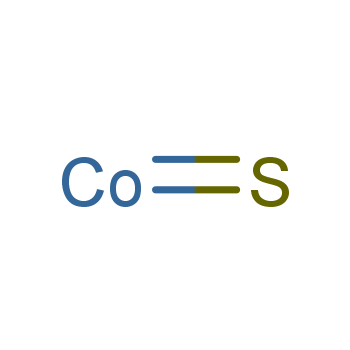
Cobalt Sulfide (CoS) is an inorganic compound consisting of cobalt (Co) and sulfur (S). It exists primarily as a black solid and finds application in various industries due to its unique properties. The structure and formation of Cobalt Sulfide provide insights into its diverse uses and potential reactions.
Before delving into the specifics of Cobalt Sulfide, it's essential to understand polarity. Polar molecules have a non-uniform distribution of electrical charge, resulting from differences in electronegativity between bonded atoms. This property significantly influences molecular interactions and the behavior of compounds.
To assess the polarity of Cobalt Sulfide, we must consider several factors: molecular geometry, dipole moment, and electronegativity differences.
Molecular Geometry: Cobalt Sulfide has a simple structure, with cobalt and sulfur atoms bonded directly to each other. This linear arrangement does not result in a symmetrical charge distribution, contributing to its polarity.
Dipole Moment: The dipole moment of a molecule is a measure of its polarity, determined by the separation of positive and negative charges. In Cobalt Sulfide, the sulfur atom, being more electronegative than cobalt, pulls the shared electrons closer to itself, creating a partial negative charge on sulfur and a partial positive charge on cobalt. This leads to a non-zero dipole moment, confirming Cobalt Sulfide's polarity.
Electronegativity Differences: Electronegativity differences between cobalt and sulfur atoms contribute to the polarity. Sulfur has a higher electronegativity than cobalt, causing an uneven distribution of electrons and, thus, polarity. In conclusion, Cobalt Sulfide is a polar compound due to the inherent differences in electronegativity between cobalt and sulfur atoms and the resulting asymmetrical charge distribution.
Cobalt Sulfide finds application across multiple fields:
1. Catalysis: Cobalt Sulfide acts as a catalyst in the production of ammonia, where it facilitates the Haber process.
2. Semiconductor Industry: It is used in the manufacturing of high-quality semiconductors due to its properties as a p-type semiconductor material.
3. Electronics: Cobalt Sulfide is utilized in the production of batteries, particularly in the cathode materials of lithium-ion batteries.
4. Photovoltaics: It is also employed in solar cells, contributing to their efficiency in converting light into electricity. Understanding the polarity and properties of Cobalt Sulfide provides insight into its versatile applications and potential for future technological advancements.
Several related compounds share similarities with Cobalt Sulfide, differing primarily in their elemental composition and properties:
1. Cobalt Oxide (CoO): While both contain cobalt, Cobalt Oxide lacks sulfur and instead features oxygen, affecting its reactivity and applications.
2. Sulfur Dioxide (SO₂): Sulfur Dioxide is a polar molecule due to its bent molecular shape and the electronegativity difference between sulfur and oxygen. It is used in various industrial processes, including the production of sulfuric acid.
3. Selenium (Se): Similar to Cobalt Sulfide, Selenium compounds often involve selenium and a second element, but they typically differ in their physical properties and uses. These related compounds highlight the versatility of elements within similar chemical classes and their potential for diverse applications in various industries.
 |
|
 |
|
|
 EN
EN
 Agricultural News
 Food News
 Industrial News
 Cosmetic News
 Pharmaceutical News
 Science News

 6YRS
6YRS

