-
We detected your language preference as English. Would you like to switch to the English version for a better experience?
Switch to English
Stay here


Understanding the solubility of potassium acetate in water is crucial in many fields, including chemical experiments, industrial production, and environmental monitoring. In practical applications, questions about the solubility of potassium acetate often arise, such as how to prepare solutions correctly and how to control solubility during reactions. This article aims to address these common questions, delving into the solubility patterns and influencing factors of potassium acetate in water to help readers better understand and apply this knowledge. Through an in-depth study of potassium acetate solubility, we can accurately control experimental conditions, improve production efficiency, and effectively monitor environmental pollutants.

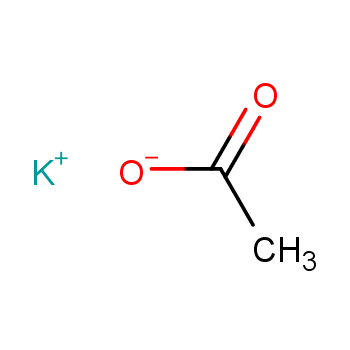
CH3CO2K, known as potassium acetate, is the potassium salt of acetic acid. It is also referred to as diuretic salt, potassium ethanoate, or potassium salt of acetic acid. It is an important macro mineral and potassium salt composed of equimolar amounts of acetate ions and potassium ions. Potassium acetate is formed by one acetate anion CH3COO- and one potassium cation K+, both connected by an ionic bond. However, due to the covalent bonding of the acetate anion's elements, these two oxygens are resonance-stabilized.
Is potassium acetate soluble? Potassium acetate is a white crystalline powder with deliquescent properties, soluble in water, with a pH range of 7.5-9.0. Widely used as a diuretic and systemic alkalizer in electrolyte replenishment. Used as an expectorant and diuretic. Potassium is essential for maintaining cell tension critical for nerve conduction, smooth muscle contraction, normal kidney function, and blood pressure.
Potassium acetate has a slight vinegar odor. It is widely used as a de-icing agent for de-icing and preventing ice formation.
Potassium acetate is soluble in water, soluble in alcohols, liquid ammonia, and insoluble in diethyl ether and acetone. The solubility in water is as follows:
216.7 g/100 mL (0.1 ℃)
233.8 g/100 mL (10 ℃)
268.6 g/100 mL (25 ℃)
320.8 g/100 mL (40 ℃)
390.7 g/100 mL (96 ℃)
Several factors affect the solubility of the solute (the substance being dissolved) in the solvent (the liquid dissolving the substance). Here are these factors affecting potassium acetate and water:
(1) Solvent-Solute Interaction
Potassium acetate is an ionic compound. It breaks down into potassium (K+) and acetate (CH3COO-) ions in water. Water is a polar molecule with positive and negative ends. These opposite charges attract ions, dispersing them in water to form a solution.
(2) Temperature
Generally, increasing temperature increases the kinetic energy of solvent molecules. This makes them move faster and collide more frequently with solute particles, aiding solute dissolution. As observed, the solubility of potassium acetate in water increases with temperature.
(3) Intermolecular Forces
The strength of intermolecular forces between solute particles and solvent molecules affects solubility. In potassium acetate, the ionic forces between K+ and CH3COO- ions are relatively strong. However, the good interaction between ions and water molecules (dipole-ion attraction) overcomes the ionic forces, making potassium acetate easily soluble.
(1) Heat
While not strictly necessary for potassium acetate, applying gentle heat can slightly increase the rate of salt dissolution. However, be cautious not to overheat the solution, as this may lead to unnecessary evaporation or decomposition.
(2) Ultrasonic Treatment
Using an ultrasonic bath for stubborn mixtures is a useful technique. Sound waves can dislodge trapped bubbles and accelerate their dissolution.
Potassium acetate (KCH3COO) dissociates into ions when dissolved in water. This means that the ionic compound separates into its individual charged particles. For potassium acetate:
The dissociation of potassium acetate relates closely to its high solubility in water. Here's why:
Potassium acetate itself is a soluble salt and does not precipitate under normal conditions. In certain cases, it actually acts to precipitate other substances.
Here are some common applications involving the precipitation of potassium acetate:
Through the discussion in this article, we have gained insight into the solubility patterns and influencing factors of potassium acetate in water. In summary, the solubility of potassium acetate in water is influenced by temperature, pressure, solvent properties, and more, with solubility increasing with temperature but reaching equilibrium in a saturated state. Understanding these points is crucial for correctly preparing solutions, controlling reaction processes, and environmental monitoring. In chemical experiments, accurately controlling the solubility of potassium acetate ensures the accuracy and repeatability of experimental results; in industrial production, rational control of potassium acetate solubility can improve production efficiency and quality; in environmental monitoring, monitoring the solubility of potassium acetate can help us understand the level of pollution in the environment. Therefore, a thorough understanding of the solubility of potassium acetate in water is essential, as it is important in various situations and has a positive impact on our production and life.
[1] https://www.geeksforgeeks.org/potassium-acetate-formula-structure-properties-uses-sample-questions/
[2] https://www.cambio.co.uk/1283/77/products/potassium-acetate/
[3] https://www.fishersci.nl/shop/products/potassium-acetate-99-thermo-scientific/11437797
[4] https://byjus.com/chemistry/factors-affecting-solubility/
[5] https://www.pw.live/exams/school/potassium-acetate-formula/
[6] https://en.wikipedia.org/wiki/Potassium_acetate
 |
 |
|
 |
 |
 |
 EN
EN
 Agricultural News
 Food News
 Industrial News
 Cosmetic News
 Pharmaceutical News
 Science News

 1YR
1YR

