-
We detected your language preference as English. Would you like to switch to the English version for a better experience?
Switch to English
Stay here


In the fields of chemical engineering, pharmaceuticals, and food production, potassium acetate and potassium chloride are two common chemicals with diverse applications. Potassium acetate serves as an important food additive, pharmaceutical ingredient, and industrial material, while potassium chloride finds extensive use in fertilizers, pharmaceuticals, and metallurgy. When selecting the appropriate chemical, it is essential to consider specific needs and application scenarios to ensure the desired effects and safety. This article will introduce the characteristics, uses, and applications of potassium acetate and potassium chloride, aiming to provide readers with a comprehensive understanding and help them make informed choices in practical applications. Let's delve into the properties and uses of these two chemicals to provide references and guidance for selecting the right chemical.
(1) What is Potassium Acetate?
Potassium acetate (CH3CO2K) is a potassium salt of acetic acid, commonly known as potassium acetate or diuretic salt. It combines potassium with the acetate ions present in acetic acid. Potassium acetate is more soluble than other potassium salts, facilitating easy absorption by the body. It also exhibits mild alkalizing properties, which can help neutralize acidity in the blood. In medicine, potassium acetate is primarily used to treat or prevent low potassium levels (hypokalemia) and is often the preferred choice for correcting low potassium and acidosis.
(2) What is Potassium Chloride?
Potassium chloride (KCl) is an ionic compound consisting of one potassium atom and one chlorine atom. It is a white to colorless face-centered cubic crystal. Potassium chloride is most commonly used in potassium fertilizers as part of plant-available nutrients. About 90% of potassium chloride is used in the fertilizer industry. Other applications include industrial, pharmaceutical, food, and beverage uses. In medicine, it is used to treat or prevent low levels of potassium in the body (hypokalemia). Potassium ions are essential for the normal functioning of the heart, muscles, kidneys, as well as the nervous and digestive systems.
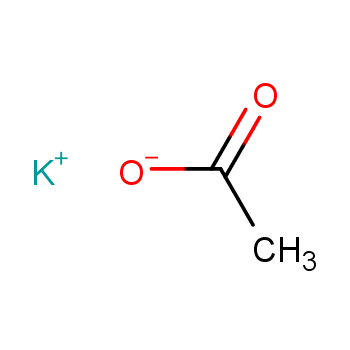
- Potassium Acetate (CH3CO2K): The molecule consists of potassium (K) ions combined with acetate (CH3COO) ions. Acetates are derived from acetic acid (vinegar) by removing a hydrogen ion.
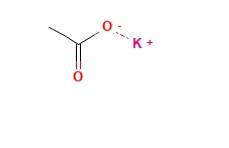
- Potassium Chloride (KCl): It consists of one potassium (K) ion bonded to one chloride (Cl) ion. Chloride ions are simple ions derived from chlorine gas.

The key difference lies in the anion with which potassium is bonded. Potassium acetate has a complex acetate ion, while potassium chloride has a simple chloride ion.
Potassium acetate is more soluble in water than potassium chloride. This is because acetate ions can form hydrogen bonds with water molecules, making it more soluble. Due to stronger ionic attraction between potassium and chloride ions, potassium chloride has a higher melting point.
(1) Potassium Acetate
- Food Additive: Used as an acidity regulator (E261) in various foods.
- De-icing Agent: Lowers the freezing point of water, suitable for winter road maintenance.
- Pharmaceuticals: Used as a potassium supplement or diuretic to treat hypokalemia and hypertension.
(2) Potassium Chloride
- Fertilizers: Primary source of potassium for replenishing nutrient-poor soils.
- Medical: Intravenous fluid replacement to correct electrolyte imbalances.
- Industrial: Used in the production of essential components in various industrial applications—potassium metal.
Potassium acetate and potassium chloride are both important industrial compounds. Potassium acetate is used in food, pharmaceuticals, and de-icing, while potassium chloride is crucial in agriculture, pharmaceuticals, and industrial processes. Their different physical properties and chemical structures make them suitable for various applications.
(1) Environmental Impact
Potassium acetate is environmentally friendly and biodegradable, unlike potassium chloride, which can accumulate in the environment and may pose hazards to flora and fauna.
(2) Safety and Handling
Both potassium acetate and chloride can cause irritation if they come into contact with the skin or eyes. However, potassium chloride poses a higher risk of gastrointestinal issues if accidentally ingested due to its higher chloride concentration. While similar safety measures apply during handling, the risk of internal complications is lower with potassium acetate.
(3) Performance and Effectiveness
- De-icing: Potassium acetate is an effective de-icing agent compared to potassium chloride, with significantly lower corrosiveness than chloride-containing products. Because of its rapid action, it is a common choice for many high-volume industrial applications, such as airport runways. It can be used as a pretreatment before a storm or as a de-icer when snow is on the ground. Surfaces treated with this option will even continue to prevent future icing.
- Medical: Potassium acetate offers dual benefits in treating diabetic ketoacidosis. It supplements potassium, and its acetate component helps neutralize the body's acidic state.
The choice between potassium acetate and potassium chloride depends on specific applications. Here's why you might choose one over the other:
(1) Sustainable Solution
In some cases, potassium acetate may be a more environmentally friendly choice than potassium chloride due to its biodegradability. This is important in industries where preventing chloride ions from accumulating in the environment, such as oil and gas drilling fluids.
(2) Enhanced Performance
While both provide potassium, performance may differ:
- Acidity: Potassium acetate has a mild alkalizing effect, whereas potassium chloride is neutral. This can be beneficial if combating acidity (acidosis) and elevated potassium levels, making it sometimes preferred in specific medical conditions.
- Solubility: Potassium acetate is more soluble in water than potassium chloride. This may be an advantage in applications where faster or more complete dissolution is required, such as certain fertilizer formulations.
(3) Regulatory Compliance
Why choose potassium acetate over potassium chloride? Regulations may favor potassium acetate in specific industries:
- Drilling Fluids: Some environmental regulations limit chloride levels in drilling fluids. In this scenario, potassium acetate serves as an effective, non-corrosive alternative to potassium chloride.
[1] https://pubchem.ncbi.nlm.nih.gov/
[2] https://en.wikipedia.org/
[3] https://www.britannica.com/science/potassium-chloride
[4] https://www.ferguson.com/content/ideas-and-learning-center/trade-talk/how-to-choose-the-best-ice-melt/
[5] https://www.drugs.com/compare/potassium-acetate-vs-potassium-chloride
|
 |
 |
 |
 |
 |
 EN
EN
 Agricultural News
 Food News
 Industrial News
 Cosmetic News
 Pharmaceutical News
 Science News

 1YR
1YR

