-
We detected your language preference as English. Would you like to switch to the English version for a better experience?
Switch to English
Stay here



Xenon fluoride, with the chemical formula XeF2 and CAS number 13709-36-9, is a binary compound composed of xenon and fluorine. It exists as a colorless, odorless solid at room temperature and pressure. Xenon fluoride is notable for its reactivity and use in various chemical processes.
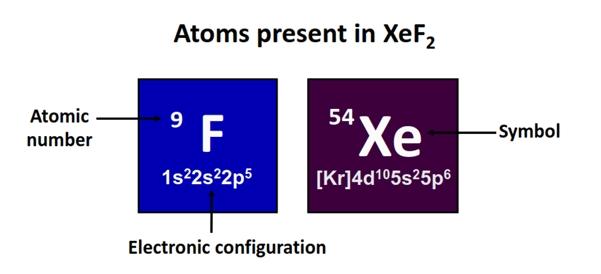
(Image Source: Is XeF2 polar or nonpolar? - Polarity of XeF2)
Polarity describes the uneven distribution of electrons in a molecule or compound. In chemistry, the polarity of a molecule refers to the uneven distribution of positive and negative charges, resulting in the molecule having positive and negative poles. This uneven distribution is typically due to differences in electronegativity between atoms.
Electronegativity is a measure of an atom's ability to attract electrons. The polarity or non-polarity of a bond between two atoms is determined by the electronegativity of the constituent elements. When there is a significant difference in electronegativity between two atoms, with an electronegativity difference ranging from 0.5 to 2, one atom will attract the shared electron pair more strongly, causing the electron pair in the covalent bond to be skewed toward one atom, giving it a partial negative charge, while the other atom carries a partial positive charge. In this case, the molecule exhibits polarity.
Polar molecules display unique behaviors in chemical reactions and physical properties such as solubility, melting point, boiling point, etc. These properties make polar molecules important in many chemical and biological processes.
Xenon fluoride, XeF2, is a polar molecule despite the presence of symmetrically arranged fluorine atoms.Why is XeF2 polar?
Fluorine is highly electronegative, causing the xenon atom to carry a partial positive charge. The two pairs of fluorine atoms in XeF2 create a bent molecular geometry, resulting in an asymmetric distribution of charge. This leads to a net dipole moment, making XeF2 a polar molecule.
The electronegativity difference between xenon and fluorine in XeF2 is significant enough to create polar covalent bonds. The electronegativity of xenon is approximately 2.6, while fluorine's electronegativity is about 3.98. This large difference in electronegativity results in a polar molecule.
Therefore, Xenon fluoride, XeF2, exhibits polarity.
Xenon fluoride, XeF2, finds application in various fields due to its polar nature and reactivity. It is commonly used in the semiconductor industry for etching silicon dioxide layers. Its polarity allows it to selectively react with certain materials, making it ideal for precise etching processes. Additionally, XeF2 is utilized in the production of fluorine-containing compounds and as a fluorinating agent in organic synthesis.
| Xenon Fluoride Cas 13709-36-9 |
|
| Molecular formula |
XeF2 |
| Molecular shape |
Bent |
| Relative molecular mass |
169.29 g/mol |
| Solubility |
Insoluble in water, soluble in organic solvents |
| Melting point |
126.7 °C |
| Boiling point |
104.9 °C |
 |
 |
|
 |
|
|
 EN
EN
 Agricultural News
 Food News
 Industrial News
 Cosmetic News
 Pharmaceutical News
 Science News

 4YRS
4YRS

