-
We detected your language preference as English. Would you like to switch to the English version for a better experience?
Switch to English
Stay here


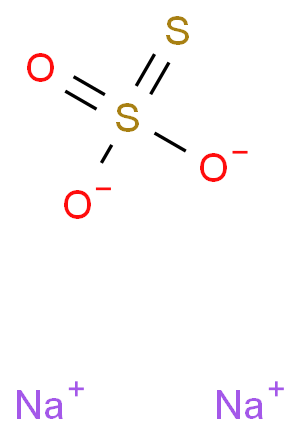
Sodium thiosulfate, also known as sodium hyposulfite or hypo, is a crucial chemical compound widely used in industries such as textiles, synthetic fibers, papermaking, tanning, and pesticides. Sodium thiosulfate, with the chemical formula Na2S2O3·5H2O, appears as a white crystalline solid. This substance exhibits high solubility in water but very limited solubility in alcohol. In this article, we'll uncover its properties and applications, followed by exploring its various uses across different industries.

(1) What is the normal weight of sodium thiosulfate? The molar mass of anhydrous sodium thiosulfate is 158.11 grams per mole. The more common pentahydrate Na2S2O3·5H2O has a molar mass of 248.18 g/mol.
(2) It presents as a white crystalline solid with no odor.
(3) The density of sodium thiosulfate is approximately 1.667 grams per cubic centimeter.
(4) The melting point of its pentahydrate is 321.4 K, and the boiling point is 373 K.
(5) Sodium thiosulfate's solubility in water is 70.1g/100mL at 20°C and 231g/100mL at 100°C.
(6) Na2S2O3 crystals exhibit a monoclinic crystal structure.
(1) Sodium thiosulfate is neutral but dissociates into Na and S2O32- ions in water and other polar solvents.
(2) While stable under standard conditions, it decomposes into sodium sulfate and sodium polysulfide at high temperatures.
(3) The chemical equation for the decomposition reaction is given as 4Na2S2O3 → 3Na2SO4 + Na2S5.
(4) When exposed to dilute acids like hydrochloric acid, sodium thiosulfate undergoes a decomposition reaction, yielding sulfur along with sulfur dioxide and water: Na2S2O3 + 2HCl → 2NaCl + SO2 + H2O + S.
(5) Alkylation reactions of Na2S2O3 generate S-alkyl thiosulfates, commonly known as Bunte salts.
The molecular weight of sodium thiosulfate (Na2S2O3) is a crucial aspect to understand in various chemical applications. It provides insights into the compound's composition and behavior, playing a critical role in chemical computations across industries. The molecular weight not only holds numerical significance but is instrumental in precise formulations and reaction predictions in pharmaceutical formulations or industrial processes. So, what is the molecular weight of sodium thiosulfate? The molecular weight of sodium thiosulfate (Na2S2O3) is 158.11 g/mol. What is the molecular weight of 0.1 N sodium thiosulphate? Since a 0.1 N solution contains 0.1 equivalents of sodium thiosulfate per liter, we can calculate its molecular weight using the formula: Molecular weight = equivalent weight / normality. For sodium thiosulfate, each mole has two equivalents, and the equivalent weight equals the molecular weight divided by the number of equivalents. Hence, the equivalent weight of sodium thiosulfate = 158.11 g/mol / 2 equivalents/mol = 79.055 g/equivalent. Molecular weight of 0.1 N sodium thiosulfate: Molecular weight = 79.055 g/equivalent / 0.1 N = 790.55 g/mol. Therefore, the molecular weight of 0.1 N sodium thiosulfate is approximately 790.55 g/mol.
To determine the molar mass of Na2S2O3, we must consider the atomic masses of its constituent elements: sodium (Na), sulfur (S), and oxygen (O). This calculation provides a quantitative measure of substance mass in grams per mole, aiding in precise dosages and formulations. The molar mass of anhydrous sodium thiosulfate is 158.11 grams per mole. The more common pentahydrate Na2S2O3·5H2O has a molar mass of 248.18 g/mol. The molar mass of sodium thiosulfate holds significant utility in chemical computations, such as in preparing sodium thiosulfate solutions, where concentration and boiling points need consideration for selecting appropriate evaporators.
In pharmaceutical formulations, the molar mass of sodium thiosulfate serves as vital reference data. By calculating the molar mass of pharmaceutical-grade sodium thiosulfate, we can determine drug concentrations and ratios with other chemical substances. This is crucial for ensuring the safety, efficacy, and cost-effectiveness of medications.
(1) Serving as a standard solution for iodine titration: In analytical chemistry, sodium thiosulfate acts as a standard solution for iodine titration, used to determine iodine content.
(2) Acting as a fixing agent: In photography, sodium thiosulfate serves as a fixing agent to stabilize developed silver halide images.
(3) In the synthesis of aminobenzophenone, sodium thiosulfate prevents the precipitation of derivatives.
The sodium thiosulfate titration method is a significant analytical chemistry technique. It employs sodium thiosulfate as a standard solution to determine the content of a substance based on the amount of sodium thiosulfate consumed in reaction with it.
Sodium thiosulfate is a crucial component in analytical chemistry, showcasing various chemical reactions and applications such as deoxidizing and desulfurizing agents on metal surfaces, removal of heavy metal ions in environmental protection, etc. Therefore, in analytical chemistry, the correct usage and understanding of sodium thiosulfate's properties and applications are paramount.
Sodium thiosulfate is a versatile crystalline substance extensively employed in various industrial processes, possessing strong reducing capabilities.
In the photography industry, sodium thiosulfate serves as a fixer to reduce the diffusion of silver grains in color photographs, enhancing image clarity. In the water treatment sector, sodium thiosulfate aids in reducing cyanide toxicity, eliminating residual chlorine, reducing pesticide toxicity, improving substrate, increasing total alkalinity, and reducing bottom heat.
Moreover, its applications in the textile industry are widespread. Due to its water-soluble nature and volatility, it functions as a dyeing agent to enhance the brightness and colorfastness of fabrics. In the medical field, it finds extensive use as an antidote for cyanide poisoning and adjunctive therapy for chemotherapy's side effects. Even the FDA has approved Fennec Pharmaceuticals' sodium thiosulfate injection (Pedmark) for reducing cisplatin-induced hearing loss in pediatric patients with locally advanced non-metastatic solid tumors.
In agriculture, sodium thiosulfate also finds extensive applications. For instance, it can serve as a fungicide, detoxifying agent, and medicinal agent, used for treating platinum-induced neurotoxicity, cyanide poisoning, gout, calcific uremic arteriolopathy, and hemolytic uremic syndrome, among others.
While sodium thiosulfate finds widespread applications across industries, concerns arise due to its potential impact on the environment. However, its inherent biodegradability and eco-friendliness alleviate such concerns. Unlike many compounds, sodium thiosulfate undergoes decomposition in the natural environment, gradually breaking down into harmless by-products over time. This property reduces its persistence in ecosystems, minimizing the risk of long-term environmental pollution. Additionally, its biodegradability aligns with ecological principles by minimizing the accumulation of harmful substances in soil, water, and organisms, thus promoting environmental sustainability.
Alongside environmental considerations, stringent safety precautions are necessary for handling sodium thiosulfate to mitigate potential hazards. Due to its chemical nature and reactivity, improper handling or storage can pose risks. Therefore, comprehensive safety measures are essential in workplaces and laboratories where sodium thiosulfate is used. These precautions typically include wearing appropriate personal protective equipment (PPE) such as gloves and goggles to prevent skin and eye contact. Adequate ventilation and containment procedures help minimize exposure to airborne particles and leaks. By adhering to these safety protocols and guidelines, individuals can effectively manage the risks associated with handling sodium thiosulfate, ensuring the health of personnel and the environment.
When comparing sodium thiosulfate and sodium sulfite, their distinct chemical compositions and uses must be considered. Sodium thiosulfate (Na2S2O3) consists of sodium ions and thiosulfate ions, while sodium sulfite (Na2SO3) comprises sodium ions and sulfite ions. Although both compounds find applications in various industrial processes, their uses differ. Sodium thiosulfate is typically used in photographic fixing solutions, as an antidote for cyanide poisoning, and for neutralizing chlorine in water. In contrast, sodium sulfite primarily serves as a preservative in the food and beverage industry and as a reducing agent in chemical processes.
Sodium thiosulfate, with its complex molecular structure and reactivity with various substances, plays significant roles in photography, medicine, and analytical chemistry. Sodium hydroxide (NaOH), also known as caustic soda, is a strong base commonly used in soap and detergent manufacturing, petroleum refining, and papermaking industries. While both compounds are alkaline, their specific roles and reactivity greatly differ.
Sodium thiosulfate's fame in photography, analytical chemistry, and medical treatments stems from its multi-atomic ion structure. Sodium bisulfite (NaHSO3) is primarily employed as a disinfectant and preservative in the food and beverage industry and as a reducing agent in chemical processes. Although both compounds belong to the sulfite family, their unique chemical compositions and properties dictate their respective roles across various industrial and scientific contexts.
(1) In today's modern society, sodium thiosulfate's applications across industries are undergoing extensive research and innovation. As a vital material in fields like gold mining, water treatment, etc., its future applications in these areas may become more widespread and efficient. For instance, sodium thiosulfate might enhance ore extraction efficiency in gold mining and aid in pollutant removal in water treatment.
(2) Sodium thiosulfate's medical applications are also garnering significant attention. As an antidote for cyanide poisoning and a mitigator of chemotherapy's side effects, sodium thiosulfate may witness further medical research and innovative applications in the future. For example, intravenous administration of sodium thiosulfate may delay vascular calcification and hardening in hemodialysis patients, potentially improving patients' quality of life.
(3) The future outlook for sodium thiosulfate across industries is optimistic. With advancements in technology and industrial upgrades, its application areas are poised to expand further, such as in batteries, dyes, agriculture, etc. Additionally, combining it with other materials, such as potassium hydrogen peroxysulfate, might lead to more innovative applications.
Sodium thiosulfate emerges as a versatile and indispensable compound with multifaceted applications across industries. Through this exploration, key insights into the properties, uses, and safety considerations of sodium thiosulfate have been elucidated, providing a comprehensive understanding of its significance. As summarized, recognition of the importance of further exploration and research into sodium thiosulfate is imperative, as ongoing research holds the promise of discovering new applications, improving existing processes, and maximizing its beneficial impact on society and the environment.
[1] https://byjus.com/chemistry/sodium-thiosulfate/
[2] Niu Mingshuang. Kinetics of Sodium Thiosulfate Electrocatalytic Oxidation on Polycrystalline Gold Electrode and Effects of Sulfate Ion [D]. China University of Mining and Technology, 2022. DOI:10.27623/d.cnki.gzkyu.2022.001704.
[3] Liu Shunzhen, Zhang Lixia. Optimization of Preparation Conditions of Sodium Thiosulfate [J]. Journal of Guangxi Normal University(Natural Science Edition), 2011, 28 (01): 54-57. DOI:10.16601/j.cnki.issn1001-8743.2011.01.007.
[4] Cheng Chunying. Improvement of Sodium Thiosulfate Preparation Experiment [J]. Laboratory Science, 2011, 14 (01): 64-65.
 |
 |
 |
 |
 |
 |
 EN
EN
 Agricultural News
 Food News
 Industrial News
 Cosmetic News
 Pharmaceutical News
 Science News

 1YR
1YR

