-
We detected your language preference as English. Would you like to switch to the English version for a better experience?
Switch to English
Stay here


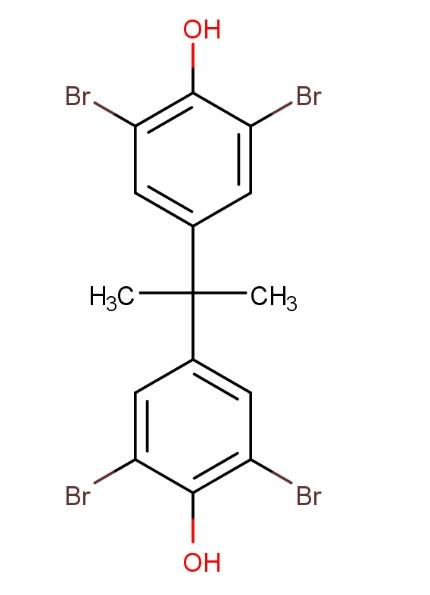
Brominated flame retardants are recognized as highly effective. Tetrabromobisphenol A (TBBPA) is currently the most produced brominated flame retardant, primarily used to enhance the fire safety of laminates in electrical and electronic equipment. TBBPA is produced in Israel, the USA, Jordan, Japan, and China. Its use is permitted worldwide.

What is Tetrabromobisphenol A used for? TBBPA helps improve the fire safety of electrical and electronic equipment and devices using printed circuit boards, such as consumer electronics (televisions, vacuum cleaners, washing machines), office and communication equipment (copiers, computers, printers, fax machines, radios), automobiles, aviation, and all entertainment devices.
Specifically, TBBPA provides the necessary flame retardancy to meet stringent fire safety standards, such as UL 94 V0 - the flammability standard for plastic materials used in electronic devices and appliance parts with circuit boards. TBBPA’s main application is in printed circuit boards (PCBs) or laminates. It is used in over 95% of FR-4 printed circuit boards, the most commonly used boards in electronic devices. In this application, TBBPA is a reactive flame retardant, meaning it no longer exists as a free chemical substance in the final board but becomes part of the resin polymer backbone. TBBPA is also used as an "additive" flame retardant, primarily for ABS2 plastic housings.
Additionally, TBBPA is used as an intermediate in the production of other brominated flame retardant systems, derivatives, and brominated epoxy oligomers and is incorporated into resins.
Tetrabromobisphenol A (TBBPA) is mainly used as an additive flame retardant for acrylonitrile butadiene styrene (ABS) housings (BSEF, 2009b). ABS is widely used in the housings and structural components of various electronic and electrical equipment. A survey in the USA found that 34% of computer monitors and 2% of television back cases used ABS containing TBBPA. The primary function of TBBPA is to enhance the fire safety of various components and finished products. Its working principles are as follows:
TBBPA is particularly important for printed circuit boards (PCBs), the core of most electronic products. Over 90% of TBBPA is used to produce FR-4 type PCBs, a common and reliable material. TBBPA acts as a reactive flame retardant, chemically bonding with the resins used to manufacture PCBs. This bonding enhances the fire resistance of the boards themselves.
TBBPA can also be used in other electronic components, such as housings, casings, and connectors. In these applications, TBBPA may be physically mixed into the plastic materials during manufacturing, providing an additional layer of fire safety.
By enhancing the fire safety of components, TBBPA contributes to the overall fire safety of electronic products like televisions, computers, smartphones, and various appliances. This is especially important as electronic products become increasingly miniaturized, generating more heat in smaller spaces.
TBBPA helps prevent televisions, computers, and other consumer electronics from easily catching fire. This reduces the risk of electrical fires in homes and offices, protecting lives and property.
Communication equipment such as routers, modems, and servers often operate continuously, generating significant heat. TBBPA helps ensure these devices meet fire safety standards, minimizing the fire risk to critical communication infrastructure.
Many countries and regions have established fire safety regulations for electronic products. TBBPA helps manufacturers comply with these regulations, ensuring their products meet fire safety requirements.
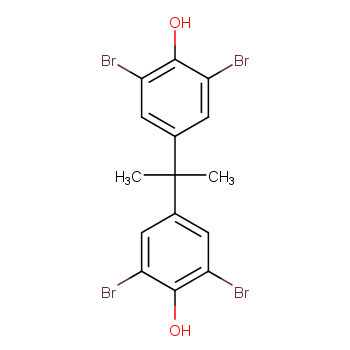
TBBPA is mainly used as a reactive component in polymers, meaning it is incorporated into the polymer backbone. It is used to prepare fire-resistant polycarbonates by replacing some bisphenol A. Lower grades of TBBPA are used to prepare epoxy resins for printed circuit boards. The structure of polycarbonate copolymers containing tetrabrominated monomers is as follows:
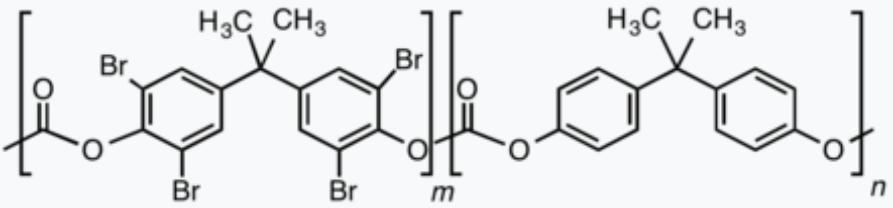
Tetrabromobisphenol A (is a sterically hindered bisphenol and is known to generate low molecular weight polymers using interfacial methods. The low reactivity is attributed to the bulky and electron-withdrawing bromine substituents in the ortho positions. Jen-Tau Gu et al. have developed optimal reaction conditions for TBBPA interfacial polymerization using pyridine derivatives as catalysts. Key process parameters were obtained from the phase distribution constants (Ke) and pK values of triethylamine, 4-dimethylaminopyridine (DMAP), and TBBPA. Due to its high nucleophilicity and good leaving properties, the DMAP catalyst system successfully generated high molecular weight TBBPA-polycarbonate (PC).
TBBPA is a plastic additive used to manufacture engineering plastics. TBBPA is commonly used with antimony oxide as a flame retardant additive for engineering plastics (such as ABS (acrylonitrile butadiene styrene) and HIPS (high-impact polystyrene)) for optimal performance. Additionally, derivatives of TBBPA are used as additives for other engineering thermoplastics, such as polybutylene terephthalate (PBT) and polyethylene terephthalate (PET). These plastics are used in the electrical and electronic industries to manufacture housings, switches, connectors, and other plastic components. Engineering plastics are widely applied in the electronics industry due to their high resistance to various environmental factors (such as chemicals, high temperatures, and wear). This makes them ideal materials for manufacturing consumer electronic products.
TBBPA has been shown to have some negative environmental impacts:
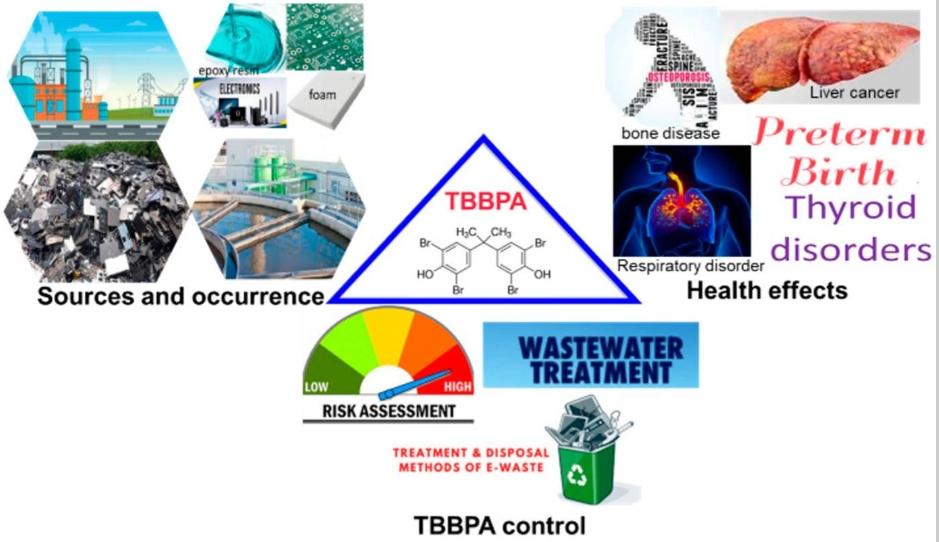
TBBPA is persistent in the environment, meaning it does not easily break down. It can also bioaccumulate in animal bodies, concentrating at higher levels of the food chain. This can pose a threat to wildlife, especially top predators.
TBBPA has been found in various environmental samples such as water, soil, sediment, and air. This widespread pollution is concerning because it may pose risks to human health and the environment.
Organophosphorus flame retardants are another category of alternatives to TBBPA. They generally have lower persistence and bioaccumulation compared to TBBPA but can still pose some environmental risks.
Nanoclays are a relatively new type of flame retardant currently under research. They are made from very small clay particles that can be added to materials to enhance their fire resistance. Nanoclays are still in development but have the potential to be a more sustainable alternative to TBBPA.
Tetrabromobisphenol A, as a flame retardant, has widespread applications in various industrial fields. Although it plays a crucial role in enhancing product safety and durability, its potential environmental and health risks warrant attention. Therefore, appropriate measures and alternatives should be implemented during its use and management to minimize its negative impacts on humans and the environment.
[1]https://en.wikipedia.org/wiki/Tetrabromobisphenol_A
[2]https://www.businesswire.com/news/home/20220616005691/en/Worldwide-Tetrabromobisphenol-A-Industry-to-2028---by-Product-Type-Application-and-Region---ResearchAndMarkets.com
[3]https://www2.mst.dk/udgiv/publications/2010/978-87-92617-52-1/html/kap08_eng.htm
[4]https://www.bsef.com/wp-content/
[5]https://onlinelibrary.wiley.com/doi/epdf/10.1002/app.1993.070500116
[6]https://sustainableproduction.org/
 |
 |
|
 |
 |
 |
 EN
EN
 Agricultural News
 Food News
 Industrial News
 Cosmetic News
 Pharmaceutical News
 Science News

 3YRS
3YRS

