-
We detected your language preference as English. Would you like to switch to the English version for a better experience?
Switch to English
Stay here


Phthalic anhydride is a crucial organic compound with extensive applications and research value. Understanding its structure and properties is vital for the chemical industry and materials science. By delving into the composition and characteristics of phthalic anhydride, we can uncover its role in chemical reactions and material preparation, opening up more possibilities for research and application in related fields.
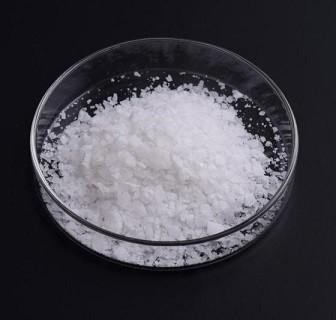
Phthalic anhydride, with the molecular formula C8H4O3, is the anhydride of phthalic acid. It is commercially available in the form of white to off-white needles and is the first commercially produced acid anhydride. Phthalic anhydride is widely used globally, from the plastics industry to resin synthesis, agricultural fungicides, and amines. It is currently produced by oxidizing naphthalene and ortho-xylene in a vapor-phase process.
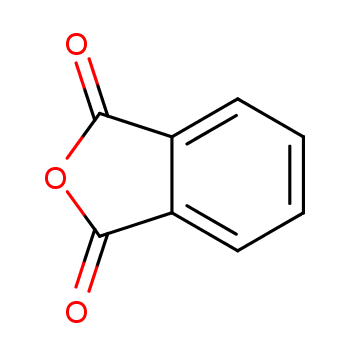
What functional group is phthalic anhydride? Phthalic anhydride, an organic compound with the molecular formula C8H4O3, consists of a six-membered benzene ring attached to a five-membered ring containing two carbonyl (C=O) groups and one oxygen atom. The benzene ring alternates between single and double carbon-carbon bonds, forming the basic unit of many aromatic compounds. The two carbonyl groups in phthalic anhydride are attached to adjacent carbon atoms in the five-membered ring, while the oxygen atom bridges the gap between two other carbons, forming a structure similar to furan. The structure of phthalic anhydride is represented as follows:
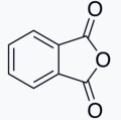
According to IUPAC numbering, the carbon atoms in the benzene ring are numbered 1 to 6, while the carbon atoms in the five-membered ring are numbered 2 and 3, with the oxygen atom connecting carbons 1 and 4. The carbonyl groups are connected to carbons 2 and 3, making the compound a 1,3-diketone.
(1) Carbon-Carbon (C-C) Bonds:
These are single and double bonds between carbon atoms in the molecular ring structure. These bonds are covalent, meaning carbon atoms share electrons to achieve a stable octet configuration.
(2) Carbon-Oxygen (C-O) Bonds:
Phthalic anhydride contains four C-O bonds. Two of these bonds are between carbon atoms and carbonyl (C=O) groups. The other two C-O bonds are part of the anhydride ring structure, with one oxygen atom bonding to two different carbon atoms. These bonds are also covalent.
In addition to these main types of bonds, phthalic anhydride can form hydrogen bonds with molecules containing O-H or N-H bonds.
(1) Physical Properties:
Appearance: Phthalic anhydride exists as white crystalline solid at room temperature and can also be a transparent colorless liquid when melted.
(2) Chemical Properties:
The structure of phthalic anhydride closely resembles that of aromatic carboxylic acids, making it one of the simplest acids in this family. As the name "phthalic anhydride" implies, it consists of a benzene ring connected to two carboxylic acid groups at positions 1 and 2, or in other words, additional carboxyl groups attached to the ortho position of a benzene carboxylic acid. Therefore, the chemical formula of phthalic anhydride or phthalic acid is C6H4(CO2H)2, indicating the presence of a six-carbon ring with alternating double bonds, essentially aromatic, with carboxyl groups (-COOH) attached to one carbon atom of the aromatic benzene ring and another carboxyl group (-COOH) at the ortho position. Phthalic anhydride is primarily used as an acid anhydride to produce other chemicals such as dyes, fragrances, saccharin, phthalate salts, and many other useful products.
Phthalic anhydride is the anhydride of phthalic acid. It is obtained by dehydrating phthalic acid to phthalic anhydride. Since phthalic acid is a dicarboxylic acid with two or three carboxyl groups separated by two or three carbon atoms, it loses a molecule of water upon heating, forming an anhydride.
Through this introduction, we have gained a deeper understanding of the structure, composition, and properties of phthalic anhydride. As a common organic compound, phthalic anhydride holds significant application value in industrial production and scientific research. Understanding the structural characteristics of phthalic anhydride can help us better grasp its role in chemical reactions and material preparation, opening up more possibilities for research and application in related fields. It is hoped that through this introduction, readers will have a comprehensive understanding of phthalic anhydride and be inspired in their learning and work in relevant fields.
[1] https://en.wikipedia.org/wiki/Phthalic_anhydride
[2] https://www.vedantu.com/chemistry/phthalic-acid
[3] https://thechemco.com/
[4] https://inscricao.faculdadeitop.edu.br/mentor/draw-the-structure-of-phthalic-anhydride-which-is-also-known-gotb
 |
 |
 |
 |
|
|
 EN
EN
 Agricultural News
 Food News
 Industrial News
 Cosmetic News
 Pharmaceutical News
 Science News

 4YRS
4YRS


