-
We detected your language preference as English. Would you like to switch to the English version for a better experience?
Switch to English
Stay here


Ferrous sulfate monohydrate is a chemical compound with significant applications in the field of chemistry. This article aims to introduce and explain the basic concepts of ferrous sulfate monohydrate, including its properties, structure, and hazards. By gaining a deeper understanding of ferrous sulfate monohydrate, we can better appreciate its importance in the chemical industry and scientific research and explore its potential applications in various fields.
Ferrous sulfate monohydrate is a non-toxic, odorless grayish-white to beige powder with an astringent taste. The iron contained in ferrous sulfate monohydrate is a raw material for synthesizing hematin antibodies in animal bodies. It can serve as a feed-grade mineral feed additive for livestock, promoting growth and development, enhancing disease resistance, and improving feed returns. Ferrous sulfate monohydrate is also used in the manufacture of pigments such as iron oxide red. In agriculture, it is employed as a herbicide, soil conditioner, foliar fertilizer, and popular fertilizer abroad for soil improvement and moss and lichen removal. Additionally, it can be utilized in pesticide formulations for the control of wheat and fruit tree diseases and serves as an intermediate raw material in chemical, electronic, and biochemical industries.
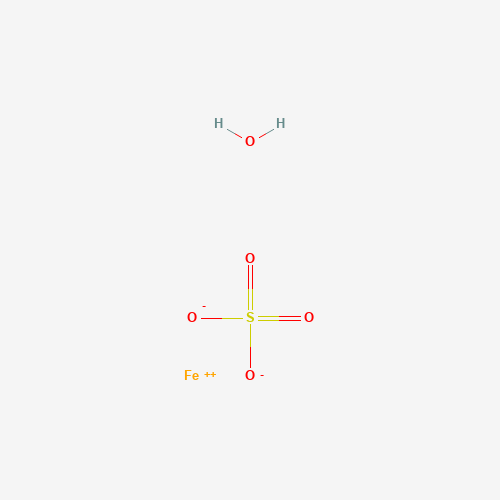
Ferrous sulfate monohydrate, with the molecular formula FeH2O5S, exists in a hydrated state, containing one water molecule bonded to ferrous sulfate (FeSO4) molecules. This compound is obtained by heating the common heptahydrate form of ferrous sulfate (FeSO4·7H2O) above 65°C to remove six water molecules.
Its crystal structure exhibits distorted monoclinic crystals. The central Fe(II) ion is coordinated with four oxygen atoms, forming a distorted tetrahedral geometry. These oxygen atoms originate from two sulfate ions (SO42-) and one water molecule (H2O). The remaining water molecules' hydrogen atoms form hydrogen bonds with adjacent sulfate ions, contributing to the overall crystal packing.
Ferrous sulfate monohydrate (FeSO4·H2O) is an important industrial raw material and chemical, with its solubility and dissolution rate influenced by various factors, including:
Solubility and dissolution rate increase with temperature. It is highly soluble in water (44.69 g/100 mL at 77°C).
The higher the solvent polarity, the greater the solubility. For example, ferrous sulfate monohydrate has greater solubility in water than in alcohol.
Smaller particles result in a larger surface area, leading to faster dissolution rates.
Stirring promotes contact between solute and solvent, enhancing dissolution rates.
Stable under normal conditions. Decomposes upon heating. It readily decomposes at high temperatures, losing crystalline water. Therefore, environmental conditions need to be controlled to maintain its stability.
Ferrous sulfate monohydrate should be stored in a dry, cool, light-resistant, and tightly sealed container.
During use, avoid high temperatures, moisture, and alkaline environments.
(1) Routes of Entry: Skin or eye contact, ingestion, or inhalation of dust and mist.
(2) Skin/Eyes: May cause corneal burns or severe eye irritation. Smoke or mist may irritate or burn the skin.
(3) Ingestion: Oral and gastrointestinal irritation. Local tissue damage. Additionally, nausea, vomiting, diarrhea, and gastrointestinal bleeding may occur subsequently. Ingestion of sufficient quantities can be fatal.
(4) Inhalation: Respiratory system irritation. Prolonged exposure may cause bronchial irritation, coughing, and bronchopneumonia. Exacerbation of preexisting medical conditions includes acute and chronic respiratory system diseases.
(1) Wear appropriate personal protective equipment for handling materials.
(2) No smoking or eating in the spill area.
(3) Contaminated materials should be placed in appropriate containers for disposal.
(4) If spilled on the ground, the affected area should be moved to a depth of 1 to 2 inches and then placed in appropriate containers.
(5) Do not flush materials into public sewers or any waterway.
(6) Wear appropriate protective clothing and equipment during use.
(7) Ensure thorough cleaning of tools and equipment after use.
(8) Adequate ventilation is required during leakage.
Immediately flush with plenty of water. Remove contact lenses if present and easy to remove. Open eyes wide while flushing. Continue flushing for 15 minutes. If irritation persists, call a doctor.
Immediately wash with plenty of water. Remove all contaminated clothing and shoes. If skin irritation occurs: Seek medical advice/treatment.
Move to fresh air. If breathing is difficult, perform artificial respiration. Seek medical attention.
Do not induce vomiting without medical advice. Rinse mouth with water. Do not give anything by mouth to an unconscious person. If symptoms persist, seek medical attention.
Avoid contact with eyes, skin, and clothing. Do not inhale dust/spray/mist/fume. Wear gloves/eye/face protection. Thoroughly clean after handling. Contaminated clothing should be washed before reuse. Do not eat, drink, or smoke while using this product. Regularly clean equipment and work areas.
Store in a cool, ventilated, dry place. Keep containers tightly closed when not in use and label them.
Ferrous sulfate monohydrate is an important chemical substance with wide-ranging applications in many fields. A thorough understanding of the structure and chemical properties of ferrous sulfate monohydrate enables us to better utilize this compound and explore its potential application value in different fields. It is hoped that this article will provide readers with a deeper understanding of ferrous sulfate monohydrate and stimulate interest in the research and application of chemical compounds.
[1]https://www.affinitychemical.com/ferrous-sulfate-environmental-and-toxicological-information/
[2]https://www.valudor.com/wp-content/uploads/2020/07/Ferrous-Sulfate-Monohydrate-30_GHS_EN_Valudor.pdf
[3]https://pubchem.ncbi.nlm.nih.gov/compound/
[4] Xinjiang University. Method for Room Temperature Production of Ferrous Sulfate Monohydrate. 2011-03-30.
 |
|
 EN
EN
 Agricultural News
 Food News
 Industrial News
 Cosmetic News
 Pharmaceutical News
 Science News


 6YRS
6YRS


