
I. Executive Summary
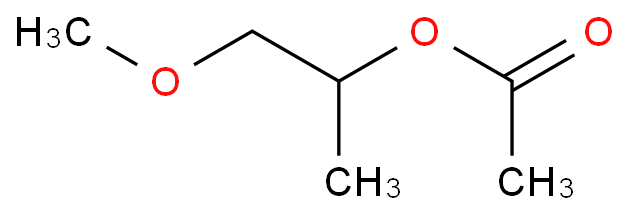
1-Methoxy-2-propyl acetate (CAS 108-65-6), traded globally as PMA or PGMEA, is the workhorse ester of the propylene-series glycol ether family. With formula C6H12O3, molecular weight 132.16 g/mol, a boiling range near 145 to 146 °C and a closed-cup flash point in the low-to-mid 40s °C, it occupies a narrow but decisive window of solvency, evaporation rate and safety. It dissolves acrylic, epoxy, polyester, polyurethane, nitrocellulose and many photoresist resin systems while tolerating enough water to serve both conventional and high-solid formulations.
Two forces shape 2026. Substitution: PMA is the designated drop-in replacement for ethylene-series glycol ether acetates whose reproductive toxicity profile has driven them out of mainstream formulation, and that logic keeps pulling volume in mature coating markets. Bifurcation: the same CAS number is sold as a commodity solvent priced against propylene and acetic acid, and as an electronics wet chemical priced against far tighter metal-ion and particle limits. These are effectively two businesses sharing one molecule.
This paper covers solvency and the alpha and beta isomer question, the production route families and the impurity fingerprint each leaves, the coatings, ink, cleaner and electronics matrix, the toxicological and regulatory distinction from the ethylene-series esters it replaces, the volatile organic compound framework in the European Union and the United States, and the classification, packaging and transport of a flammable ester at bulk scale.
II. Product Deep Dive: Molecular Mechanisms and Production Evolution
2.1 Physicochemical Properties and Mechanisms
The solvent is a colourless, low-odour liquid of density near 0.97 g/cm3 and refractive index around 1.40 at 20 °C. An ether oxygen and an ester carbonyl give hydrogen-bond acceptance across a wide polarity range, while the short alkyl framework keeps viscosity low and evaporation controlled. Water solubility is moderate, and the solvent carries water into organic phases, a property formulators exploit to suppress humidity blush.
- Alpha and beta isomer control: commercial PMA is not a single structure. Propylene oxide ring opening is regioselective but not exclusive, so both the secondary ether acetate, 1-methoxy-2-propyl acetate, and the primary ether acetate, 2-methoxy-1-propyl acetate, are formed, with the secondary isomer predominating at a supplier-dependent proportion. The ratio is not cosmetic: it affects boiling and evaporation behaviour, solvency for specific resin families, and in electronics the reproducibility of resist film thickness. Buyers should specify it by gas chromatography and require notice of any catalyst change.
- Water, acid value and colour: three parameters dominate disputes. Water, by coulometric Karl Fischer titration, affects polyurethane and isocyanate systems directly. Acid value, as milligrams of potassium hydroxide per gram, reflects residual acetic acid and hydrolysis, and is limited because acidity corrodes packaging and attacks metal surfaces. Colour, in Hazen or APHA units, is a sensitive indicator of thermal degradation in distillation and of trace aldehyde or peroxide formation.
2.2 Synthesis and Manufacturing Technologies
Industrial production follows one of two route families, and the choice leaves a fingerprint on the impurity profile that experienced buyers read from a gas chromatogram. Both begin from propylene oxide or methoxypropanol, and both converge on azeotropic or extractive distillation to break the water and alcohol azeotropes that limit achievable purity.
- Esterification of methoxypropanol with acetic acid: the dominant route reacts the glycol ether monoether with acetic acid over an acid catalyst, using reactive distillation or an entrainer to remove the water of reaction. Homogeneous sulfuric or toluene sulfonic acid is cheap but generates salt waste and corrosion burden; modern plants favour acidic ion-exchange resins, heteropoly acids or solid acid and zeolite systems enabling continuous fixed-bed operation. Catalyst choice determines residual acidity, colour and ether-linked by-products.
- Propylene oxide insertion and transesterification: alternatives react propylene oxide with methyl acetate, or transesterify methyl acetate with methoxypropanol, in principle shortening the chain by avoiding separate etherification and esterification. They offer attractive atom economy and integration with methyl acetate streams, but demand control of unreacted epoxide and light ends. Where a producer runs both families, buyers should ask which supplied a given lot, because the trace impurity sets differ.
2.3 Core Application Matrix
- Coatings and industrial paints: the largest outlet, spanning automotive original equipment and refinish clearcoats, coil and can coatings, wood lacquers, general industrial enamels and high-solid systems where PMA acts as a coalescing solvent. Its medium evaporation rate improves levelling and its water tolerance suppresses blush under humid application.
- Printing inks and industrial cleaners: a standard solvent in gravure and flexographic packaging inks, balancing resin solubility against controlled drying on high-speed presses, and in formulated degreasers and paint strippers where it replaces more hazardous halogenated and ethylene-series solvents. Odour and evaporation residue matter more here than isomer composition.
- Electronics wet chemicals and photoresist processing: the highest-value outlet, serving as photoresist solvent and thinner, in edge bead removal, wafer and mask cleaning, and in display and colour-filter manufacture. The specification set is entirely different: trace metal-ion limits for sodium, potassium, iron and copper, sub-micron particle counts, water far below industrial limits, and contamination-controlled filling.
III. Global Market Supply-Demand Landscape and Export Trends
3.1 Demand Drivers and Market Shifts
Growth through 2026 is increasingly driven by electronics rather than coatings. Semiconductor and display investment have made electronics grade the fastest-growing and highest-margin outlet, with long, sticky qualification cycles around fabrication clusters. Coatings demand is mature in Europe and North America but still expands in Asia-Pacific on automotive, infrastructure and packaging conversion. Underlying both is regulatory pressure: every tightening on toxicologically concerning solvents transfers volume into P-series esters.
3.2 Capacity Distribution and Export Flows
Capacity is anchored by integrated petrochemical producers in North America and the Middle East controlling propylene oxide and acetic derivatives, by a dense Chinese base in the Yangtze River Delta and Shandong, and by Japanese and Korean producers disproportionately important in electronics grade. Bulk industrial volume moves in vessels and isotanks to formulation hubs, while electronics grade moves in dedicated contamination-controlled containers, often with warehousing near fabs.
3.3 Market Bifurcation and Pricing Dynamics
Industrial grade is a genuine commodity: price tracks propylene and acetic acid, operating rates and freight, and regional spreads arbitrage quickly because specifications are broadly interchangeable. Electronics grade behaves differently, with price reflecting qualification status, analytical capability and contamination-controlled assets rather than feedstock. A supplier qualified at a fab is insulated from competition until the customer chooses to requalify, so the prize is entry into qualification, not a price concession.
IV. In-depth Analysis of Global Compliance and Regulatory Barriers
The regulatory position is favourable, and that favourability is itself the commercial asset. The solvent is not classified for reproductive toxicity, is not a substance of very high concern, is not on the REACH authorisation list and is not covered by the Annex XVII glycol ether entries affecting certain ethylene-series ethers and acetates. It remains a regulated chemical: registered under REACH, classified under CLP as a flammable liquid with narcotic effects, listed under TSCA and counted as a volatile organic compound.
4.1 European Market: REACH, CLP, and Sector-Specific Directives
- REACH registration and the Annex XVII distinction: the substance is registered at high tonnage with a substantial dataset, so importers are well served by existing joint submissions. The real task is verification: confirm in writing that the restriction entries covering certain ethylene glycol ethers and their acetates do not apply to the propylene-series ester purchased, and hold that verification in the product file. E-series and P-series confusion in legacy safety data sheets is a recurring problem.
- CLP classification and mixture obligations: the substance is widely notified as a Category 3 flammable liquid and as a specific target organ toxicity single-exposure Category 3 substance for narcotic effects, with flame and exclamation-mark pictograms. Formulators must recalculate classification under the mixture rules, since a coating may carry additional skin or eye irritation from other components. Poison-centre notification obligations apply in member states where they cover industrial mixtures.
4.2 North American Market: TSCA, EPA, and FDA Regulations
- TSCA Inventory status and risk evaluation context: the substance is listed on the TSCA Inventory in active status and carries a well-developed regulatory record. Because EPA has devoted attention to the glycol ether family as a class, participants should monitor the risk evaluation pipeline for any action imposing workplace or emission controls, even though the propylene-series profile is materially more favourable than that of the ethylene-series materials driving concern.
- VOC regulation under federal and state air programmes: PMA is a volatile organic compound and is not exempt, so coatings use is governed by federal and state implementation plan requirements and by the most stringent applicable regional rule, with South Coast Air Quality Management District and Ozone Transport Commission rules frequently setting the practical national ceiling. Suppliers support compliance by supplying accurate vapour pressure, density and exempt-compound data.
4.3 The Critical Hurdle: Quality Control and Safety Limits
Compliance Warning: The most expensive failure in this trade is grade mismatch, not adulteration. Industrial grade delivered into an electronics wet bench, or a lot whose isomer ratio shifted after an unnotified catalyst change, can halt a fabrication line and generate claims far exceeding the shipment value. Specify grade, isomer ratio, water, acid value, colour and metal-ion limits explicitly, require advance notice of any process or site change, and verify metals and particles independently on receipt.
V. Green Trade Barriers and ESG in Manufacturing
As a commodity solvent sold into consumer-facing coatings and electronics chains, PMA sits squarely inside corporate sustainability reporting. Customers request product carbon footprints, ask about mass-balanced bio-based options and expect responsible solvent management across the use phase. The regulatory direction on volatile organic compounds reinforces this: lower-VOC formulation is now a market expectation, not only a compliance response.
5.1 Carbon Footprint and Circular Economy
Cradle-to-gate emissions are dominated by upstream propylene oxide and acetic acid rather than by esterification, so meaningful reduction requires feedstock engagement, including bio-attributed material under mass-balance certification and renewable electricity for distillation. The largest circular opportunity lies with the user: recovery from coating overspray, press cleaning and wet benches can be recycled into industrial grade, and suppliers supporting closed-loop recovery gain a real tender advantage.
5.2 Sustainable Sourcing and Traceability
Traceability demands rise fastest in electronics, where fabrication customers push questionnaires upstream to solvent producers and expect documented responsible sourcing and permitting. Participants should hold ISO 9001 and ISO 14001 certification, publish a product carbon footprint, state bio-based content where mass balance is offered, and confirm no intentionally added substance of very high concern. Chain-of-custody records should tie each lot to a campaign and to dedicated storage assets.
VI. Supply Chain Resilience and Export Logistics
Logistics divide along the same line as the market: industrial grade moves like any bulk flammable liquid in isotanks, vessels and drums, while electronics grade moves as a controlled material whose principal risk is contamination introduced after the product is made. Recognising which business a shipment belongs to is the core operational discipline.
6.1 Packaging Standards and Moisture/Contamination Control
- Industrial-grade containment: bulk movements use lined or stainless isotanks and chemical tankers, with drums and intermediate bulk containers for smaller customers. Because water pickup drives acid value upward through hydrolysis, tanks should be nitrogen-padded or fitted with desiccant breathers. Mild steel is generally acceptable, but water plus acetic acid will raise iron and colour over time, so low-metal specifications require stainless or lined equipment throughout.
- Electronics-grade containment and sampling: electronics lots require dedicated or rigorously cleaned containers, electropolished or fluoropolymer transfer lines, filtration at fill, and sampling under controlled conditions with validated containers. Contamination from a shared drum, hose or sample bottle is indistinguishable from production contamination once the material reaches the analyser, which is why qualified suppliers validate packaging and sampling as part of manufacturing.
6.2 Dangerous Goods Identification and Transit Protocols
With a flash point in the 40s °C, the solvent ships as a Class 3 flammable liquid, generally packing group III, under the UN Recommendations, IMDG, ADR, RID and IATA, typically under a generic flammable liquid or esters entry. Consequences include UN-specification packaging, flammable-liquid marks and labels, segregation from oxidisers, dangerous goods declarations and trained handlers. Destination storage should be bunded, ventilated, grounded and bonded for transfer, with electrostatic precautions during high-rate loading.
VII. Enterprise Global Expansion Strategy Guide
Participants should decide deliberately which tier they compete in, because the required capabilities barely overlap and attempting both without separation usually damages both.
- Choose and commit to a grade tier: industrial participants should compete on feedstock integration, energy efficiency, logistics reach and service, not on speculative electronics investment. Electronics participants must fund metal-ion and particle analytics, contamination-controlled filling, dedicated storage and long qualification cycles, accepting that returns accrue over years rather than quarterly price movements.
- Build the substitution case with evidence: since much incremental demand comes from replacing ethylene-series glycol ether acetates, maintain a documented comparison dossier covering reproductive toxicity classification, authorisation and restriction status, occupational exposure limits and volatile organic compound treatment. Formulators need it to justify reformulation internally, and it shortens sales cycles materially.
- Engineer for low-VOC formulations: align development with the direction of regulation by supporting high-solid, waterborne and radiation-cure systems and by offering or facilitating solvent recovery. Suppliers who help customers meet the applicable VOC ceiling while preserving application performance retain volume as solvent intensity per unit of coating steadily falls.
VIII. Conclusion
1-Methoxy-2-propyl acetate has become the reference P-series ester of the global solvents industry: broad enough in solvency to serve coatings, inks and cleaners, clean enough in profile to have displaced ethylene-series materials wherever regulators and formulators acted, and refinable enough for semiconductor and display manufacturing. Its structure is unusual in that one CAS number supports both a commodity and a specialty-electronics business, and success in one confers almost no advantage in the other.
Through 2026 we expect electronics to set the pace on value and industrial demand to set it on volume, with volatile organic compound regulation compressing solvent intensity and substitution adding baseline demand. The best-positioned participants have made an explicit grade choice and built the regulatory dossier that lets customers justify reformulation. In a market this mature, differentiation lies in consistency and documentation.
IX. Industry Resource Connection and Supplier Ecosystem
Powered by Guidechem
This white paper is exclusively compiled by the Guidechem Intelligence Team based on global customs data, regulatory databases, and industry research. Guidechem is a leading global B2B chemical platform, dedicated to connecting global buyers with verified, high-quality manufacturers.
Relying on Guidechem's extensive global database, we have mapped the core participants in the current global 1-Methoxy-2-propyl acetate (PMA/PGMEA) supply chain:
- China: the scale and cost anchor: production is concentrated in the Yangtze River Delta and Shandong, where glycol ether producers are integrated with propylene oxide and acetic acid and serve domestic coatings demand plus export markets. Chinese capacity sets the global industrial-grade price floor and increasingly supplies regional electronics distributors under private label.
- United States and Europe: integrated producers and formulation hubs: petrochemical and oxo-chemical producers on the United States Gulf Coast and in Northwest Europe run P-series assets integrated with propylene oxide, acetic derivatives and methyl acetate streams. Their strength is feedstock security, bulk logistics, established REACH and TSCA dossiers, and ties to multinational coatings and ink formulators.
- Japan, Korea and Taiwan: the electronics-grade core: producers here are disproportionately important in semiconductor and display wet chemicals, combining high-purity distillation and filtration with contamination-controlled filling and proximity to fabrication customers. Entry barriers are high, and customer loyalty makes this the most attractive segment of the business.
Disclaimer: The content of this white paper is compiled based on public market data and regulatory information available as of 2026. Global chemical regulations are subject to dynamic adjustments. In actual export operations, enterprises must consult professional regulatory advisors or relevant competent authorities to obtain the latest compliance guidance.




 EN
EN
 Agricultural News
 Food News
 Industrial News
 Cosmetic News
 Pharmaceutical News
 Science News

 3YRS
3YRS

