
I. Executive Summary
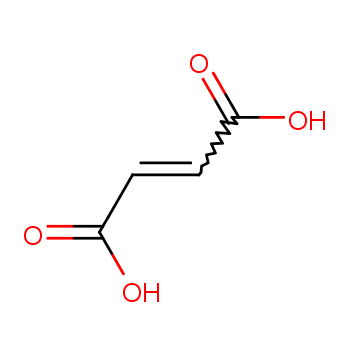
Fumaric acid (CAS 110-17-8), the trans isomer of butenedioic acid, is the shortest unsaturated dicarboxylic acid produced at industrial scale. Its molecular formula C4H4O4 and molecular weight of 116.07 g/mol describe a compact, planar difunctional molecule whose double bond is conjugated with both carboxyl groups. The consequences of that geometry are commercially decisive: strong acidity (pKa values near 3.0 and 4.4), exceptional thermal stability with sublimation above roughly 290 °C, very low water solubility of about 0.6 g per 100 mL at ambient temperature, and a densely hydrogen-bonded crystal lattice that resists moisture pickup far better than citric or maleic acid.
These attributes have given the molecule a rare triple commercial identity. It is simultaneously a high-tonnage unsaturated polyester resin and paper-sizing intermediate, a regulated food acidulant (E297 in the European Union) and animal-nutrition additive, and a pharmaceutical counterion and biocatalytic precursor for L-aspartic acid. Two production platforms compete for that demand: petrochemical hydrolysis and isomerisation of maleic anhydride, and carbohydrate fermentation, the latter increasingly requested by buyers pursuing measurable bio-based content and reduced Scope 3 emissions.
This white paper is written for procurement, regulatory and product-stewardship professionals whose sourcing decisions span several very different compliance regimes. It examines physicochemical behaviour, the competing synthesis technologies, the application matrix, global capacity and pricing, and the layered obligations of REACH, CLP, purity criteria for food uses, TSCA, FDA food rules and cGMP expectations for pharmaceutical-grade lots.
II. Product Deep Dive: Molecular Mechanisms and Production Evolution
2.1 Physicochemical Properties and Mechanisms
The single structural distinction between fumaric and maleic acid — trans versus cis placement of the carboxyl groups — generates an outsized difference in behaviour. Whereas the cis isomer forms a low-melting, highly water-soluble solid capable of internal anhydride formation, fumaric acid packs into an extended hydrogen-bonded network that raises the melting point, suppresses solubility and blocks anhydride closure. Understanding these two design elements explains nearly every application choice and every process-relevant property discussed below.
- Lattice, Acidity and Handling Behaviour: Planar symmetry permits tight intermolecular hydrogen bonding, so the acid dissolves slowly, dissolves poorly, and resists caking far better than most organic acidulants — a decisive advantage in dry blends. Its two-step dissociation gives useful buffering between pH 3 and 5, while low hygroscopicity protects powdered beverages, flour tortillas and bake-stable systems from premature moisture-driven clumping.
- Reactive Double Bond and Stepwise Functionalisation: The electron-deficient alkene copolymerises readily with styrene in unsaturated polyester cure and undergoes Michael-type addition, while each carboxyl can be esterified selectively to give mono- and diesters. Salt formation with basic active pharmaceutical ingredients delivers fumarate forms chosen for compressibility and stability, and enzymatic hydration or amination converts the molecule into L-malic or L-aspartic acid.
2.2 Synthesis and Manufacturing Technologies
Commercial supply rests on two parallel routes that deliver chemically identical material with markedly different carbon footprints and impurity profiles. Route choice is therefore an economic and an ESG decision at once.
- Maleic Anhydride Hydrolysis and cis/trans Isomerisation: Maleic anhydride from benzene or n-butane oxidation is hydrolysed to maleic acid and isomerised using acidic or thiourea-based catalysis, then the sparingly soluble trans product is crystallised, washed and dried. Quality leverage concentrates on removing residual maleic acid, colour bodies and process-related chloride or sulfur species, since these dominate specification failures more often than assay itself.
- Carbohydrate Fermentation and Continuous Intensification: Filamentous fungal fermentation converts glucose to fumarate through the reductive tricarboxylic acid branch, typically requiring neutralisation with carbonate and subsequent acidification to release the free acid. Modern development targets engineered strains, in-situ product removal to escape the solubility ceiling, continuous crystallisation and higher titre broth, all of which address the historic weakness of fermentation: energy-intensive downstream recovery and dissolved-solids-rich effluent.
2.3 Core Application Matrix
- Unsaturated Polyester Resins and Paper Sizing: In resin manufacture the acid supplies both chain rigidity and cure sites, yielding polyesters with higher heat distortion resistance and crystallinity than phthalic analogues; applications include marine composites, construction panels, pipes and wind-energy laminates. Rosin fortified with fumaric acid remains a workhorse sizing agent in alkaline papermaking and printing-ink vehicles.
- Food, Beverage and Animal Nutrition: As E297 the acid delivers persistent sourness and pH control in flour tortillas, dessert gels, beverage powders and confectionery, outperforming faster-dissolving acids where shelf-life and low moisture uptake matter. In ruminant nutrition, fumarate serves as a rumen electron sink in research into reduced methanogenesis, creating a small but scientifically active demand segment.
- Pharmaceutical Salts and Biocatalytic Feedstocks: Fumarate counterions are selected to tune solubility, hygroscopicity and tabletting behaviour of basic actives, while its esters such as dimethyl fumarate occupy entirely separate, tightly regulated pharmaceutical territory. Immobilised aspartase or fumarase processes convert the acid into L-aspartic and L-malic acid, anchoring it in established industrial biotechnology value chains.
III. Global Market Supply-Demand Landscape and Export Trends
3.1 Demand Drivers and Market Shifts
Resin demand tracks infrastructure spending, marine and automotive composite production and wind-blade installation, so it behaves cyclically with construction and energy programmes. Food demand is steadier, tied to processed-food volumes and tortilla consumption patterns. The most important structural shift is substitution pressure: formulators seeking to displace phthalic anhydride find fumaric acid a credible aliphatic alternative where rigidity and cure speed are wanted.
3.2 Capacity Distribution and Export Flows
Global capacity is anchored in Asia, with China holding the largest share of tonnage and the strongest cost position, supported by integrated maleic anhydride supply. Europe and North America retain capacity linked to domestic anhydride plants and to buyers requiring short lead times, verified REACH coverage and food-grade documentation. Export flows run predominantly east-to-west in twenty-five kilogram bags and one-tonne big bags, while food and pharmaceutical grades move in smaller, higher-value consignments requiring tighter documentary control.
3.3 Market Bifurcation and Pricing Dynamics
Pricing follows maleic anhydride and energy rather than any intrinsic scarcity, and swings in either input propagate quickly into contract offers. The market is graded rather than uniform: technical-grade tonnage competes almost purely on delivered cost, whereas food, feed and monograph-grade material commands a durable premium justified by heavy-metal limits, residual maleic acid control and audit-ready quality systems. Buyers should also monitor trade-remedy reviews in major importing regions, since past investigations have shown how quickly landed costs can move.
IV. In-depth Analysis of Global Compliance and Regulatory Barriers
Few commodity acids carry obligations across three regulatory worlds at once. The same manufacturing line may serve an industrial resin producer subject to chemical-only rules, a food blender bound by additive purity legislation, and a pharmaceutical customer operating under ICH Q7 good manufacturing practice for active substances and excipient supply. Segregating these streams physically, procedurally and documentarily is the central compliance task, and it should be designed in rather than retrofitted after the first customer audit.
4.1 European Market: REACH, CLP, and Sector-Specific Directives
- REACH Registration and Chemical Safety Assessment: The substance is manufactured and imported at high tonnage and must therefore carry full REACH registration covering all identified uses, usually delivered through a joint submission. Registrants must maintain a robust chemical safety assessment with exposure scenarios for dust handling, while importers verify that registration covers their particular use before contracting supply.
- CLP Classification, Food Additive Purity and Contact Rules: Harmonised and consensus hazard communication requires registrants to self-classify — most commonly for serious eye irritation and respiratory-tract effects — and to issue GHS-aligned safety data sheets and labels. Material sold as E297 must additionally satisfy the Union's additive purity criteria for heavy metals, maleic acid content and loss on drying, and resin-grade lots used in food-contact polymers must comply with the relevant plastics regulation.
4.2 North American Market: TSCA, EPA, and FDA Regulations
- TSCA Inventory Status and FDA Food Conditions: The substance is listed as active on the Toxic Substances Control Act inventory, so ordinary industrial and resin uses proceed without further chemical notification. Food use is separately governed by Food and Drug Administration regulations permitting fumaric acid and certain fumarate salts as direct food ingredients subject to identity and purity requirements, with manufacturers expected to demonstrate Food Chemicals Codex conformance and current good manufacturing practice for food ingredients.
- Workplace Dust Control, EPA Reporting and Emergency Planning: Combustible dust is the principal occupational hazard, so facilities follow recognised standards for dust hazard analysis in addition to occupational exposure limits for nuisance particulates. Release reporting obligations under community right-to-know rules and wastewater permitting under the Clean Water Act apply to producing sites, and any change in process catalysts or solvents should be re-screened against these thresholds.
4.3 The Critical Hurdle: Quality Control and Safety Limits
Compliance Warning: The most frequent failure in this market is grade substitution: technical-grade acid quietly offered into food or pharmaceutical applications without the required purity evidence. Buyers must contractually fix assay, residual maleic acid, moisture, chloride, sulfate, arsenic and heavy-metal limits appropriate to the intended application, and obtain lot-specific certificates of analysis. Dust must be controlled at every transfer point, since fine-particle irritation, not systemic toxicity, drives the practical hazard. Its esters, notably dimethyl fumarate, sit in wholly separate regulatory categories and must never be assumed interchangeable.
V. Green Trade Barriers and ESG in Manufacturing
because two synthetically valid routes exist, route selection is the single largest determinant of cradle-to-gate impact. Petrochemical supply is capital- and energy-efficient but embeds fossil carbon, while fermentation offers biogenic carbon and a compelling narrative at the cost of dilute broth and effluent treatment. Buyers increasingly demand that producers disclose which route they operate and substantiate claims with third-party-verified life-cycle data.
5.1 Carbon Footprint and Circular Economy
For the isomerisation route, decarbonisation levers include maleic anhydride produced from n-butane rather than benzene, heat integration with the upstream oxidation unit, renewable electricity for crystallisation and drying, and recovery of isomerisation catalyst. For fermentation, credits flow from renewable feedstock, high-gravity sugar streams from waste biomass, and anaerobic digestion of spent broth with biogas recovery. In both cases transparent partitioning of emissions across Scope 1, 2 and 3 is essential if customers are to rely on the numbers in their own climate disclosures.
5.2 Sustainable Sourcing and Traceability
Traceability expectations attach mainly to the fermentation route, where the carbohydrate source determines regulatory classification and market acceptability in Europe. Suppliers should document feedstock origin, genetically modified organism status, absence of regulated allergens, chain-of-custody certification recognised by buyers, ISO 14001 environmental management and, for food streams, recognised food-safety certification. Petrochemical suppliers, meanwhile, must demonstrate responsible sourcing of upstream anhydride and documented control of process emissions.
VI. Supply Chain Resilience and Export Logistics
Although the acid is far less hygroscopic than competing acidulants, freight claims cluster around moisture-induced caking, bag damage and contamination. As quality complaints surface weeks after delivery, clear contractual definitions of sampling and dispute resolution matter as much as the packaging.
6.1 Packaging Standards and Moisture/Contamination Control
- Barrier Packaging and Caking Prevention: Standard configurations use multiwall kraft sacks with polyethylene liners, one-tonne flexible intermediate bulk containers with liners and, for pharmaceutical streams, high-density polyethylene drums. Keeping fines content and residual moisture within specification reduces bridging in silos, while pallet wrapping and container desiccant protect consignments crossing humid equatorial routes.
- Grade Segregation and Clean Changeover: Facilities shipping food or monograph grades should operate dedicated filling lines or validated cleaning procedures under ISO 9001 quality systems, with lot-coded labels, tamper-evident seals and documented allergen-free statements. Cross-contamination incidents involving prior residues of other organic acids or process solvents remain the most damaging quality event in this product family.
6.2 Dangerous Goods Identification and Transit Protocols
Material is normally transported as non-dangerous general cargo, but each consignment still requires verification against the current dangerous goods lists and any GHS-derived classification, since some jurisdictions expect shipments carrying irritation pictograms to be documented accordingly. Practical resilience comes from dual sourcing between a petrochemical and a fermentation supplier, holding buffer stock through monsoon and holiday shutdown periods, and fixing Incoterms that place customs-clearance responsibility with the party best able to manage local permits.
VII. Enterprise Global Expansion Strategy Guide
Commodity positioning is a race to the bottom in this molecule. The defensible strategy is to climb specification tiers where audit requirements, analytical capability and documentation create genuine barriers to entry, then to defend those positions with verified environmental performance and uninterrupted regulatory coverage.
- Migrate Up the Specification Ladder: Invest in the analytical capability that food, feed and monograph customers demand — ion chromatography for residual maleic acid, validated heavy-metal and arsenic methods, and full compendial testing where pharmaceutical use is claimed. Each additional specification tier structurally reduces the competitive set and lifts achievable margin.
- Hedge Input Exposure and Route Risk: Combine long-term maleic anhydride arrangements or backward integration with a qualified second source, or add fermentation capacity where customers will pay for verifiable bio-based content. Route diversity converts volatile input pricing from an existential risk into a manageable commercial variable.
- Sell Compliance and Carbon Together: Bundle current REACH coverage for European destinations, recognised food-safety certification, chain-of-custody documentation and third-party-verified product carbon footprints into a single tender response. Buyers evaluating multiple suppliers increasingly treat that documentary package as decisive evidence of reliability.
VIII. Conclusion
Fumaric acid demonstrates how a simple four-carbon molecule can sustain a genuinely diversified franchise. Its planar, hydrogen-bonded crystal structure explains the low solubility and stability that make it valuable in dry food systems; its activated double bond explains its central role in crosslinked resins; and its two carboxyl functions anchor both pharmaceutical salt formation and industrial biocatalysis. Very few intermediates command so many distinct demand streams simultaneously.
The commercial challenge is that those streams operate under incompatible rules and margin structures. Organisations that succeed will treat grade discipline, route optionality and environmental transparency as core capabilities rather than marketing accessories, and as due-diligence expectations tighten they will set the terms of competition.
IX. Industry Resource Connection and Supplier Ecosystem
Powered by Guidechem
This white paper is exclusively compiled by the Guidechem Intelligence Team based on global customs data, regulatory databases, and industry research. Guidechem is a leading global B2B chemical platform, dedicated to connecting global buyers with verified, high-quality manufacturers.
Relying on Guidechem's extensive global database, we have mapped the core participants in the current global Fumaric acid supply chain:
- North America: The region is served by diversified chemical manufacturers with captive or contracted maleic anhydride, supplying resin and industrial customers on long-term agreements. A second tier comprises food-ingredient companies and blenders offering additive-purity material with domestic warehousing, while specialist distributors and repackers handle pharmaceutical and laboratory quantities under tighter documentation. Regional buyers prioritise supply continuity and short lead times over marginal price advantage.
- Europe: European supply rests on producers integrated with regional anhydride assets alongside manufacturers pursuing fermentation routes for renewable-content customers. Registration holders and consortia maintain downstream authorisation discipline, while food-additive specialists convert bulk into blended functional systems for bakery and beverage customers. Distributors with warehousing across several member states provide smaller lot sizes and the documentation support newer entrants struggle to match.
- Asia-Pacific / China: China anchors global tonnage, with plants clustered near maleic anhydride capacity and environmental permitting increasingly concentrated in designated chemical parks. A second tier serves domestic resin and food demand, while Japan, Korea and India host higher-specification producers for electronics, food and pharmaceutical niches. Export-oriented traders consolidate volume into containerised shipments bound for Europe, the Americas, Southeast Asia and the Middle East.
Disclaimer: The content of this white paper is compiled based on public market data and regulatory information available as of 2026. Global chemical regulations are subject to dynamic adjustments. In actual export operations, enterprises must consult professional regulatory advisors or relevant competent authorities to obtain the latest compliance guidance.




 EN
EN
 Agricultural News
 Food News
 Industrial News
 Cosmetic News
 Pharmaceutical News
 Science News

 3YRS
3YRS

