-
We detected your language preference as English. Would you like to switch to the English version for a better experience?
Switch to English
Stay here


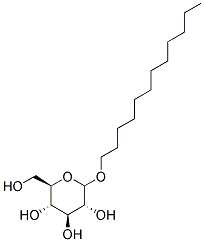
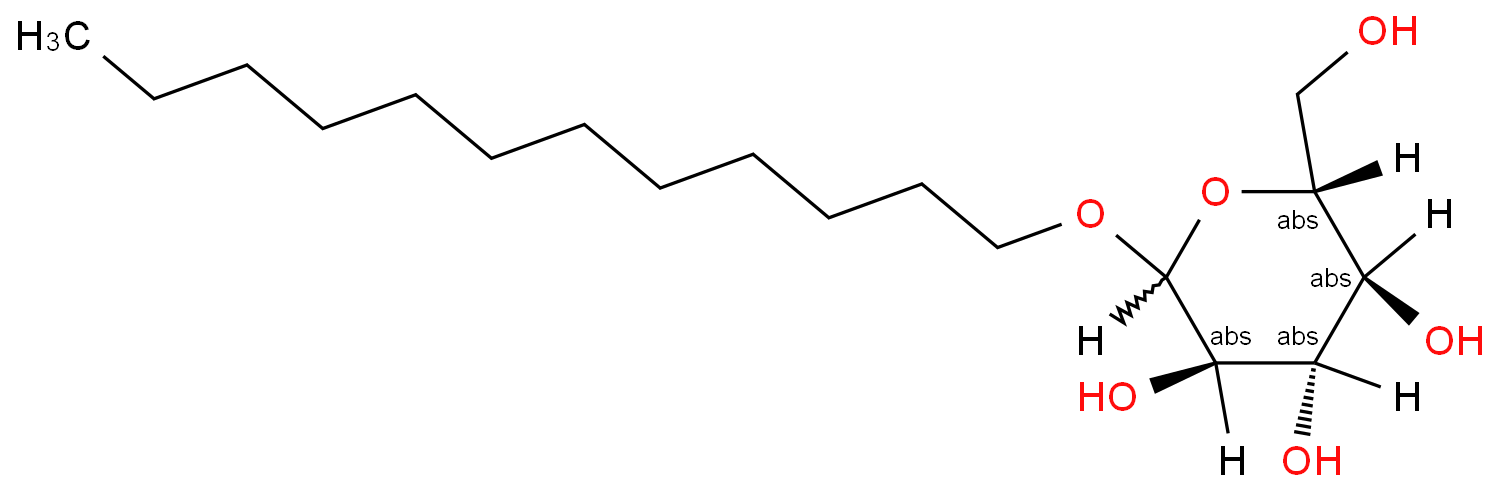
Lauryl Glucoside (CAS 110615-47-9) belongs to the alkyl polyglucoside family of non-ionic surfactants obtained by Fischer glycosylation of carbohydrate with fatty alcohol. In commercial practice the number corresponds to oligomeric glucopyranose carrying predominantly C10 to C16 alkyl chains, so the material is multi-constituent rather than a single molecule. A hydrophilic head of one to three glucose units balanced against a lauryl-type tail gives intermediate hydrophilic-lipophilic balance, low critical micelle concentration and strong interfacial activity without ethylene oxide or sulfate functionality.
Two market forces have moved this product from a niche ingredient to a mainstream building block. The reformulation wave away from sulfate and ethoxylated surfactants created demand for a foam-building, skin-mild alternative that is free of 1,4-dioxane concerns by construction, and corporate sustainability commitments created demand for high renewable carbon content with documented ready biodegradability. Buyers therefore evaluate lauryl glucoside on three axes simultaneously: performance in the intended surfactant system, verifiable bio-based content and traceable sourcing of the fatty alcohol chain.
Supply economics follow two agricultural value chains rather than petrochemicals. Glucose comes from hydrolysed starch, while the alkyl group comes from coconut or palm kernel fatty alcohol, whose credentials determine whether a European customer can use the ingredient at all. Because physical form is a viscous solution near fifty percent active matter, logistics, microbiology and temperature control matter as much as synthesis.
Performance originates in the geometry of the molecule. The alkyl chain provides hydrophobic anchoring into sebum and oily soil, while the glucoside head group is bulky, uncharged and heavily hydrated, producing steric stabilisation of micelles rather than electrostatic repulsion. That combination yields relative insensitivity to water hardness and electrolytes, compatibility across a wide pH range and synergy with anionic surfactants, where insertion of the bulky head reduces the irritation of sulfate-based systems.
Manufacture is an acid-catalysed acetal formation between glucose and fatty alcohol, followed by neutralisation and removal of excess alcohol. Although the chemistry is classical, process engineering determines every quality parameter customers care about: colour, residual alcohol, oligomer distribution and microbial condition. The critical control variables are water removal during reaction, catalyst selection and the efficiency of short-path alcohol stripping, because residual fatty alcohol drives odour and downstream formulation problems.
The dominant driver is reformulation. Retailer restricted substance lists, state-level contaminant limits and consumer pressure have pushed personal care and household brands to reduce ethoxylated and sulfated surfactants, and this chemistry offers a drop-in replacement in many systems without loss of foam. The second driver is industrial: hard surface cleaners, food-service detergents and agrochemical adjuvants value electrolyte tolerance. Volatility arises mainly from agricultural feedstock rather than from industrial demand.
Europe hosts mature production tied to its personal care and detergent industry, combining imported fatty alcohol with locally hydrolysed starch. Asia-Pacific and China have expanded capacity rapidly, integrated with oleochemical complexes supplied by palm-derived feedstock and supported by large domestic starch refining. North America combines local production with imports, serving mainly household and cleansing customers. Because finished grades are fifty percent water, economics favour regional supply, and long-distance trade concentrates in speciality or certified-sustainable grades.
Price follows fatty alcohol and starch markets, with lauryl alcohol quotations and palm kernel oil direction transmitting into contract formulas within a quarter. A clear bifurcation separates technical home care grades from certified cosmetic grades requiring additional documentation, testing and chain-of-custody evidence, and separates coco-derived from palm-derived cuts where customers specify one or the other. Certification, audit and analytical costs create premiums that persist regardless of spot feedstock movements.
Regulatory exposure is moderate but documentation-heavy. It is inventory-listed in all major jurisdictions, yet each region evaluates it differently: the European Union through detergent, cosmetic and microplastics policy, the United States through TSCA status and state contaminant limits, and importers through inventory equivalence. Suppliers should check every certificate against the composition actually shipped.
Sustainability is the commercial centre of gravity for this product. Because both carbohydrate and alkyl feedstock are agricultural, credibility depends on demonstrating that renewable content is real, that biodegradability is documented, and that the oleochemical chain is not driving deforestation. Manufacturing also consumes steam for distillation and vacuum stripping, so energy sourcing and efficiency shape the cradle-to-gate profile reported to customers.
Credible accounting separates Scope 1 plant emissions, Scope 2 purchased electricity for vacuum and pumping, and Scope 3 emissions from cultivation, milling, starch hydrolysis and feedstock transport. Producers increasingly publish footprints using ISO 14067 with ISO 14040 and ISO 14044 methodology. Since agriculture dominates upstream impact, credible reductions come from certified low-deforestation programmes rather than plant efficiency alone.
Traceability of the alkyl chain is the decisive question. Palm-derived fatty alcohol should carry recognised chain-of-custody certification with segregation or mass-balance documentation to mill level, while coconut-derived or explicitly palm-free grades must be evidenced through supplier declarations and auditable records rather than assertion. Bio-based content can be substantiated by carbon-14 measurement against ASTM D6866 or EN 16640 and expressed as renewable carbon share. ISO 14001 certification, water stewardship and absence of Substances of Very High Concern complete the expected evidence package.
Because the commercial product is roughly half water and microbiologically nutritive, distribution discipline determines whether a shipment is usable. Viscosity is strongly temperature dependent, freezing irreversibly damages appearance, and contaminated transfer hoses seed microbial problems that appear only after weeks in a customer tank. Export programmes should therefore define accepted temperature ranges, container hygiene and sampling protocol as contractual terms.
Aqueous alkyl polyglucoside solutions are normally not regulated as dangerous goods for road, sea or air transport, although grades classified for serious eye damage still carry GHS labelling and require appropriate pictograms in workplace handling. The operational risks are physical rather than hazardous: freezing below roughly five degrees Celsius can cause irreversible gelling, while prolonged exposure above sixty degrees Celsius darkens product. Insulated containers, temperature loggers and winter routing plans are therefore standard good practice.
Winning strategies treat this ingredient as a documented sustainability asset rather than a commodity surfactant. Producers who can offer palm-free, certified-mass-balance and purely coconut-derived options from the same plant, backed by carbon-14 verified bio-based content, convert regulatory and customer pressure into durable commercial advantage.
Alkyl polyglucosides occupy a rare position where performance and sustainability arguments align. The combination of a steric, uncharged glucose head with a renewable alkyl tail delivers interfacial activity, hard water tolerance and mildness, plus ready biodegradability and high bio-based content. Its multi-constituent nature means that specifications must be written in terms of chain distribution and degree of polymerisation rather than simple assay.
For contract manufacturers and speciality ingredient developers, the opportunity is partnership rather than volume: tailored hydrophobe cut and oligomer distribution, pilot glycosylation campaigns, residual alcohol reduction studies, analytical development and validation, and documentation covering REACH, CLP, TSCA, biodegradability and chain-of-custody claims. The boundary must remain clear throughout: this is an industrial ingredient supplied to qualified formulators, and no step transfers responsibility for finished consumer product claims from the brand to the ingredient supplier.
Powered by Guidechem
This white paper is exclusively compiled by the Guidechem Intelligence Team based on global customs data, regulatory databases, and industry research. Guidechem is a leading global B2B chemical platform, dedicated to connecting global buyers with verified, high-quality manufacturers.
Relying on Guidechem's extensive global database, we have mapped the core participants in the current global Lauryl Glucoside supply chain:
Disclaimer: The content of this white paper is compiled based on public market data and regulatory information available as of 2026. Global chemical regulations are subject to dynamic adjustments. In actual export operations, enterprises must consult professional regulatory advisors or relevant competent authorities to obtain the latest compliance guidance.
|
 |
 |
 |
 EN
EN
 Agricultural News
 Food News
 Industrial News
 Cosmetic News
 Pharmaceutical News
 Science News

 13YRS
13YRS

