Guideview >  Articles >  Trends  > Oleic acid:Exports & Compliance White Paper 2026

Oleic acid:Exports & Compliance White Paper 2026

Oleic acid (CAS 112-80-1) is a monounsaturated fatty acid for oleochemicals and personal care. Sourcing in 2026 means stable supply, sustainability credentials, and clear specs - see export trends here. Valentine5 MIN READOctober 8, 2026
Oleic acid White Paper

I. Executive Summary

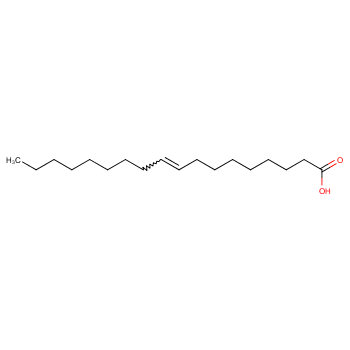
Oleic acid (CAS 112-80-1) is the ubiquitous monounsaturated omega-9 fatty acid, systematically cis-9-octadecenoic acid with molecular formula C18H34O2 and molecular weight 282.46 g/mol. A single cis double bond bend the chain sufficiently to depress melting behaviour while offering markedly better oxidative stability than polyunsaturated analogues. It is the dominant fatty acid of olive and high-oleic sunflower oils, a major component of tallow and palm olein, and a recovered constituent of tall-oil fatty acid from kraft pulping.

Commercial supply spans low-cost technical grades used for soaps and lubricity through premium low-colour, low-peroxide materials for pharmaceutical excipient and personal-care use. Pricing therefore reflects grade discipline rather than a single commodity benchmark. Upstream economics increasingly depend on policy: renewable fuel mandates absorb tallow and used cooking oil, while food-industry reformulation away from partially hydrogenated fats sustains demand for high-oleic varieties. Through 2026, suppliers able to document provenance, contaminant control, and consistent oxidative status will hold a structural advantage over purely price-driven sellers.

This white paper analyses molecular behaviour and derivative chemistry, examines splitting and fractionation technologies, and maps global capacity, trade flows, and pricing tiers. It also reviews applicable regulatory frameworks including REACH and CLP obligations in Europe, food-additive and pharmacopoeial requirements, and United States TSCA and FDA pathways, before addressing carbon accounting, due-diligence traceability, export logistics, and enterprise expansion strategy. Throughout, emphasis rests on how apparently identical specifications conceal meaningful differences in origin, purity, and stability performance.

II. Product Deep Dive: Molecular Mechanisms and Production Evolution

2.1 Physicochemical Properties and Mechanisms

The acid is a colourless to pale yellow oily liquid at room temperature, solidifying near thirteen to sixteen degrees Celsius and boiling above three hundred and fifty degrees Celsius at atmospheric pressure with practical distillation conducted under high vacuum. It is insoluble in water, freely soluble in ethanol, ether, chloroform, and hydrocarbon solvents, and exhibits characteristic acid behaviour including salt formation with alkali to yield oleate soaps.

  • Membrane Behaviour and Metabolic Role: As the principal monounsaturated fatty acid in human tissue and dietary oils, it influences membrane fluidity, lipoprotein metabolism, and cell signalling without obligate conversion to eicosanoid precursors. Replacement of saturated fat by oleic-rich oils supports recognised cardiovascular dietary strategies, which has institutionalised its role in reformulated foods. Topically it enhances penetration and imparts emollience with low irritation potential.
  • Stability Profile and Derivative Reactivity: Because only one allylic pair exists and no bis-allylic position is present, radical propagation proceeds far more slowly than in linoleic acid, giving superior shelf-life, higher usable frying temperatures, and lower polymer formation. Yet the double bond still permits epoxidation, ozonolysis to azelaic and pelargonic acids, metathesis to alpha-olefins, hydrogenation to stearic acid, and esterification or amidation to oleochemical intermediates.

2.2 Synthesis and Manufacturing Technologies

Manufacture is separative rather than constructive, beginning with hydrolysis of triacylglycerols from tallow, palm, olive-pomace, or high-oleic seed oils, followed by enrichment. Continuous high-pressure counter-current splitting yields crude fatty-acid mixtures alongside glycerol-rich sweet water, after which vacuum distillation removes colour bodies and odoriferous volatiles. Enrichment of the monoene fraction relies on low-temperature solvent crystallisation or detergent-emulsification processes exploiting melting-point differences, on short-path or molecular distillation for finer cut control, and increasingly on selective lipase routes.

  • Fractionation Technology and Oleochemical Integration: Fractional crystallisation separates stearic and palmitic saturates from oleic-rich liquid fractions, with yields governed by cooling profile, solvent ratio, and crystal growth control. Integrated oleochemical complexes couple this step directly to downstream units producing oleyl alcohol, oleamides, esters, ethoxylates, dimer acids, and azelaic acid, thereby capturing margin across the value chain.Where very high purity is required, urea adduction or enzymatic selective esterification further suppresses saturate content.
  • Quality Preservation and Grade Discipline: Because oxidation and colour develop mainly through thermal history and metal contact, producers minimise residence time at temperature, use stainless construction, and exclude copper and brass fittings from contact surfaces. Bleaching earth or activated carbon polishing reduces colour, while nitrogen blanketing of storage protects peroxide value.Pharmaceutical and personal-care campaigns operate in segregated lines with validated cleaning, since carry-over from technical-grade campaigns is detectable by trace-metal and colour testing.

2.3 Core Application Matrix

  • Surfactants, Esters, and Personal Care: A large share of output converts into oleochemical derivatives: ethoxylated esters and sorbitan derivatives for emulsification, oleates for textile and metalworking auxiliaries, oleamides as polymer slip and antiblock agents, and oleyl alcohol for conditioning and emollient esters. In cosmetics the acid itself functions as emollient, penetration enhancer, and viscosity modifier, valued for a favourable sensory profile.
  • Nutrition, Food, and Pharmaceutical Excipient Use: Food applications exploit high-oleic oils for frying stability and improved nutritional profiles, while purified acid serves as a lubricant, antifoam, and emulsifying aid under applicable additive provisions. In pharmaceuticals it appears as an excipient in semi-solid and self-emulsifying systems and is covered by recognised pharmacopoeial monographs specifying iodine and acid values.
  • Lubricants, Rubber, and Industrial Uses: Technical grades supply metalworking fluids, rolling-oil formulations, textile lubricants, drilling-fluid additives, rubber processing aids, and soap manufacture. Its liquidity and oxidative stability support ester-based synthetic lubricant stocks with advantageous low-temperature behaviour.

III. Global Market Supply-Demand Landscape and Export Trends

3.1 Demand Drivers and Market Shifts

Demand growth is propelled by food reformulation away from partially hydrogenated fats toward high-oleic oils, by expansion of personal-care markets in Asia, and by sustained industrial use of oleochemical derivatives. Regulatory scrutiny of trans fats and of mineral-oil-derived ingredients reinforces substitution toward plant-derived monoene chemistry. Simultaneously, renewable diesel and sustainable aviation fuel capacity absorb tallow and used cooking oil that historically fed technical oleic streams, tightening residual supply.

3.2 Capacity Distribution and Export Flows

Oleochemical conversion is concentrated in Southeast Asia and China, where integrated port-adjacent complexes process imported palm solutions and tallow into fatty acids and downstream derivatives. Europe retains specialty capability anchored by tall-oil recovery from Nordic pulping and by high-oleic sunflower processing serving food and cosmetic customers. The Americas combine substantial rendering-derived tallow volumes with soybean fractionation.

3.3 Market Bifurcation and Pricing Dynamics

Pricing tiers reflect origin and documentation rather than chemistry alone. Technical tallow-derived material trades competitively and follows rendering economics, whereas pharmaceutical and personal-care grades, typically produced from segregated vegetable streams with validated cleaning and low peroxide values, command durable premiums reflecting additional testing and certification. Intermediate product-grade grades serve food-contact and general industrial uses.

IV. In-depth Analysis of Global Compliance and Regulatory Barriers

Compliance obligations vary sharply by declared application, since identical chemistry may enter a lubricant, a food line, or a pharmaceutical product. Each destination imposes its own purity expectations, contaminant ceilings, and documentary evidence, so producers serving multiple segments must maintain campaign segregation with demonstrable cleaning validation. Origin also matters: animal-derived streams face different acceptability constraints than vegetable-derived streams, particularly for religious-certified or vegetarian products.

4.1 European Market: REACH, CLP, and Sector-Specific Directives

  • REACH Registration and CLP Communication: C18 monounsaturated fatty acids derived from natural sources are covered by existing registrations, and importers must confirm that the relevant tonnage band and use pattern align with registrant exposure scenarios. Although the substance often carries no harmonised hazard classification, registrant notifications may address skin or eye irritation potential, and safety data sheets must document handling and disposal accordingly.
  • Food Purity, Contact Materials, and Due Diligence: Food-use material must satisfy specified purity criteria covering acid value, iodine value, unsaponifiable matter, colour, and contaminants including heavy metals, polycyclic aromatic hydrocarbons, and process contaminants associated with refined fats. Where the acid is incorporated into food-contact plastics or coatings, applicable contact-material rules and migration limits supplement additive requirements.

4.2 North American Market: TSCA, EPA, and FDA Regulations

  • TSCA Inventory Position and EPA Interface: The acid appears as an active substance on the TSCA inventory, so routine industrial import requires no premanufacture filing, but importers should retain documentation substantiating the listing claim and correct tariff classification. Bulk storage sites must observe applicable fats and oils reporting and spill-prevention provisions once inventory thresholds are met.
  • FDA Route by Application: Food and food-contact applications rely on applicable fatty-acid additive provisions or recognised spilling practices, while cosmetic use follows ingredient-label declarations and product safety substantiation. Where the acid serves as a pharmaceutical excipient, conformance with the applicable pharmacopoeial monograph covering iodine value, acid value, and related characteristics is expected, with supporting documentation filed in the finished-product application.

4.3 The Critical Hurdle: Quality Control and Safety Limits

Compliance Warning:Apparent purity is insufficient evidence of suitability, because oxidative history, trace-metal contamination, and hidden carry-over from technical campaigns determine downstream success. Buyers should specify and verify not only composition by gas chromatography but also acid value, iodine value, peroxide value, anisidine value, colour, titre behaviour, moisture, unsaponifiable matter, and heavy metals at release and on receipt.

V. Green Trade Barriers and ESG in Manufacturing

Sustainability requirements now shape market access for oleochemicals as forcefully as technical specifications do. European buyers must evidence deforestation-free provenance for palm and soy-derived inputs, while multinational customers increasingly require verified product carbon footprints for their Scope 3 disclosures. Because agricultural emissions dominate the footprint, credibility depends on supplier-specific data rather than regional averages.

5.1 Carbon Footprint and Circular Economy

Cradle-to-gate emissions arise predominantly from agriculture and rendering, including fertiliser use, nitrous oxide emissions, cultivation diesel, livestock emissions where tallow is used, and land-use change where forest risk commodities are involved. Downstream contributions come from high-pressure splitting steam, vacuum distillation energy, and freight. Tallow-derived streams can perform favourably on allocation logic since rendering valorises unavoidable by-products, while tall-oil recovery credits pulping residues.

5.2 Sustainable Sourcing and Traceability

Traceability must extend to plantation or render source, supported by geolocation data, risk assessment, and documented mitigation consistent with European due-diligence obligations. Mass-balance certification provides a practical transitional pathway, whereas segregated supply supports premium market positioning and simplified customer acceptance. Leading producers operate digital systems linking inbound deliveries to finished lot numbers, integrated with ISO 9001, ISO 14001, and ISO 45001 management systems and recognised sustainability audit frameworks.

VI. Supply Chain Resilience and Export Logistics

Resilience starts with multi-origin qualification, because tallow, palm, and high-oleic seed streams respond differently to policy, weather, and renewable-fuel demand. Buyers should maintain at least two qualified sources with distinct feedstock bases and harmonised specifications. Because bulk movement depends on tank availability and cleanliness, logistics planning deserves the same rigour as production planning. Contract structures referencing transparent indices with defined adjustment mechanisms reduce dispute risk.

6.1 Packaging Standards and Moisture/Contamination Control

  • Bulk Containment and Metal Exclusion: Bulk exports normally travel in stainless steel isotanks or dedicated tank containers, with epoxy-lined drums for smaller food-grade volumes. Because copper and brass accelerate oxidation catastrophically, contact surfaces, pumps, and gaskets must be qualified for fatty-acid service and documented accordingly.
  • Temperature Behaviour and Grade Segregation: Because the material solidifies near typical ambient minimums, winter shipments to temperate destinations frequently require heated tanks or insulated containers, with documented heating protocols that avoid localised overheating. Products should be stored under nitrogen where extended hold is anticipated.

6.2 Dangerous Goods Identification and Transit Protocols

The acid is normally not classified as dangerous for transport, given its high flash point, low acute toxicity, and ready biodegradability, so it ships as general cargo under standard multimodal procedures. Shippers should nevertheless carry accurate product descriptions, non-hazard statements, and spill-response documentation, since several receivers require such evidence. Elevated-temperature transport must comply with applicable tank and road transport rules for heated liquids.

VII. Enterprise Global Expansion Strategy Guide

Durable expansion requires moving deliberately up the value ladder, since technical-grade competition rewards only scale while premium segments reward documentation and consistency. Companies should therefore choose target segments, invest in the corresponding segregation and analytics, and then build regional service capability. Feedstock flexibility remains essential given renewable-fuel competition.

  1. Segment the Portfolio and Build Grade Capability: Define clear grade families with distinct specifications, origins, and campaign segregation, then invest in low-temperature fractionation and short-path distillation to reach premium colour, peroxide, and purity levels. Pair this with validated cleaning between campaigns and metals management so premium lots remain free of technical carry-over.
  2. Secure Multi-Origin Feedstock and Due Diligence: Qualify vegetable, tallow, and tall-oil routes to hedge against policy and weather shocks, recognising that each carries distinct acceptability constraints for customers. Build geolocation-based due-diligence systems and recognised chain-of-custody certification for forest-risk inputs, with special attention to used cooking-oil authenticity.
  3. Regionalise Finishing and Decarbonise Operations: Position blending, drumming, and finishing assets near demand centres to reduce lead time and freight exposure, retaining heavy conversion where energy is competitive. Procure renewable steam and electricity, integrate waste heat between splitting and distillation, and publish verified footprints using stated allocation rules.

VIII. Conclusion

Oleic acid occupies a central position precisely because it balances the competing demands of stability and reactivity. Through 2026, growth should continue across high-oleic food reformulation, personal care, and oleochemical derivatives, while distillation byproducts such as azelaic acid add further value potential.

For buyers, the practical guidance is to qualify sources with distinct feedstock bases, verify oxidative indices and trace metals rather than composition alone, and retain periodic independent verification even for long-standing suppliers. For producers, the strategy that endures combines premium grade capability, validated campaign segregation, credible deforestation-free due diligence, and measurable energy-intensity reduction.

IX. Industry Resource Connection and Supplier Ecosystem

Powered by Guidechem

This white paper is exclusively compiled by the Guidechem Intelligence Team based on global customs data, regulatory databases, and industry research. Guidechem is a leading global B2B chemical platform, dedicated to connecting global buyers with verified, high-quality manufacturers.

Guidechem Global Oleic acid Supplier Ecosystem List

Relying on Guidechem's extensive global database, we have mapped the core participants in the current global Oleic acid supply chain:

  • North America Ecosystem: This tier combines rendering-based producers, soybean fractionators, and oleochemical refiners serving lubricants, surfactants, and food customers. Its strengths are abundant tallow and vegetable feedstock, integrated rail and tank logistics, and mature quality documentation; its weakness is competition from renewable fuel producers for the same raw materials.
  • Europe Ecosystem: European participation is anchored by tall-oil recovery from pulping, high-oleic sunflower processing, and specialty oleochemical derivatives. Strengths include rigorous due-diligence compliance, proximity to demanding food and cosmetics customers, and advanced fractionation expertise.
  • Asia-Pacific and China Ecosystem: Asia-Pacific provides the largest conversion capacity through integrated port complexes splitting imported palm and tallow streams into fatty acids and derivatives. Its advantages are scale, efficient utilities, and extensive downstream integration; its weaknesses include import dependence and uneven traceability maturity.

Disclaimer: The content of this white paper is compiled based on public market data and regulatory information available as of 2026. Global chemical regulations are subject to dynamic adjustments. In actual export operations, enterprises must consult professional regulatory advisors or relevant competent authorities to obtain the latest compliance guidance.
Make Guideview Preferred Source on Google
  Oleic acid          
Related News
