-
We detected your language preference as English. Would you like to switch to the English version for a better experience?
Switch to English
Stay here


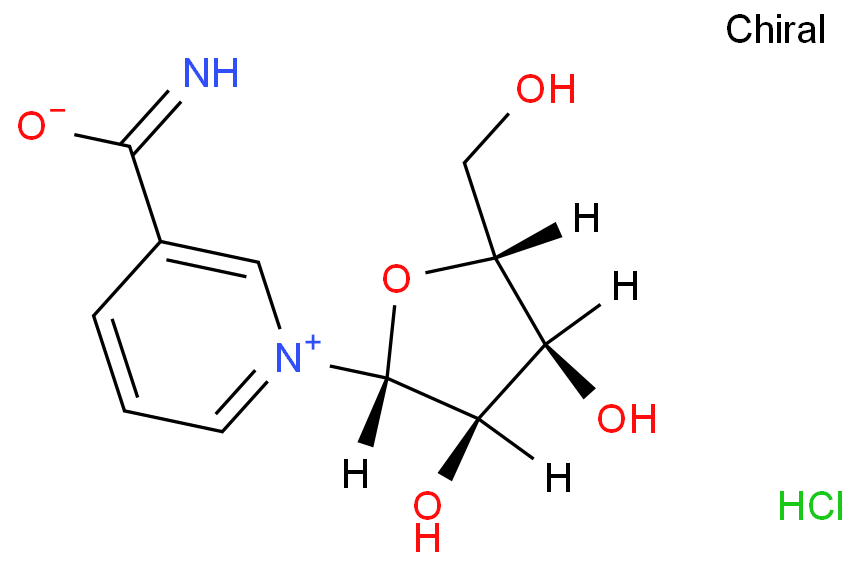
Nicotinamide riboside chloride (CAS 23111-00-4) is the chloride salt of nicotinamide riboside, a quaternary pyridinium nucleoside in which nicotinamide is linked through the pyridine nitrogen to beta-D-ribofuranose. With a salt molecular weight near 291 and a cation mass near 255, it belongs to the nicotinamide adenine dinucleotide family of metabolites and is studied biochemically as a precursor entering the nicotinamide adenine dinucleotide salvage pathway. It is supplied as a food supplement ingredient, a cosmetic ingredient and a research reagent, and it is not an approved medicinal product in any jurisdiction covered by this analysis.
Manufacturing difficulty is concentrated in one transformation, formation of the N-glycosidic bond with correct beta anomeric configuration, followed by removal of protecting groups and isolation of a permanently charged, strongly hygroscopic solid. Purification is therefore rarely trivial, and campaigns historically combine crystallisation of protected intermediates with high-resolution chromatography. For contract development and manufacturing organisations, the differentiators are anomeric purity, control of nicotinamide and ribose degradants, accurate counter-ion stoichiometry and demonstrated control of water content, all of which must be reflected in an honest compositional specification.
Regulatory status, not chemistry, sets the commercial boundaries. In Europe the chloride form has been authorised under legislation governing novel foods subject to defined purity specifications, use levels and labelling conditions, and those conditions are tied to the specific authorised material. In the United States the ingredient is positioned within the dietary supplement framework through company-specific pathways, while 2026 sees continued divergence across Asia-Pacific markets. Across all regions no health claims may be made, and no dosing guidance may accompany any B2B supply.
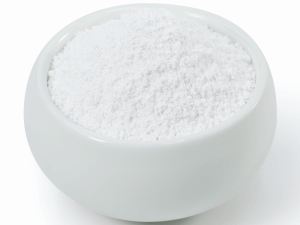
The molecule carries a permanent positive charge on the pyridinium ring, paired with a chloride counter-ion in strictly equimolar proportion, which makes it freely water-soluble and essentially insoluble in non-polar media. Commercial material is typically a white to off-white amorphous powder that takes up moisture readily, so water content determined by Karl Fischer titration is always part of the material balance. Its UV-active pyridinium chromophore supports routine detection, while the permanent charge dictates the chromatographic approach, with hydrophilic interaction methods or ion-pair reversed-phase systems normally preferred.
Practised chemistry starts from a protected ribofuranose donor carrying acyl protecting groups, which is coupled with nicotinamide under Lewis acidic promotion to build the quaternary nitrogen glycosidic bond. The acyl group at the neighbouring ring position governs stereochemical outcome through anchimeric participation, favouring the desired beta anomer over the alpha isomer that would otherwise dominate. After deprotection, typically under mildly basic or acidic alcohol conditions, the free nucleoside salt is purified and isolated by controlled drying to give the finished ingredient.
Demand originates in consumer interest around cellular metabolism and healthy ageing, amplified by brands that can only communicate within tightly constrained claims frameworks. Because those constraints differ sharply by region, the same ingredient is marketed under very different positioning in different markets, and any supplier must therefore build region-specific documentation rather than a single global claim set. On the technical side, purchasers have become markedly more attentive to identity testing: complaints about inconsistent composition have made full compositional verification a purchase criterion rather than an afterthought.
Production requires glycosylation chemistry, chromatographic capability and food-grade handling under controlled humidity, so the installed base is narrower than for commodity vitamins. Asia-Pacific, and Greater China especially, has become the dominant source of exported tonnage, combining carbohydrate chemistry infrastructure with competitive purification capacity. European and North American participants retain a strong role in high-documentation grades, method development and finished-brand formulation. Consequently bulk ingredient flows move westward while finished retail brands are largely formulated inside their own regulatory bloc to simplify compliance.
A pronounced two-tier market has emerged. Ingredient-grade material meeting novel-food or supplement specifications, supported by full certificates covering identity, anomeric purity, heavy metals, residual solvents, microbial limits and water content, sustains a durable premium. Undocumented material competes on price and is progressively excluded from regulated channels as brand owners face liability for what their labels imply. As capacity has expanded, average prices have compressed, shifting competition towards delivered consistency, audit-readiness and the ability to support customer product registrations.
Three regulatory realities define this ingredient. First, it is a food or dietary ingredient rather than a medicine, and it carries no approved therapeutic indication. Second, its lawful use is form-specific: an authorisation granted for one salt or one set of purity specifications does not automatically extend to another salt or another manufacturing route. Third, health claims are either prohibited or tightly circumscribed in every major market, so the commercial story has to be built from technical composition and lawful category descriptions rather than from benefit language.
Although production volumes are modest, purification intensity gives the molecule an outsized environmental footprint relative to tonnage. Chromatographic polishing, which separates anomers and removes nicotinamide, consumes large solvent volumes, and low-temperature drying adds energy demand. Carbon accounting for the product therefore falls mainly into Scope 3 through purchased solvents and their treatment. Credible producers quantify this, operate certified ISO 14001 environmental and ISO 9001 quality systems, and, where the ingredient goes into food, layer in food safety management certification.
The highest-leverage improvements are straightforwardly technical. Improving anomeric selectivity reduces the chromatographic load rather than merely treating it, solvent recovery by distillation lowers both virgin purchases and waste treatment, and continuous or simulated moving bed operation can cut eluent consumption substantially. Electrification of drying and renewable supply contracts address remaining Scope 2 exposure. Because the product ships under refrigeration, lane optimisation and right-sized insulation also reduce the transport share of reported Scope 1-3 Emissions.
Traceability questions centre on the carbohydrate-derived ribose feedstock, which typically originates from plant biomass or fermentation and therefore raises expected declarations on genetically modified organism status, pesticide residues, allergens and country of origin. Because the ingredient often enters food and cosmetic supply chains, customers additionally require absence statements for animal-derived inputs, documentary support for religious certification where claimed, and full batch genealogy from donor through to finished lot. Documented refusal of unapproved consumer and inappropriate pharmaceutical channels is likewise part of the governance evidence sophisticated brands now expect.
Resilience planning starts with the recognition that this ingredient degrades rather than spoils suddenly, so time and temperature in distribution are quality variables rather than conveniences. Buyers should contract defined maximum excursion limits, require data loggers on every shipment, and agree retest provisions. Because chromatographic capacity is the practical bottleneck for supply expansion, second-source qualification should be initiated well before any volume commitment, and retained lots stored under the recommended conditions provide valuable buffer.
The salt is not normally classified as dangerous for transport, and consignments move as general cargo provided the required chemical documentation accompanies them. Refrigerated transit with calibrated monitoring is nevertheless standard, with validated lanes and pre-agreed excursion handling instructions. Because some authorities treat the consignment as a food ingredient rather than a chemical, importers should prepare certificates of analysis, origin statements and food-chain declarations in advance, since missing documentation at clearance is the most frequent cause of product loss in this category.
Winning in this category depends on being able to prove what is in the drum. Brand owners have learned that inconsistent ingredient composition creates regulatory and reputational exposure that no price discount compensates, so suppliers who can demonstrate rigorous identity testing, honest compositional disclosure and route transparency convert that capability into preferred-supplier status. Everything else follows from that foundation, including pricing power and export optionality.
Nicotinamide riboside chloride is a chemically demanding ingredient whose commercial destiny is decided by documentation. The route is short in concept but unforgiving in practice, because one stereochemical step and one hygroscopic isolate determine whether a batch meets the strict composition upon which regulatory clearance depends. Suppliers treating specification integrity as the product, rather than as paperwork appended afterwards, consistently outperform those competing on headline purity alone.
Through 2026 and beyond, expect continued regional divergence in permitted uses and continued compression of undifferentiated pricing. The defensible position combines verified total composition, route transparency, solvent and energy reduction, and an explicit refusal of any channel implying therapeutic purpose. Organisations assembling that combination will serve food, cosmetic and research customers from one plant while keeping each documentation stream cleanly separated.
Powered by Guidechem
This white paper is exclusively compiled by the Guidechem Intelligence Team based on global customs data, regulatory databases, and industry research. Guidechem is a leading global B2B chemical platform, dedicated to connecting global buyers with verified, high-quality manufacturers.
Relying on Guidechem's extensive global database, we have mapped the core participants in the current global Nicotinamide riboside chloride supply chain:
Disclaimer: The content of this white paper is compiled based on public market data and regulatory information available as of 2026. Global chemical regulations are subject to dynamic adjustments. In actual export operations, enterprises must consult professional regulatory advisors or relevant competent authorities to obtain the latest compliance guidance.
|
 |
 |
 |
 |
 |
 EN
 Agricultural News
 Food News
 Industrial News
 Cosmetic News
 Pharmaceutical News
 Science News


 2YRS

