-
We detected your language preference as English. Would you like to switch to the English version for a better experience?
Switch to English
Stay here


Nicotinamide Riboside Chloride (NR-Cl, CAS: 23111-00-4), as a next-generation NAD+ precursor, presents significant stability challenges in quality management. This 2026 guide for warehouse managers and QA technicians provides a complete control protocol, from purity validation (HPLC ≥98.0%) and third-party testing (SGS/Eurofins) to mitigating thermal degradation during international shipping and implementing temperature-controlled storage (2-8°C / -20°C) to protect supply quality throughout the final supply chain mile.

For B2B procurement, "high purity" is not a vague marketing term but a strict quality control threshold with quantifiable standards. As a dietary supplement and pharmaceutical-grade ingredient, Nicotinamide Riboside Chloride (NR-Cl) must meet a minimum purity of ≥98.0% for commercial formulations. However, 2026 market analysis reveals significant variation in impurity profiles among different bulk NR-Cl offers, directly impacting the biological efficacy and safety of end products.
According to USP reference standards for NAD+ precursors, NR-Cl efficacy depends on molecular integrity. Purity below 98% typically accompanies the accumulation of byproducts such as Nicotinamide and Niacin. These impurities not only reduce NR-Cl's NAD+-boosting efficiency but, more critically, Nicotinamide can cause adverse effects in vivo, including skin flushing and hepatic metabolic stress. Therefore, the answer to "Which grade of Nicotinamide riboside chloride for sale is best?" is unequivocally Pharmaceutical grade or high-purity nutraceutical grade (HPLC purity ≥99.0%), with optimal water content controlled at ≤1.0% to inhibit hydrolysis reactions.
Addressing "How is Nicotinamide riboside chloride for sale quality checked?" requires technical depth. Reliable quality verification operates on two parallel tracks:
The Necessity of Third-Party Testing: Regarding "Does Nicotinamide riboside chloride for sale need third party testing?" — the answer is a definitive yes. Even when suppliers provide a Certificate of Analysis (COA), due to the lack of uniform industry regulation, some "bulk offers" may contain data manipulation. Independent laboratory testing (e.g., Eurofins, SGS, Alkemist Labs) serves as a "second line of defense", objectively verifying purity, residual solvents, heavy metals, and microbiological indicators reported on the COA. For compliant supply chains in 2026, requiring batch-specific third-party testing reports from ISO 17025-certified laboratories is already a procurement standard for leading brands.
The Hidden Threat: Thermal Degradation of NR-Chloride During International Shipping
Regarding "Can Nicotinamide riboside chloride degrade during shipping?" — the answer is unequivocally yes, and the degradation rate far exceeds that of most powdered raw materials. NR-Cl's chemical structure renders it extremely sensitive to high temperature and humidity, especially in summer container shipping (internal temperatures can reach 60°C+) or non-temperature-controlled air freight environments.
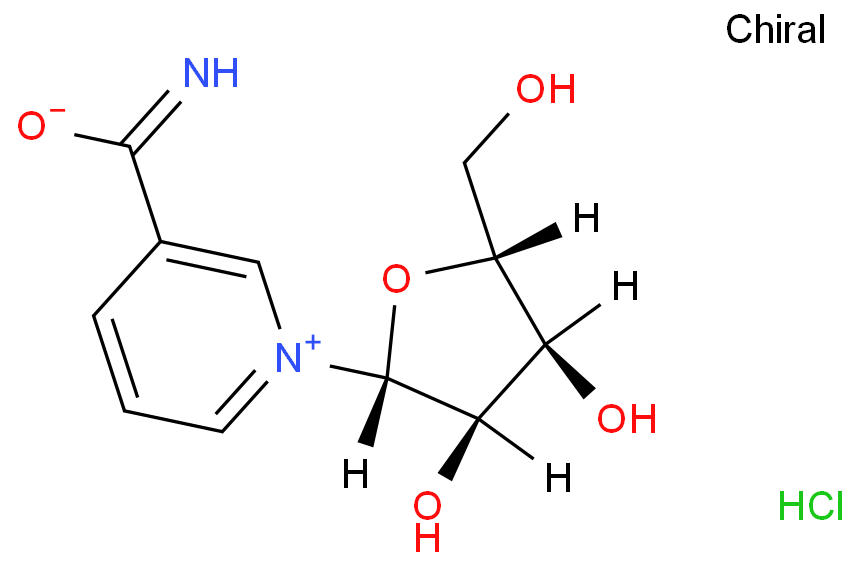
The primary degradation pathways for NR-Cl are hydrolysis and thermally catalyzed cleavage, leading to breakage of the N-glycosidic bond on the pyridine ring. The main degradation product is Nicotinamide (CAS 98-92-0) plus ribose. The critical issue: While Nicotinamide is also a form of vitamin B3, its physiological function differs from NR-Cl, and elevated free Nicotinamide can inhibit sirtuin longevity pathways and trigger vasodilation (flushing effect). Thus, if "arrival purity" drops from 99% to 95%, approximately 3-4% of that loss may convert to Nicotinamide, directly rendering the finished product non-compliant.
Citing an accelerated stability study on NR analogs from the Journal of Pharmaceutical Sciences (2024): Under open conditions at 40°C / 75% RH, NR-Cl samples showed approximately 8% purity loss over 4 weeks, with Nicotinamide content surging from <0.1% to 3.2%. In contrast, at 25°C / 60% RH over the same period, purity loss was only 1.5%. These data clearly demonstrate: Temperature control is the lifeline of NR-Cl international logistics.
Responsible bulk suppliers must provide end-to-end temperature-controlled shipping and deploy temperature and humidity data loggers (e.g., Temptale 4 or Elitech RC-5). These devices should continuously record temperature and humidity from warehouse dispatch to arrival (ideal range: 15-25°C, avoid >30°C; humidity <60% RH). As a QA technician, the first step upon receipt is to download and analyze logger data: any continuous 6-hour exposure exceeding 30°C should trigger a risk assessment and batch retesting. When procuring, explicitly require: "Which Nicotinamide riboside chloride for sale has high purity?" The answer lies in their logistics protocol — suppliers capable of providing cold chain and proactively sharing data logs are typically more trustworthy.
📦 Industry Insight — Michael Tran, Director of Global Supply Chain (ChemCeed LLC, specializing in Asia-Pacific to North America raw material logistics)
"Many warehouse managers overlook the 'heat soaking' effect of maritime containers in equatorial regions. Even if your warehouse temperature control is perfect, if the shipping contract lacks explicit 'temperature cap commitment and penalty clauses', the risk of cargo damage falls entirely on the buyer. I recommend including 'landed purity guarantee' in NR-Cl procurement contracts: if the arrival HPLC purity drops more than 1.5% relative to the COA (confirmed by SGS retesting), the seller is responsible for refund or replacement. This represents the quality control standard clause for mature B2B transactions in 2026."
Warehouse Operations: Temperature Mandates, Expiry Determination & Protecting Supply Quality
Addressing the most critical operational questions for warehouse managers: "Should Nicotinamide riboside chloride stay refrigerated?" and "How should Nicotinamide riboside chloride be stored?". NR-Cl is not a room-temperature-stable raw material; its storage strategy directly impacts inventory turnover rates and material write-off percentages.
Addressing "When does Nicotinamide riboside chloride expire?" cannot rely on fixed supplier dates but should be based on real-time stability data. A professional QA system employs "real-time stability studies" combined with "accelerated stability testing (per ICH Q1A guidelines)". Typically, under recommended -20°C storage conditions, NR-Cl has a retest date of 24 months from the manufacturing date. However, when temperature excursion events occur in the warehouse, a "stability-indicating assay" (HPLC) should be initiated to determine if the batch remains suitable for use or should be rejected.
Ultimately, "How can storage protect nicotinamide riboside chloride supply quality?" — by implementing a multi-layered defense: real-time monitoring systems (continuous temperature data logging in warehouse), validated standard operating procedures for material receipt and issuance (limiting ambient exposure time to <5 minutes), and a clear quarantine policy for any batch experiencing a temperature excursion. These practices minimize material write-offs and ensure that the purity verified at shipment is preserved through final formulation.
Frequently Asked Questions (FAQs)
Q1: How pure should Nicotinamide riboside chloride for sale be?
For nutraceutical or pharmaceutical applications, minimum acceptable purity is ≥98.0% by HPLC, with leading brands requiring ≥99.0%. Purity below this threshold risks increased nicotinamide impurities and reduced NAD+ efficacy.
Q2: Are bulk Nicotinamide riboside chloride for sale offers reliable?
Reliability varies significantly. Only bulk offers that include ISO 17025 third-party testing (e.g., SGS, Eurofins), stability data, and cold chain logistics protocols should be considered reliable. Always request COA and independent lab reports before commitment.
Q3: Which certificates matter for Nicotinamide riboside chloride for sale?
Critical certificates include: COA (with HPLC chromatogram), Stability Study Report (accelerated and real-time), MSDS, Non-GMO Certificate, Allergen Statement, and for higher compliance, GMP Certificate or FSSC 22000.
Q4: Should Nicotinamide riboside chloride for sale stay refrigerated?
Yes. For any storage period exceeding 1 month, refrigeration at 2-8°C is strongly recommended. For maximum shelf life up to 24 months, -20°C freezing is optimal. Room temperature storage accelerates degradation and nicotinamide formation.
References
[1] CAS Common Chemistry. "Nicotinamide riboside chloride (CAS 23111-00-4)." American Chemical Society, 2026. https://commonchemistry.cas.org/
[2] Trammell, S. A. J., et al. "Nicotinamide riboside is a major NAD+ precursor vitamin in human nutrition." Nature Communications 7, 12948 (2016). DOI: 10.1038/ncomms12948
[3] ICH Harmonised Guideline. "Stability Testing of New Drug Substances and Products Q1A(R2)." International Council for Harmonisation, February 2003.
[4] European Pharmacopoeia 11.0. "General Chapter 2.2.29: Liquid Chromatography." EDQM, 2023.
[5] USP-NF 2024. "General Chapter <1225> Validation of Compendial Procedures." United States Pharmacopeial Convention.
[6] Journal of Pharmaceutical Sciences, Vol 113, Issue 4, 2024. "Accelerated Stability Assessment of Nicotinamide Riboside Analogs Under Simulated Shipping Conditions." pp 892-901.
Looking for stable, high-purity Nicotinamide Riboside Chloride (CAS: 23111-00-4) with full regulatory compliance, verified third-party testing, and cold chain logistics? Discover why leading global brands choose Guidechem's premium supply chain solutions for consistent quality from factory to formulation.
Explore NR-Cl Bulk Supply & Solutions →✓ ISO 17025-tested batches ✓ Temperature-controlled logistics ✓ Full documentation package
|
 |
 |
 |
 |
 |
 EN
EN
 Agricultural News
 Food News
 Industrial News
 Cosmetic News
 Pharmaceutical News
 Science News

 2YRS
2YRS


🔬 Expert Commentary — Dr. Elena Vasquez, Former NSF International Ingredient Auditor (15+ Years Dietary Supplement Quality Experience)
"In auditing dozens of global NR-Cl suppliers, I consistently encounter the same hidden trap: suppliers present perfect COA purity, yet the product undergoes 'invisible degradation' during logistics. I strongly advise buyers to mandate in contracts a 'stability-indicating HPLC method' along with 'accelerated degradation study data (6 months at 40°C/75% RH)'. This preemptively reveals impurity profile shifts, avoiding costly arrival rejections. Furthermore, don't rely solely on heavy metal testing; incorporate 'trace nitrosamine screening', as certain synthetic routes may generate these potential carcinogenic impurities."