
I. Executive Summary
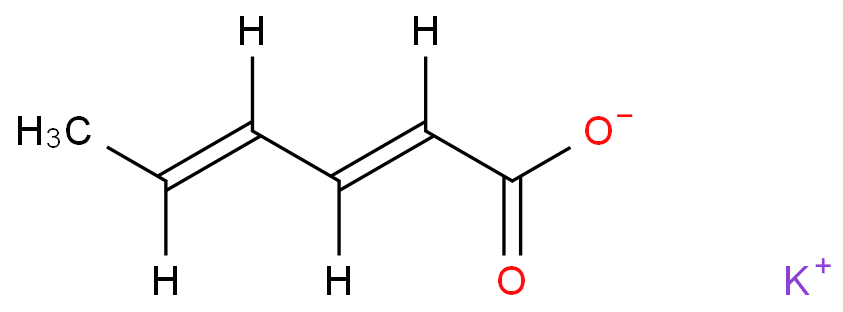
Potassium sorbate (E 202, CAS 24634-61-5) is the potassium salt of trans,trans-2,4-hexadienoic acid and the workhorse preservative of the global food, beverage and personal-care industries. Its position rests on broad antifungal efficacy in the mildly acidic pH band where most foods sit, high water solubility and neutral taste, backed by repeated assessment from the Joint FAO/WHO Expert Committee on Food Additives and the European Food Safety Authority. In 2026 the category sits at the intersection of food-waste targets, clean-label reformulation and tighter carbon disclosure duties.
On the supply side, sorbic acid capacity is concentrated in Asia-Pacific, with China hosting the largest integrated ketene-to-sorbate complexes and Europe a smaller high-purity base. Because ketene is made by high-temperature cracking of acetic acid, the cost curve tracks acetic acid, crotonaldehyde and energy. Consolidation under environmental-permit regimes has removed many small plants, improving consistency but raising concentration risk and making dual sourcing standard.
This white paper assesses the antimicrobial mechanism that governs real-world dosage, the technologies that separate commodity from premium grades, and the application matrix across food, cosmetics, feed and excipient uses. It then examines the compliance regime spanning EU food-additive purity criteria, REACH and CLP, US FDA and TSCA obligations and Asia-Pacific inventories, before covering quality limits, the carbon and traceability agenda, and export packaging.
II. Product Deep Dive: Molecular Mechanisms and Production Evolution
2.1 Physicochemical Properties and Mechanisms
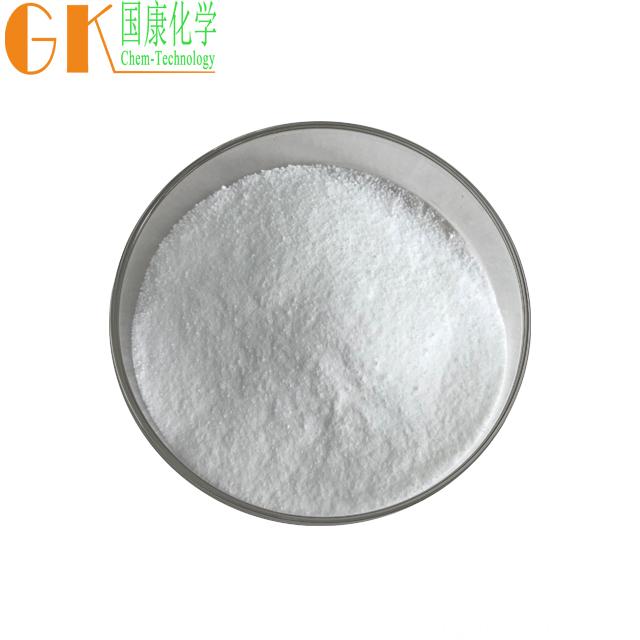
Potassium sorbate is a white to off-white crystalline powder with formula C6H7KO2 and molecular weight near 150.22 g/mol, and it dissolves freely in water but sparingly in ethanol. Activity depends on the pH-dependent equilibrium between the sorbate anion and undissociated sorbic acid, whose pKa is roughly 4.76. Since only the uncharged acid is active, efficacy falls away above about pH 6.0.
- Undissociated-Acid Diffusion and Intracellular Acidification: In mildly acidic matrices, sorbate ions protonate at the cell surface and neutral sorbic acid diffuses into the cell before dissociating. The cell then spends ATP on proton export, the pH gradient collapses, dehydrogenases are inhibited and mold growth arrests, so sorbate must be paired with pH control, water-activity reduction or thermal processing rather than used alone.
- Spectrum, Stability and Matrix Interactions: Potassium sorbate is most potent against yeasts and molds such as Aspergillus, Penicillium, Saccharomyces and Zygosaccharomyces, with narrower activity against catalase-positive and lactic bacteria. The conjugated diene that delivers activity also invites oxidation and sulfite attack, and some molds decarboxylate sorbate to 1,3-pentadiene, producing the characteristic geranium off-odor.
2.2 Synthesis and Manufacturing Technologies
Production proceeds in two stages: synthesis and purification of sorbic acid, then stoichiometric neutralization with potassium hydroxide or carbonate and controlled crystallization. Sorbic acid is made by base-catalyzed condensation of ketene with crotonaldehyde to a polyester intermediate that is hydrolyzed to the trans,trans acid. Ketene is generated on site by high-temperature cracking of acetic acid, which sets both the energy intensity and the hazard profile of the plant.
- Ketene Condensation and Isomer Control: Competitive plants run continuous condensation with tight trans,trans isomer control, since cis isomers depress assay, and recover unreacted aldehyde to cut cost and emissions. On-line spectroscopy holds assay within the 99.0 to 101.0 percent range required by the Food Chemicals Codex and EU purity criteria, and auditors should review isomer charts and ketene-area safety instrumentation.
- Neutralization and Physical-Form Engineering: Neutralization is followed by carbon treatment, filtration and vacuum crystallization or spray drying, then classification into powder, granulated, dust-free or encapsulated grades. Physical-form engineering is the main differentiation lever, because low-dust grades reduce operator exposure and explosion risk, improve dosing accuracy and limit caking in humid climates.
2.3 Core Application Matrix
- Food and Beverage Preservation: Under Regulation (EC) No 1333/2008, E 202 is authorized in cheese, bakery fillings, dried fruit, wine, soft drinks, sauces, dressings, margarine and confectionery at maximum levels expressed as sorbic acid. It is preferred over benzoate where product pH lies between about 4.5 and 6.2, and buyers must verify permitted levels per destination market.
- Cosmetics and Personal Care: Sorbic acid and its potassium salt appear in Annex V of Regulation (EC) No 1223/2009, typically at up to 0.6 percent as acid, in emulsions, wet wipes, oral care and sulfate-free cleansers positioned free of formaldehyde releasers. In the United States the Modernization of Cosmetics Regulation Act adds facility registration, product listing and responsible-person duties, with ISO 11930 testing used to justify the system.
- Feed, Excipient and Industrial Uses: In feed, silage additives, pet food and liquid supplements, sorbate extends open-bag stability and supports mycotoxin-management programs under feed-safety schemes. In pharmaceutical channels it serves as an antimicrobial excipient in syrups, suspensions and topical preparations, supplied to United States Pharmacopeia or European Pharmacopoeia expectations where required.
III. Global Market Supply-Demand Landscape and Export Trends
3.1 Demand Drivers and Market Shifts
Demand is structurally defensive, growing with packaged-food volumes, chilled distribution in emerging markets and food-loss reduction programs. Clean-label reformulation favors sorbate, perceived as a traditional, well-characterized preservative, even as some brand owners pursue preservative-free routes through hurdle technology. Sugar and salt reduction lowers intrinsic preservation capacity and raises inclusion rates, while growth in plant-based beverages and pet food shifts volume into mid-pH matrices where sorbate outperforms benzoate.
3.2 Capacity Distribution and Export Flows
Global capacity is concentrated in Asia-Pacific, with China operating the largest share of integrated plants built on acetic acid, ketene and crotonaldehyde chains. Europe retains a smaller base focused on high-purity and certified grades, North America combines domestic finishing with imports, and India has expanded merchant production. Export flows run east to west and east to south, often through distributors providing repackaging and local stocking.
3.3 Market Bifurcation and Pricing Dynamics
The market has split into a commodity segment priced against acetic acid, crotonaldehyde and energy, and a premium segment where certification, pharmacopoeial conformity and documented carbon footprint command a durable spread. Commodity pricing follows the acetyl chain with a one to two month lag and reacts sharply to permit-driven downtime in China. Premium pricing is decoupled from feedstock volatility because buyers pay for audit-readiness.
IV. In-depth Analysis of Global Compliance and Regulatory Barriers
Potassium sorbate occupies a layered regulatory position: an industrial chemical subject to inventory and classification law, a food additive subject to purity criteria and use-level authorizations, and in some channels a cosmetic preservative or pharmaceutical excipient subject to monographs. Importers often assume a food-grade certificate suffices, then discover that REACH registration, CLP labeling, FDA citations, TSCA certification and national additive authorizations are separate obligations.
4.1 European Market: REACH, CLP, and Sector-Specific Directives
- REACH Registration and CLP Notification: Volumes at or above one tonne per year require registration under Regulation (EC) No 1907/2006, normally through joint submission and an Only Representative for non-EU producers. Under Regulation (EC) No 1272/2008 there is no harmonized Annex VI entry, so suppliers self-classify, commonly for serious eye irritation, and divergence between documents and drum markings frequently delays customs clearance.
- Food-Additive Purity and Food-Contact Rules: Food-use material must satisfy the E 202 specification in Commission Regulation (EU) No 231/2012, including assay of not less than 99 percent on the dried basis, low aldehyde content and tight heavy-metal limits. Use levels are set category by category in Annex II to Regulation (EC) No 1333/2008, supported by HACCP and traceability duties, and buyers typically add FSSC 22000 certification.
4.2 North American Market: TSCA, EPA, and FDA Regulations
- TSCA Status and EPA Interface: Potassium sorbate is an existing TSCA substance, removing pre-manufacture notification, but importers must still meet Section 13 import certification and confirm that no significant new use rule applies. State chemical disclosure regimes and EPA inert-ingredient policies may add documentation for non-food uses, and facilities handling combustible dust should align with OSHA expectations.
- FDA Status, FSMA and Monograph Conformity: Sorbic acid and its potassium salt are affirmed as generally recognized as safe under 21 CFR Part 182 subject to good manufacturing practice, and must meet Food Chemicals Codex identity and purity requirements that US buyers treat as the baseline. Importers operate under the Foreign Supplier Verification Program of the Food Safety Modernization Act, and pharmacopeial conformance shortens pharmaceutical qualification.
4.3 The Critical Hurdle: Quality Control and Safety Limits
Compliance Warning: Most disputes arise not from assay failure but from caking caused by moisture uptake, oxidative degradation that raises aldehyde values and creates off-odor, and heavy-metal or loss-on-drying results exceeding Regulation (EU) No 231/2012, JECFA or Food Chemicals Codex limits. Every order should specify compendial test methods and require a batch-traceable certificate of analysis covering assay, loss on drying, aldehydes, solution pH, heavy metals and microbial counts. Material must never be re-dried, re-milled or repacked by unauthorized parties.
V. Green Trade Barriers and ESG in Manufacturing
Environmental, social and governance criteria have moved from corporate communications to contractual qualification criteria. European and North American brand owners now require product carbon footprints, renewable-energy shares and social-compliance audits before listing a supplier, and Scope 3 disclosure obligations push these requirements upstream to commodity preservatives. For potassium sorbate the profile is dominated by the ketene step, neutralization wastewater and packaging waste, all measurable and improvable.
5.1 Carbon Footprint and Circular Economy
The dominant cradle-to-gate contributor is high-temperature cracking of acetic acid to ketene, which concentrates fuel combustion and process emissions in one unit operation. Reductions come from heat integration, waste-heat recovery and renewable power procurement, verifiable under ISO 14064 and reportable at product level under ISO 14067 using ISO 14040 and ISO 14044 methodology. Circular measures include water recovery, by-product valorization and recyclable packaging. Any carbon claim must be scope-complete and assured.
5.2 Sustainable Sourcing and Traceability
Traceability expectations now extend to acetyl-chain feedstocks and the potassium source, with buyers requesting mass-balance certification of bio-attributed acetic acid and documented labor performance. Certified systems remain the practical currency: ISO 9001 for quality, ISO 14001 for environment, FSSC 22000 or IFS Food for food safety, and SMETA or Sedex for labor. Digital traceability resolving each pallet to reaction batch and analytical results increasingly separates strategic partners from commodity vendors.
VI. Supply Chain Resilience and Export Logistics
Potassium sorbate is not a hazardous cargo in transport terms, but it is a moisture-sensitive, dust-forming food-grade material whose value is destroyed by poor handling. A resilient export program pursues three objectives: keeping water out, keeping lot identity intact and keeping documentation synchronized with the physical shipment. Buyers evaluate suppliers on lead-time reliability, packaging integrity on arrival and complaint-resolution speed, since these matter more than nominal price per tonne.
6.1 Packaging Standards and Moisture/Contamination Control
- Barrier Packaging and Caking Prevention: Standard presentation is a 25 kg multi-wall kraft bag with a food-grade polyethylene liner, palletized and stretch-wrapped, with big bags and fiber drums for larger customers. Because sorbate is hygroscopic and cakes irreversibly, best practice specifies a low water-vapour transmission liner, closure verification, pallet desiccants on tropical lanes and declared storage limits.
- Food-Contact Compliance and Lot Labeling: Each package must carry product name, grade, net weight, manufacturer, production and best-before dates, batch number, storage conditions and destination-language hazard statements. Liners need EU declarations under Regulation (EC) No 1935/2004 and Regulation (EU) No 10/2011 or equivalent FDA food-contact documentation, wooden pallets must meet ISPM 15, and buyers increasingly require serialized codes linking pallets to certificates of analysis.
6.2 Dangerous Goods Identification and Transit Protocols
In standard commercial form potassium sorbate is not classified as a dangerous good under the United Nations Model Regulations, so no ADR, IMDG or IATA declaration applies, although the Safety Data Sheet must carry a Section 14 statement confirming that position. The genuine operational risks are combustible dust, requiring explosion assessment under ATEX or national equivalents, and moisture ingress during humid sea transits. Protocols should include clean food-grade containers, desiccants matched to route humidity and a pre-agreed nonconformance procedure.
VII. Enterprise Global Expansion Strategy Guide
Winning in potassium sorbate in 2026 depends less on capacity than on qualification depth. The supplier that clears a European food-safety audit, satisfies an American Foreign Supplier Verification Program review, documents a verified carbon footprint and delivers consistent physical form displaces cheaper competitors who cannot. The recommended approach is to build a specification ladder, regionalize service and digitize documentation.
- Build a Tiered Specification and Certification Ladder: Separate the portfolio into commodity food grade, certified premium grade with food-safety and religious-diet certification, and pharmacopoeial grade, aligning scheduling, warehousing and analytical release to those tiers. Maintain European REACH registration through an Only Representative where volume justifies it, keep CLP notifications current, and hold Food Chemicals Codex documentation plus Foreign Supplier Verification Program packages ready for US customers.
- Regionalize Service and De-risk Supply: Qualify at least two production sources in different regulatory and energy jurisdictions, hold buffer stock in bonded warehouses near European and North American consumption, and use contracts with feedstock-linked price adjustment and clear force majeure terms. Run annual supply-risk mapping covering trade remedies, permit exposure, port congestion and freight volatility, tested through a documented continuity exercise.
- Convert ESG and Technical Service into Differentiation: Publish a verified product carbon footprint with clear boundaries, commit to dated renewable-energy and water-reduction targets, and hold ISO 14001, ISO 50001 and a recognized social audit so customer scorecards can be completed without repeated data requests. Pair this with application-laboratory support that fixes pH, dissolution, caking and off-flavor problems, and deliver certificates and shelf-life modeling through a portal.
VIII. Conclusion
Potassium sorbate will remain a foundational preservative because its mechanism, toxicological record and cost position align with the mid-pH, reduced-sugar, waste-conscious formulations dominating food development. The contest is no longer who makes the molecule cheapest but who can prove consistency, purity and responsibility with documentation that survives audit. Producers investing in continuous-process control, physical-form engineering and verified carbon data will keep gaining share.
For buyers, the actionable conclusion is to qualify on total compliance cost rather than unit price, insist on compendial test methods with full lot traceability, and build geographically diversified supply with tested contingency. Organizations that institutionalize these practices see fewer rejected lots, faster qualification and lower working-capital drag.
IX. Industry Resource Connection and Supplier Ecosystem
Powered by Guidechem
This white paper is exclusively compiled by the Guidechem Intelligence Team based on global customs data, regulatory databases, and industry research. Guidechem is a leading global B2B chemical platform, dedicated to connecting global buyers with verified, high-quality manufacturers.
Relying on Guidechem's extensive global database, we have mapped the core participants in the current global Potassium sorbate supply chain:
- North America Supply Tier: The North American ecosystem is import-dependent distribution supported by domestic finishing, blending and repackaging capacity. Participants compete on Food Chemicals Codex conformity, Foreign Supplier Verification Program documentation, kosher and halal certification and just-in-time regional warehousing rather than upstream synthesis.
- Europe Supply Tier: European participants are distinguished by rigorous regulatory positioning, including REACH registration maintained through Only Representatives, current CLP notifications and conformity with Regulation (EU) No 231/2012 purity criteria. They compete on audit-readiness, FSSC 22000 or IFS Food certification, documented low-carbon production and reliability under retailer codes.
- Asia-Pacific and China Supply Tier: The Asia-Pacific tier, led by China, provides the largest share of global capacity through integrated acetyl-chain complexes with competitive energy and feedstock positions. Participants increasingly hold ISO 9001 and ISO 14001 certification, publish product carbon footprints and support export documentation for EU, US and Asian destinations, offering the broadest price and specification range.
Disclaimer: The content of this white paper is compiled based on public market data and regulatory information available as of 2026. Global chemical regulations are subject to dynamic adjustments. In actual export operations, enterprises must consult professional regulatory advisors or relevant competent authorities to obtain the latest compliance guidance.


 EN
 Agricultural News
 Food News
 Industrial News
 Cosmetic News
 Pharmaceutical News
 Science News


 13YRS

