
I. Executive Summary
Sodium sarcosinate (CAS 4316-73-8), the sodium salt of N-methylglycine, is a small amino-acid salt with an outsized industrial role: it is the principal amine feedstock for the N-acyl sarcosinate family of mild surfactants behind sulfate-free personal-cleansing formulations worldwide. Commercial material is traded either as an aqueous concentrate, typically 30 to 40 percent active, or as a crystalline solid, and the buyer's specification is dominated by synthesis-derived impurities rather than by assay. Free methylamine, sodium chloride, residual chloroacetate and methyliminodiacetic acid decide whether a lot is acceptable.
Production economics are anchored in two bulk feedstocks, sodium chloroacetate and monomethylamine, both commodity chemicals with chlorine-caustic and methanol-ammonia cost exposure. The dominant route reacts sodium chloroacetate with excess methylamine and neutralises the resulting sarcosine to its sodium salt; a smaller share uses hydrolysis from nitrile intermediates. Downstream, most traded volume is converted by Schotten-Baumann acylation with fatty acid chlorides into sodium lauroyl, cocoyl and myristoyl sarcosinate, with the balance serving electroplating baths, metalworking fluids and pharmaceutical intermediate use.
This white paper is written for industrial procurement, regulatory and formulation professionals. It covers route chemistry and impurity control, the application matrix across personal care and industrial fluids, REACH and TSCA positioning, EU Cosmetics Regulation 1223/2009 and US MoCRA implications for downstream customers, nitrosamine risk management arising from the secondary-amine structure, GHS classification and alkaline handling, bulk-liquid logistics and a regional supply map.
II. Product Deep Dive: Molecular Mechanisms and Production Evolution
2.1 Physicochemical Properties and Mechanisms
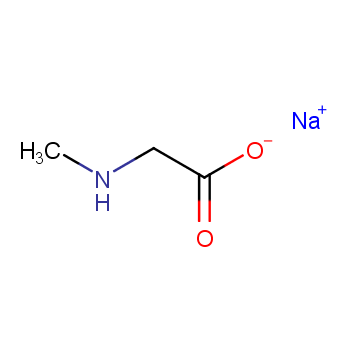
Sodium sarcosinate is the sodium salt of a secondary amino acid: a compact, water-soluble molecule carrying a carboxylate and an N-methyl-substituted amine on an alpha carbon. That combination gives two useful behaviours: as a carboxylate it chelates and buffers; as a secondary amine it is nucleophilic enough for clean acylation with fatty acid chlorides, the property on which the derivative chain depends. Commercial concentrates are alkaline, typically pH 10 to 12, and absorb carbon dioxide from air, slowly shifting pH.
- Ampholytic Salt Behaviour and Buffering: In solution the species distribution is pH-dependent, with carboxylate dominating above neutral pH and the amine protonating as pH falls, so the salt buffers and complexes in plating and metalworking baths. Below roughly pH 4 to 5 the free acid form dominates and solubility of the neutral species falls, so acidic formulation windows must be validated.
- Nucleophilicity as the Basis of Derivatisation: The secondary amine nitrogen is the reactive centre for N-acylation. In Schotten-Baumann conditions the amine competes with hydroxide for the acid chloride, so reaction pH, temperature and acid-chloride addition rate determine the ratio of the desired amide to hydrolysed fatty acid soap. High free-amine content in the feed improves conversion, while high salt content increases viscosity and complicates downstream formulation clarity.
2.2 Synthesis and Manufacturing Technologies
Two process families supply the market. The chloroacetate plus methylamine route is dominant because both feedstocks are bulk chemicals and the reaction is straightforward, but it inherently co-produces salt and requires careful control of the alkylating agent and of the bis-carboxymethylated by-product. Nitrile and hydrolysis routes avoid chloride entirely and are preferred where a low-salt or chloride-free grade is needed for electronics or high-clarity cosmetic applications, at the cost of additional unit operations.
- Sodium Chloroacetate and Monomethylamine Route: Sodium chloroacetate is reacted with a stoichiometric excess of aqueous monomethylamine under controlled temperature and pressure, producing sarcosine with sodium chloride and methylamine hydrochloride. Excess amine is stripped and recycled, the solution is neutralised with caustic soda, and the product is concentrated or crystallised. Critical controls are residual sodium chloroacetate, which is both toxic and a skin sensitiser, and methyliminodiacetic acid formed by over-alkylation.
- Low-Salt Routes, Purification and Finishing: Where chloride specification is tight, producers use nitrile intermediate hydrolysis or ion-exchange and nanofiltration desalting to remove sodium chloride, followed by activated-carbon treatment for colour and polish filtration for clarity. Finishing determines grade: cosmetic-derivative grades target very low free amine and low colour, while industrial grades optimise active concentration and cost. Spray or vacuum concentration gives the solid, with all steps run closed to limit amine loss and carbonation.
2.3 Core Application Matrix
- N-Acyl Sarcosinate Surfactant Manufacture: The dominant outlet, in which sodium sarcosinate is acylated with lauroyl, cocoyl or myristoyl chloride to give mild, high-foaming anionic surfactants used in sulfate-free shampoos, facial cleansers, oral-care foam bases and gentle body washes. Buyers specify amine content, salt and colour because these directly affect acylation yield, product odour and final surfactant colour.
- Electroplating, Metalworking and Corrosion Inhibition: Used as a complexing and buffering additive in electroplating baths, as a corrosion-inhibiting and pH-stabilising component in synthetic metalworking fluids and water-treatment formulations, and as a chelator for transition-metal control in industrial cleaning systems, where chloride and iron limits are the governing specification.
- Pharmaceutical, Biochemical and Specialty Intermediate Use: Sarcosine derivatives serve as intermediates and as biochemical buffer and reagent components; pharmaceutical users impose the tightest residual-chloroacetate, heavy-metal and microbial limits and require full change-control and traceability documentation from the producer.
III. Global Market Supply-Demand Landscape and Export Trends
3.1 Demand Drivers and Market Shifts
Demand is derivative-driven. The sulfate-free personal-care movement, growth in mild baby and sensitive-skin cleansing lines, and reformulation of oral-care foaming agents away from harsher sulfates sustain steady growth in acyl sarcosinate consumption, pulling sodium sarcosinate volumes with it. Industrial demand from metalworking and plating is more cyclical and tracks manufacturing output. Because the surfactant market is consolidated and qualification slow, demand is characterised by long-term contracts rather than spot trading.
3.2 Capacity Distribution and Export Flows
Capacity follows chloroacetic acid and methylamine availability. China hosts the largest integrated base, with producers typically co-located with chlor-alkali and monochloroacetic acid plants, and exports both concentrate and solid to surfactant converters across Asia, Europe and the Americas. India has built a strong position through its personal-care surfactant industry, importing and captively producing amino-acid surfactant feedstock for domestic and export formulations. Western Europe and the United States retain capacity oriented to captive conversion and to high-specification grades.
3.3 Market Bifurcation and Pricing Dynamics
Pricing splits between industrial-grade concentrate, sold largely on active content and competing on cost, and cosmetic-derivative grade, where low free amine, low chloride, low colour and documented nitrosamine control command a clear premium. Because the product is shipped substantially as water, freight cost per unit of active matter is material, so regional sourcing frequently beats long-distance imports on landed cost. Prices track monochloroacetic acid, methylamine and caustic soda, and tenders are increasingly indexed to those inputs with quarterly adjustment clauses.
IV. In-depth Analysis of Global Compliance and Regulatory Barriers
Sodium sarcosinate itself is an industrial chemical, but its commercial fate is decided by the regulatory regime applied to its derivatives. Producers therefore run two parallel compliance programmes: a chemical-substance programme covering REACH, TSCA and GHS, and a customer-driven programme anticipating what the surfactant or cosmetics manufacturer must declare downstream. The second, including nitrosamine control and traceability, frequently decides qualification.
4.1 European Market: REACH, CLP, and Sector-Specific Directives
- REACH Registration and Downstream Cosmetics Obligations: Manufacturers and importers placing one tonne or more per year on the EU market require registration, with a dossier covering the amino-acid salt and its impurities, and only representatives are needed for non-EU exporters. Customers additionally demand confirmation that the substance is not on the SVHC candidate list or authorisation list, and that any residues potentially relevant to the EU Cosmetics Regulation, notably nitrosamines which are prohibited, are controlled and tested.
- CLP Classification and Detergent Sector Rules: Classification is concentration and pH dependent: alkaline concentrates are typically classified for serious eye irritation or eye irritation, and solid grades for skin and eye irritation, requiring GHS labelling, child-resistant and tactile warning closures where applicable, and poison-centre notification. Where derivatives are sold as cosmetic or detergent ingredients, the finished-product obligations under Regulation 1223/2009 and the Detergents Regulation attach to the downstream formulator.
4.2 North American Market: TSCA, EPA, and FDA Regulations
- TSCA Inventory Status and Reporting: Sarcosine sodium salt is an existing TSCA inventory substance, so ordinary import does not trigger premanufacture notification, but importers must be able to document inventory status, comply with Chemical Data Reporting where thresholds are met, and hold a positive TSCA certification at entry. Suppliers should also be prepared to answer customer questions on PFAS and on Proposition 65 style substance-list screening.
- MoCRA Readiness for Cosmetic-Derivative Customers: Under the Modernization of Cosmetics Regulation Act, US cosmetic manufacturers must register facilities, list products, substantiate safety and maintain adverse-event records, and their raw-material suppliers must provide the composition, impurity and traceability data those obligations require. Sodium sarcosinate producers serving that chain should expect demands for full impurity disclosure, nitrosamine test results and manufacturing-site identification.
4.3 The Critical Hurdle: Quality Control and Safety Limits
Compliance Warning: Four impurity axes decide acceptability and are the most common cause of rejected lots. Residual sodium chloroacetate must be reduced to trace levels because it is toxic, corrosive and a skin sensitiser. Free methylamine must be controlled for odour, volatility and worker-exposure reasons. Chloride from the neutralisation step affects corrosion behaviour and cosmetic clarity. Because sarcosine is a secondary amine, nitrosamine formation is a real risk wherever nitrosating agents, nitrite preservatives or nitrogen oxide exposure are present; producers must use nitrite-free process water, avoid nitrosating conditions and test finished lots for nitrosamines.
V. Green Trade Barriers and ESG in Manufacturing
ESG pressure on sodium sarcosinate arrives through the personal-care value chain, where brand owners publish ingredient-sourcing commitments and customers ask for bio-based content, biodegradability data and carbon footprints. The molecule is readily biodegradable and derived from amino-acid chemistry, which is favourable, but the chloroacetate route carries a chlorine-intensive upstream footprint that must be quantified and defended with data rather than with assertions.
5.1 Carbon Footprint and Circular Economy
Cradle-to-gate emissions are dominated by upstream monochloroacetic acid and methylamine production and by the energy for vacuum concentration or spray drying of solid grades. Shipping water is a hidden carbon and cost penalty, so supplying concentrate at maximum practical active content is both economic and environmental. Reporting should follow ISO 14067 or Together for Sustainability formats, and brine recovery is an increasingly requested circularity measure.
5.2 Sustainable Sourcing and Traceability
Traceability expectations centre on chlorine and methanol-ammonia chains, on the absence of animal-derived materials, and on confirmation that no restricted biocidal additives are used in the concentrate. Producers under ISO 9001, ISO 14001 and responsible-sourcing frameworks are easier to qualify. Buyers targeting bio-based cosmetic positioning increasingly request bio-based carbon content by radiocarbon analysis, favouring renewable methanol or fermentation-derived feedstocks.
VI. Supply Chain Resilience and Export Logistics
Most volume moves as bulk aqueous solution, and the logistics problem is therefore one of liquid bulk handling: preventing carbonation, controlling microbial growth in a nutrient-rich amino-acid solution, avoiding crystallisation or salt-out at low temperature, and selecting materials of construction that will not leach iron or other metals into the product.
6.1 Packaging Standards and Moisture/Contamination Control
- Bulk Liquid Packaging and Materials of Construction: Standard configurations are HDPE drums, IBCs with compatible liners, and stainless or lined ISO tank containers for larger volumes; carbon steel and copper alloys should be avoided because of iron pick-up and amine compatibility. Headspace should be minimised or nitrogen-blanketed to limit carbon dioxide absorption, and hygiene-grade seals should be used where cosmetic or pharmaceutical customers require microbial limits.
- Solid Grade Moisture Control and Shelf-Life Management: Crystalline or spray-dried solid is hygroscopic and must be packed in moisture-barrier liners with desiccant inside fibre or HDPE drums, stored below the temperature at which caking begins. Because the concentrate is a nutrient medium, preservation strategy, hygiene controls and a retest period should be documented, and lots past retest re-assayed for amine content, colour and microbial count.
6.2 Dangerous Goods Identification and Transit Protocols
Solution is normally transported as non-dangerous goods under IMDG, ADR and IATA, provided the classification check confirms that alkaline pH and concentration do not meet corrosive criteria; solid grades are likewise non-dangerous but should be documented against irritant classification. Transit controls focus on temperature: product must not freeze or overheat, so heated or insulated tank containers are used on winter routes and shaded stowage on summer routes.
VII. Enterprise Global Expansion Strategy Guide
Because customers qualify slowly and reformulate reluctantly, the winning strategy is to become the documented, audited, technically supported source rather than the cheapest one. Suppliers that can demonstrate consistent free-amine and chloride performance, nitrosamine testing, and downstream application support are able to convert a single qualified grade into multi-year volume across several surfactant product lines.
- Grade Segmentation and Certification: Define and publish distinct industrial and cosmetic-derivative grades with explicit limits for free amine, chloride, residual chloroacetate, colour and microbial count, and support them with ISO 9001 and ISO 14001 certification, REACH and TSCA statements, and, where requested, halal, kosher or RSPO-adjacent documentation for downstream markets.
- Feedstock Integration and Salt Management: Secure captive or contracted monochloroacetic acid and methylamine supply, invest in amine recovery and brine handling, and offer low-chloride grades produced by desalting. Integration protects margin against chlorine and methanol price swings and removes the impurity drift that most often causes customer complaints.
- Downstream Application Support and Nitrosamine Governance: Provide acylation troubleshooting, formulation compatibility data and nitrosamine control documentation to surfactant customers, and maintain end-use declarations and Know-Your-Customer screening so that material destined for cosmetic and personal-care supply chains is fully traceable and clearly separated from industrial-grade channels.
VIII. Conclusion
Sodium sarcosinate is a classic example of a small molecule whose value is set by its derivatives. Its 2026 outlook is tied to the shift of personal cleansing toward mild, sulfate-free amino-acid surfactants and to steady industrial demand from plating and metalworking fluids. Volume growth will be moderate and contractual, and the contest will be fought on impurity consistency, documentation and application support rather than price.
Suppliers should therefore invest where qualification friction is highest: residual chloroacetate and free-amine control, chloride management for cosmetic clarity, nitrosamine governance across a secondary-amine chemistry, and carbon and bio-based content data that brand owners now require. Combined with liquid-bulk logistics discipline and clear grade segmentation, those capabilities convert a commodity amino-acid salt into a durable, contractually anchored position in the global mild-surfactant value chain.
IX. Industry Resource Connection and Supplier Ecosystem
Powered by Guidechem
This white paper is exclusively compiled by the Guidechem Intelligence Team based on global customs data, regulatory databases, and industry research. Guidechem is a leading global B2B chemical platform, dedicated to connecting global buyers with verified, high-quality manufacturers.
Relying on Guidechem's extensive global database, we have mapped the core participants in the current global Sodium sarcosinate supply chain:
- China - Integrated Chloroacetate and Methylamine Base: Chinese producers are typically co-located with chlor-alkali, monochloroacetic acid and methylamine assets, giving cost leadership in both aqueous concentrate and solid grades, and export to surfactant converters across Asia, Europe and the Americas through established bulk-liquid and drummed channels.
- India - Personal-Care Surfactant Conversion Hub: India combines domestic amino-acid surfactant production with a large personal-care formulation industry, importing and captively producing sodium sarcosinate for lauroyl and cocoyl sarcosinate derivatives sold into domestic brands and exported to multinational cosmetic supply chains.
- European Union - High-Specification Grades and Documentation Depth: European producers and converters focus on low-chloride, low-colour and tightly documented grades serving cosmetics and pharmaceutical customers, supported by full REACH registration, CLP notification, nitrosamine testing and ISO-certified quality systems that shorten customer qualification.
Disclaimer: The content of this white paper is compiled based on public market data and regulatory information available as of 2026. Global chemical regulations are subject to dynamic adjustments. In actual export operations, enterprises must consult professional regulatory advisors or relevant competent authorities to obtain the latest compliance guidance.



 EN
EN
 Agricultural News
 Food News
 Industrial News
 Cosmetic News
 Pharmaceutical News
 Science News

 1YR
1YR

