-
We detected your language preference as English. Would you like to switch to the English version for a better experience?
Switch to English
Stay here


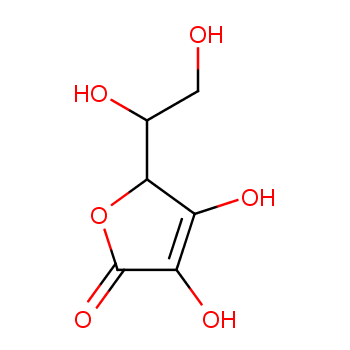
L-Ascorbic acid (CAS 50-81-7), universally known as vitamin C, is a water-soluble lactone bearing an enediol moiety that makes it both a potent reducing agent and one of the least stable commodity fine chemicals in commerce. Its commercial importance rests on a rare combination: it is simultaneously a pharmaceutical active substance and excipient antioxidant, a food additive with an established European code, a dietary-supplement active, a cosmetic functional ingredient and an animal-nutrition micronutrient. That multiplicity of end uses means a single production asset can serve five regulatory regimes, each with its own specification, documentation and audit expectations.
The production landscape has shifted decisively from the classical Reichstein chemical route toward fermentation-based manufacture of the 2-keto-L-gulonic acid intermediate, driven by solvent reduction, oxidant elimination and wastewater load. This transition is now also the primary ESG narrative of the industry, because buyers in Europe and North America increasingly evaluate suppliers on carbon intensity, water stewardship and traceable carbohydrate feedstock in addition to assay and price. Meanwhile the vitamin C market remains one of the most price-cyclical segments in nutritional ingredients, with capacity concentration and environmental compliance cycles driving pronounced boom-bust behaviour.
This white paper is written for B2B procurement, regulatory and contract-manufacturing professionals active in 2026. It examines molecular mechanism and degradation chemistry, competing synthesis routes, application matrices across pharmaceutical, food, supplement, cosmetic and feed channels, global capacity and trade flows, REACH/CLP and TSCA/FDA compliance, ESG and Scope 1-3 emissions, moisture- and oxidation-controlled logistics, and a practical strategy guide. All content is confined to professional industrial and pharmaceutical supply and does not extend to consumer dosing or self-care guidance.
L-Ascorbic acid is a six-carbon gamma-lactone whose C2-C3 enediol group donates electrons in two successive one-electron steps, first to the semi-dehydroascorbate radical and then to dehydroascorbic acid. Dehydroascorbic acid can be reduced back enzymatically or by glutathione, but its further hydrolysis to 2,3-diketogulonic acid is irreversible and represents the principal degradation pathway in solution. The molecule is highly water-soluble, virtually insoluble in non-polar media, and unstable in the presence of oxygen, light, heat, alkaline pH and catalytic traces of copper or iron, which is why formulation and packaging decisions dominate shelf-life performance.
Two industrial platforms coexist. The classical Reichstein process hydrogenates D-glucose to D-sorbitol, oxidises it microbially to L-sorbose, protects the sorbose as a diacetone derivative with acetone under acid catalysis, chemically oxidises it to diacetone-2-keto-L-gulonic acid, and finally deprotects and lactonises to ascorbic acid. The dominant modern alternative is two-step fermentation, in which engineered bacterial strains convert glucose directly to 2-keto-L-gulonic acid, which is then converted to ascorbic acid by acid-catalysed lactonisation, avoiding acetone, hypochlorite or permanganate chemistry.
Baseline demand is structurally stable because ascorbic acid is a non-discretionary micronutrient in pharmaceutical, fortified-food and feed formulations, but growth pockets are visible in immunity-positioned supplements, clean-label antioxidants replacing synthetic preservatives, and premium topical derivatives. Industrial buyers are also shifting specification emphasis from assay alone toward physical functionality — flowability, compressibility, colour stability and particle-size distribution — because high-speed tableting and continuous blending lines penalise inconsistent powder behaviour.
Global capacity is heavily concentrated in Asia-Pacific, where integrated corn-to-glucose-to-fermentation complexes provide a decisive feedstock cost advantage, while Europe and North America retain downstream blending, tableting, packaging and quality-release activity close to customers. Export flows therefore run predominantly from Asian bulk production to Western conversion and distribution hubs, with regional blending houses converting bulk crystals into direct-compression grades, premixes and finished supplement formats.
The market splits into a high-volume commodity tier competing on unit price and a speciality tier competing on grade performance, certification breadth and documentation quality. Commodity pricing is famously cyclical, with environmental-inspection cycles, energy costs, corn prices and capacity additions producing sharp swings that reward buyers using framework contracts and safety stock. Speciality grades sustain materially higher margins where suppliers can demonstrate validated stability data, FSSC 22000 or NSF-aligned GMP, and multi-jurisdiction dossier support.
Ascorbic acid is unusual in being simultaneously a registered REACH substance, a regulated food additive, a compendial pharmaceutical active and a dietary-supplement ingredient, so a single shipment may need four independent documentary packages. The practical compliance burden falls on specification alignment: food-grade lots must satisfy food-additive purity criteria, pharmaceutical lots must satisfy compendial monographs and ICH Q7 GMP, and supplement lots must satisfy the applicable national GMP while remaining within authorised claim frameworks.
ESG performance has become a commercial differentiator in nutritional ingredients, and vitamin C is exposed because its upstream footprint combines agricultural carbohydrate with energy-intensive fermentation and crystallisation. Buyers now request quantified carbon footprints, water-intensity metrics and third-party audit results as a precondition for framework supply, which effectively converts environmental management from a reporting exercise into a qualification gate.
Route selection dominates the footprint: fermentation-based manufacture avoids the acetone, hypochlorite and permanganate chemistry of the Reichstein route, cutting Scope 1 process emissions and eliminating halogenated by-product handling. Residual burdens arise from steam for evaporation and crystallisation, compressed air for aerobic fermentation, and Scope 3 emissions embedded in glucose production, fertiliser-derived nitrous oxide and freight. Leading sites pursue anaerobic digestion of high-COD effluent with biogas recovery, mechanical vapour recompression, renewable power purchase and ISO 14001-certified environmental management.
Traceability centres on the carbohydrate source: corn-derived glucose raises genetically-modified-organism documentation requirements, while wheat or sugar-beet origins raise allergen and pesticide-residue questions. Production strains are contained and absent from the final substance, but buyers nonetheless expect documented strain-containment and non-GMO final-product attestations. Certification breadth — ISO 9001, ISO 14001, FSSC 22000 or equivalent food-safety certification, kosher and halal status, and feed-grade schemes — is now the practical currency of supplier pre-qualification.
Logistics quality for ascorbic acid is defined by excluding oxygen, moisture, heat and transition metals from the product environment from the moment it leaves the drier. Because the substance is hygroscopic and prone to caking and oxidative discolouration, packaging integrity, warehouse humidity control and container transit profiles are as important as the manufacturing process itself in determining whether material arrives within specification.
L-Ascorbic acid is not classified as a dangerous good for transport under IMDG, IATA or ADR because it is not an oxidiser, is not flammable in the regulatory sense and presents low toxicity, so routine freight documentation applies. However, finely divided organic powder can form explosive dust clouds, obliging producers to conduct dust-explosibility testing and apply ATEX or equivalent zoning, earthing and housekeeping controls in milling and packing areas. Transit protocols should additionally specify sealed, lined containers, avoidance of high-temperature container stowage, and desiccant provision for long sea voyages to prevent caking.
Competing successfully in vitamin C requires accepting commodity economics in the bulk tier while deliberately building differentiation in speciality grades and services. The most durable positions combine feedstock integration, route-level sustainability advantages, broad certification coverage and application-support capability, because customers buy formulation performance and audit readiness at least as much as they buy molecules.
L-Ascorbic acid remains one of the highest-volume, most price-volatile and most regulationally layered ingredients in global B2B trade. Its chemistry is unforgiving — the same enediol that delivers antioxidant and cofactor function also drives instability — so commercial success is determined by powder engineering, packaging discipline and documentation quality as much as by fermentation yield. Suppliers that master these operational details can serve pharmaceutical, food, supplement, cosmetic and feed channels from one asset base.
For 2026, buyers should qualify suppliers against route-level sustainability, certification breadth and stability evidence, hedge commodity exposure with framework contracts and dual sourcing, and insist on grade-specific rather than generic specifications. Producers that pair fermentation-based manufacturing with quantified ESG performance and application technical service will defend margin through the cycle, while remaining strictly within professional industrial, pharmaceutical and food-channel supply boundaries.
Powered by Guidechem
This white paper is exclusively compiled by the Guidechem Intelligence Team based on global customs data, regulatory databases, and industry research. Guidechem is a leading global B2B chemical platform, dedicated to connecting global buyers with verified, high-quality manufacturers.
Relying on Guidechem's extensive global database, we have mapped the core participants in the current global L-Ascorbic acid supply chain:
Disclaimer: The content of this white paper is compiled based on public market data and regulatory information available as of 2026. Global chemical regulations are subject to dynamic adjustments. In actual export operations, enterprises must consult professional regulatory advisors or relevant competent authorities to obtain the latest compliance guidance.
|
 |
 |
 |
 |
 |
 EN
EN
 Agricultural News
 Food News
 Industrial News
 Cosmetic News
 Pharmaceutical News
 Science News

 1YR
1YR

