
I. Executive Summary
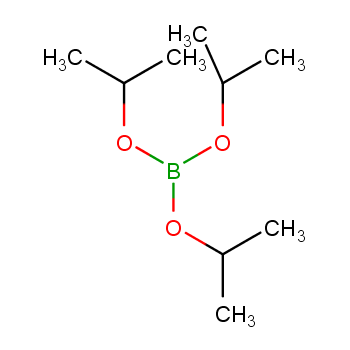
Triisopropyl borate (CAS 5419-55-6), also called triisopropoxyborane or TIPB, is the isopropyl ester of boric acid, B(OCH(CH3)2)3, with molecular weight 188.07, boron content near 5.7%, boiling point roughly 139 to 141 °C, density about 0.814 g/cm3 at 25 °C and a closed-cup flash point reported between 17 and 28 °C depending on grade and residual alcohol. It is a colourless, low-viscosity liquid miscible with alcohols, ethers and hydrocarbons, and it hydrolyses on contact with humidity to boric acid and isopropanol. That fact governs its specification, packaging, transport class and end-use performance.
Four value chains drive 2026 demand: pharmaceutical and agrochemical CDMOs using it as the low-cost boron-transfer reagent for aryl and heteroaryl boronic acids and esters feeding Suzuki-Miyaura coupling; electronics producers using it as a volatile liquid boron source for doped silica in fibre preform and borophosphosilicate glass; borohydride and elemental boron chains; and ceramics, sol-gel and halogen-free flame-retardant applications. Because these outlets need very different impurity profiles, the market has split into a commodity technical grade and a low-metals electronic grade.
For exporters the gating requirements are analytical credibility and hydrolysis control: a GC assay of 99.0% or better, water at or below 0.05%, a free isopropanol ceiling, a boron value expressed as B2O3 equivalent and, for electronic customers, an ICP-MS metals panel. The dossier must cover REACH registration or an Only Representative, CLP classification and UFI poison-centre notification, TSCA inventory status and import certification, the reproductive-toxicity profile of the hydrolysis product boric acid, and the fact that accumulating free alcohol depresses the flash point enough to change the packing group.
II. Product Deep Dive: Molecular Mechanisms and Production Evolution
2.1 Physicochemical Properties and Mechanisms
Boron in this ester is trigonal-planar and sp2-hybridised with an empty perpendicular p orbital, so the molecule is a soft Lewis acid whose alkoxide ligands act as leaving groups and whose B-O bonds are kinetically labile toward protic species. That combination makes clean transmetalation in organic synthesis and clean oxide formation in vapour deposition possible from the same molecule.
- Lewis Acidity and Hydrolytic Lability: Water attacks the electron-deficient boron centre and displaces isopropoxide stepwise, yielding boric acid plus three moles of isopropanol; both acid and base accelerate it. The failure is self-accelerating: water liberates alcohol, alcohol lowers the flash point, and boric acid crystallises into a filter-blocking haze long before operators notice.
- Volatility and Clean Oxide Conversion: A boiling point near 140 °C allows bubble or direct-liquid-injection delivery without the thermal abuse solid boron sources require, and in oxidising ambients the ester converts to B2O3, the network former in borosilicate and borophosphosilicate glass and the dopant in fibre core and cladding layers. Organic fragments leave as volatile alcohol, so residue is low.
2.2 Synthesis and Manufacturing Technologies
Industrial product comes from esterifying boric acid or boron oxide with isopropanol. The reaction is equilibrium-limited and water-producing, so the design problem is water removal and alcohol recovery rather than catalysis. Plants run glass-lined or 316L reactors under dry nitrogen, dehydrate continuously, finish by vacuum rectification and redry recovered alcohol before recycling.
- Azeotropic and Reactive Distillation Dehydration: The boric acid route makes three moles of water per mole of ester, so entrainers such as cyclohexane or toluene, or the isopropanol-water azeotrope near 80 °C with a decanter, strip water continuously. Reactive distillation cuts entrainer inventory and energy per tonne, while pervaporation and molecular-sieve polishing reach electronic-grade water limits.
- Boron Oxide Route and Transesterification: Starting from B2O3 halves the water of reaction, since six moles of isopropanol give two moles of ester and only three of water, improving the driving force at the cost of upstream dehydration energy. Transesterifying trimethyl borate with isopropanol suits producers already running methyl esters. Both routes finish with inert-gas filtration and vacuum rectification in a nitrogen-padded train.
2.3 Core Application Matrix
- Suzuki-Miyaura Borylation and Building Blocks: Arylmagnesium or aryllithium reagents add to the ester to give boronate complexes that hydrolyse to arylboronic acids or are trapped with diols to give pinacol and neopentyl glycol esters. It is a cheap, pumpable boron source that scales from kilo-lab to multi-tonne campaign.
- Semiconductor and Optical Fibre Dopant: Vaporised into CVD, PECVD or modified chemical vapour deposition, it deposits boron-doped silica for fibre preform index tuning and borophosphosilicate flow layers. This outlet sets the tightest specification: sodium, potassium, iron and copper at parts-per-billion levels and lot-traceable certification.
- Borohydride, Boron, Ceramics and Flame Retardancy: Hydride routes convert it toward borohydride chemistry; reduction and thermolysis give amorphous or crystalline boron, boron carbide and nitride powders. It also serves as a ceramic binder and glass-phase former, and as a boron source in intumescent flame-retardant systems.
III. Global Market Supply-Demand Landscape and Export Trends
3.1 Demand Drivers and Market Shifts
Demand is no longer a single cycle. Catalytic borylation with bis(pinacolato)diboron and pinacolborane has taken much discovery-stage volume, yet cost-driven commercial routes still use the stoichiometric ester for commoditised boronic acids. Electronics is the faster, more volatile driver: fab additions under the US CHIPS Act and European Chips Act plus fibre build-out for data-centre interconnect reward suppliers who certify metals. Boron flame retardants add steadier pull as formulators leave halogenated systems.
3.2 Capacity Distribution and Export Flows
Capacity follows boron ore and isopropanol rather than customers. China pairs northeast borate resources with propylene-derived isopropanol, giving integrated plants a cost advantage and making it the dominant technical-grade exporter into India, Korea, Japan, the EU and the United States. Turkey anchors upstream boric acid through its state boron producer, feeding captive and European merchant esterification. The United States and Japan lead high-purity, low-metal and isotopically defined boron materials, where value sits in purification, cleanroom filling and certification. Most volume is campaign product from multi-ester trains, so lead times reflect scheduling and alcohol availability.
3.3 Market Bifurcation and Pricing Dynamics
Pricing is two markets sharing a molecule. Technical grade at 99% in lined drums competes on boron ore, isopropanol and energy pass-through with index-linked adjustment. Electronic and ultra-dry grades at 99.9% or better with a ppb metals panel command a substantial multiple, reflecting dedicated campaigns, cleanroom filling and small lots. Export quotes also carry a Class 3 hazmat surcharge, a nitrogen-sealing premium and, in hot seasons, a temperature-controlled container premium.
IV. In-depth Analysis of Global Compliance and Regulatory Barriers
The substance carries three regulated hazards at once: it is a flammable liquid, it hydrolyses to boric acid, a reproductive-toxicity concern in Europe, and it enters regulated chains from semiconductor fabs to GMP pharmaceutical supply. A generic solvent-style safety data sheet satisfies none of them.
4.1 European Market: REACH, CLP, and Sector-Specific Directives
- REACH Registration and the Hydrolysis Product: Non-EU manufacturers must appoint an Only Representative, with a dossier covering identity, hydrolytic behaviour and toxicology. The decisive trade point is that hydrolysis releases boric acid, identified as a substance of very high concern on reproductive-toxicity grounds and featured in the authorisation system; the current status of boric acid and related borates on the Candidate List and Annex XIV must be verified against the latest ECHA publication before signing, because it determines whether a downstream use needs its own authorisation position.
- CLP Classification, UFI and Site Obligations: Notification carries a flammable-liquid classification set by measured flash point, with eye irritation and, where data support it, specific target organ toxicity from released isopropanol; labels need matching pictograms, H and P phrases and a Unique Formula Identifier for Annex VIII poison-centre notification. Large storage sites face Seveso-III thresholds, and entrainer-based dehydration must manage solvent emissions under the Industrial Emissions Directive.
4.2 North American Market: TSCA, EPA, and FDA Regulations
- TSCA Inventory and Import Certification: The substance is on the TSCA Inventory, so ordinary import needs no premanufacture notice, but importers must make the positive certification at entry, confirm active status and screen for any significant new use rule. US manufacturers and importers above threshold volumes should assess Chemical Data Reporting, and boron end products sold into pest control face separate EPA registration for boric acid.
- Hazmat Transport, Exposure and State Listings: Shipments must meet PHMSA rules, including the 49 CFR hazard table entry, Class 3 marking, labelling, placarding and packaging authorisation. Workplaces follow OSHA Hazard Communication with a GHS-compliant label, attention to isopropanol exposure during transfer and charging, and control of boron dust from hydrolysis residues. State listings such as California Proposition 65 should be rechecked at the time of sale.
4.3 The Critical Hurdle: Quality Control and Safety Limits
Compliance Warning: Water and free alcohol decide whether a shipment is accepted. Above roughly 0.05% water, hydrolysis produces boric acid crystals and isopropanol; crystals clog filters, injectors and bubbler lines, upset borylation stoichiometry and cause particle defects in deposition tools, while liberated alcohol depresses the flash point and can move the product into a stricter flammable-liquid category and packing group. Karl Fischer titration can be biased for borate esters, because the ester reacts in the methanolic medium and slowly generates water, so confirm water by GC or proton NMR and cross-check boron as B2O3 equivalent.
V. Green Trade Barriers and ESG in Manufacturing
Borate ester production is energy-intensive mainly because of its separation train, not its reaction. Azeotropic dehydration and vacuum rectification dominate utilities, the isopropanol loop is both a cost and an emission item, and ore-to-ester boron yield decides competitiveness on cost and carbon. Electronics buyers now ask for footprint data and solvent-loop evidence.
5.1 Carbon Footprint and Circular Economy
Producers cut Scope 1 emissions by replacing steam-driven azeotropic distillation with heat-integrated reactive distillation or vapour recompression, and by recovering isopropanol from hydrolysis and wash streams for molecular-sieve redrying and reuse, cutting virgin alcohol purchases and volatile organic compound emissions. Scope 2 improves through renewable electricity and electrified reboilers; Scope 3 is dominated by ore refining and boric acid, so documented boron yield strengthens scorecards.
5.2 Sustainable Sourcing and Traceability
Boron raw materials come from a concentrated set of mining jurisdictions including Turkey, the United States, South America and China, and borate has appeared in European critical and strategic raw-material assessments, raising expectations on supply-risk documentation. Exporters should maintain lot-level traceability from ore through boric acid to finished ester, hold ISO 9001, ISO 14001 and ISO 45001 certification and answer platforms such as EcoVadis.
VI. Supply Chain Resilience and Export Logistics
Logistics is a two-hazard problem: a flammable liquid destroyed by the humidity in the air around it during transfer. Every step from reactor discharge to customer receiving must be a closed, dry, inert-padded chain, and the failure mode is not dramatic, it is a drum that arrives hazy, off-spec on water and reclassified on flash point.
6.1 Packaging Standards and Moisture/Contamination Control
- Nitrogen-Sealed, Dry-Compatible Packaging: Standard export packs are UN-certified epoxy-phenolic-lined steel drums of 180 to 200 kg, smaller lined pails or glass bottles for samples, and dedicated ISO tank containers for bulk. Drums are dried and purged with nitrogen at a dew point below minus 40 °C, filled through a dip pipe under blanket with a small positive-pressure headspace, and closed with PTFE-faced gaskets rather than elastomers that swell in isopropanol.
- Closure Integrity, Retest and Servicing: Because headspace moisture ingress over months is the main risk, exporters specify double-sealed bungs, record closure torque, minimise headspace and set a retest interval covering water, assay and flash point. Drums are stored indoors with bungs up, away from steam lines and sun, and sampled through a nitrogen-padded septum. Returned empties need documented drying.
6.2 Dangerous Goods Identification and Transit Protocols
The product moves as a Class 3 flammable liquid, typically declared as UN 1993 flammable liquid not otherwise specified or under the specific borate-ester entry indicated by the shipper's classification, with the packing group fixed by measured flash point and initial boiling point. Sea freight follows the IMDG Code with segregation from oxidisers and foodstuffs; European road and rail follow ADR and RID with the applicable tunnel code; air samples follow the IATA Dangerous Goods Regulations. Transit limits are normally 25 to 30 °C, enforced by shaded stowage and avoidance of hot holds. Response must reflect hydrolysis: alcohol-resistant foam, dry chemical or carbon dioxide, not direct water, which generates isopropanol-laden runoff and boric acid residue.
VII. Enterprise Global Expansion Strategy Guide
Winning export business is less about price than about proving the molecule arrives with the water and metals numbers it left with, and that the paperwork satisfies customs and a customer auditor.
- Build a Two-Track Grade Architecture: Separate technical and electronic grades by equipment campaign, drum stock and filling area, and publish specifications that differ explicitly on water, free alcohol and the ICP-MS metals panel. Support electronic lots with lot-specific certificates and a change-control commitment so fab customers qualify once.
- Maintain a Living Regulatory File: Keep REACH or Only Representative coverage current, refresh CLP classification and UFI notification whenever flash point shifts, hold TSCA import certification and significant-new-use screening on file, and document the hydrolysis-to-boric-acid position against the latest ECHA lists. Add ISO 9001, 14001 and 45001 certification and, for pharma customers, ICH Q3D statements on boron.
- Differentiate Through Recovery and Inventory: Offer isopropanol and spent-ester take-back with molecular-sieve redrying, vendor-managed inventory in bonded warehouses near Rotterdam, Houston and Shanghai for drum call-offs, and index-linked rather than fixed annual pricing. Technical service on sampling, nitrogen padding and dry transfer converts a transaction into an embedded relationship.
VIII. Conclusion
Triisopropyl borate is a mature molecule with an unusually wide quality spread. Its chemistry is simple, its equilibrium-limited esterification well understood and its cost base transparent, yet commercial outcomes depend almost entirely on controlling water, free alcohol and trace metals, and on the credibility of the regulatory package behind each lot. Suppliers who master those controls serve every segment from commodity borylation to fab-grade doping.
Growth to 2026 and beyond should concentrate in high-purity uses where qualification barriers rather than price decide the supplier, while technical-grade volumes stay exposed to boron ore and isopropanol cost swings. The regulatory agenda will be dominated by the hydrolysis-to-boric-acid question in Europe, flammable-liquid transport enforcement everywhere, and rising carbon and traceability demands.
IX. Industry Resource Connection and Supplier Ecosystem
Powered by Guidechem
This white paper is exclusively compiled by the Guidechem Intelligence Team based on global customs data, regulatory databases, and industry research. Guidechem is a leading global B2B chemical platform, dedicated to connecting global buyers with verified, high-quality manufacturers.
Relying on Guidechem's extensive global database, we have mapped the core participants in the current global Triisopropyl Borate supply chain:
- Northeast Asia (China) Integrated Boron-Isopropanol Base: Chinese producers combine northeast borate resources with refinery-derived isopropanol in campaign plants switching between methyl, ethyl, isopropyl and butyl borates. They set the technical-grade price floor, export lined drums and ISO tanks to India, Korea, Japan, Europe and North America, and are adding ICP-MS capability to reach electronics grades.
- Turkey and the European Union Upstream-Distribution Corridor: Turkey's state boron producer anchors boric acid and refined borate supply for captive and European merchant esterification, while German, Dutch and Belgian distributors hold bonded stocks, repackaging and REACH downstream-user documentation. Rotterdam and Antwerp act as the continent's import and just-in-time delivery hubs.
- United States and Japan High-Purity Specialty Cluster: US and Japanese suppliers focus on low-metal, ultra-dry and isotopically defined boron materials for semiconductor, fibre-optic and advanced-ceramics customers, competing on purification, cleanroom filling, certification and change control rather than esterification cost. They are the toughest qualification counterparties, requiring full metals panels.
Disclaimer: The content of this white paper is compiled based on public market data and regulatory information available as of 2026. Global chemical regulations are subject to dynamic adjustments. In actual export operations, enterprises must consult professional regulatory advisors or relevant competent authorities to obtain the latest compliance guidance.


 EN
EN
 Agricultural News
 Food News
 Industrial News
 Cosmetic News
 Pharmaceutical News
 Science News

 14YRS
14YRS

