-
We detected your language preference as English. Would you like to switch to the English version for a better experience?
Switch to English
Stay here


Isopropyl alcohol, also known as isopropanol or 2-propanol (CAS 67-63-0), is among the highest-volume commodity solvents in the global chemical industry, with annual consumption above 2.7 million metric tons and demand spanning pharmaceutical, electronics, cosmetic, industrial, and consumer-disinfectant applications. As a volatile, mid-polarity aliphatic alcohol it delivers rapid evaporation, broad solvency, and potent antimicrobial activity, properties that made it a strategic material during recent global health emergencies and that sustain structural demand across essential sectors. Its manufacture is overwhelmingly tied to propylene feedstock via indirect hydration or acetone hydrogenation, linking its economics inextricably to the petrochemical and refining complex.
This white paper analyzes isopropyl alcohol as a bulk, hazard-classified solvent whose market is governed by feedstock spreads, regional capacity concentration, and the compliance discipline required to handle a flammable, health-noted substance under GHS, REACH, TSCA, and transport regimes. We examine its solvation and denaturation mechanisms, the petrochemical process routes that define producer competitiveness, and the application matrix stretching from antiseptic formulations to semiconductor cleaning. Particular attention is given to the supply shocks of recent years, which exposed fragility in a market long treated as a mature commodity.
For B2B buyers and distributors in 2026, the priority is securing reliable, spec-compliant supply amid feedstock volatility and trade-restriction risk, while meeting stringent flammable-goods logistics and occupational-exposure obligations. The following sections provide a framework for qualifying suppliers, managing price and ESG exposure, and building resilient sourcing for one of industry's most indispensable, yet deceptively complex, bulk solvents.
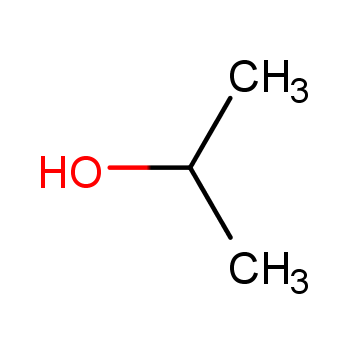
Isopropyl alcohol is a clear, colorless, mobile liquid with the molecular formula C3H8O and molar mass 60.10 g/mol, boiling at approximately 82.6 degrees Celsius and fully miscible with water and most organic solvents. It has a density near 0.785 g/mL, a low flash point around 12 degrees Celsius, and a wide flammability range in air, classifying it as a highly flammable liquid under GHS. Its mid-range polarity and ability to disrupt lipid membranes underpin both its solvency for resins, oils, and active ingredients and its rapid antimicrobial action against bacteria, enveloped viruses, and fungi.
Commercial isopropyl alcohol is produced almost entirely from propylene, a petroleum or cracker-derived olefin, through two principal routes. The dominant indirect hydration process absorbs propylene in concentrated sulfuric acid to form isopropyl sulfate, which is then hydrolyzed and distilled, while the catalytic direct hydration route passes propylene and water over a solid acid catalyst at elevated temperature and pressure to yield crude alcohol that is purified by distillation. A secondary route, acetone hydrogenation, converts acetone over a supported metal catalyst and remains relevant where acetone is abundant or where high-purity grade is targeted.
Structural demand is anchored by hygiene and pharmaceutical consumption, electronics manufacturing growth, and steady industrial solvent use, with episodic spikes from pandemic and infection-control cycles that revealed just-in-time vulnerability. The secular shift toward higher-purity grades for electronics and life-sciences cleaning, together with tightening workplace-exposure regulation, is reshaping the product mix toward certified, low-residue material and away from commodity technical solvent in developed markets.
Global capacity is concentrated among integrated petrochemical producers in North America, Western Europe, and Northeast Asia, with China and the broader Asia-Pacific representing both major production and the fastest-growing consumption hub. The United States and Europe remain net structural suppliers of high-purity grades, while Chinese and Indian output increasingly serves regional and export demand. Export flows are constrained by the flammable dangerous-goods classification, favoring regional self-sufficiency and short-sea movement, with intercontinental trade conducted under stringent hazardous-material tank-container and parcel-tanker protocols.
Pricing tracks propylene and acetone spreads, refinery operating rates, and energy costs, producing pronounced volatility that buyers hedge through formula-indexed contracts and inventory buffers. The market bifurcates between undifferentiated technical grade traded on thin margins and premium USP, ACS, and electronics grades carrying quality and documentation premiums; trade-defense measures, antidumping duties, and export-control episodes during supply crunches introduce additional tariff and availability risk that sophisticated procurement must monitor continuously.
As a flammable, health-classified solvent, isopropyl alcohol triggers obligations across chemical registration, occupational-exposure limits, flammability labeling, and dangerous-goods transport, requiring market-entry teams to maintain jurisdiction-specific safety data sheets and to manage both substance and mixture-level compliance. Its ubiquitous industrial use keeps it on positive lists, but the flammable and narcotic-health notes demand disciplined handling documentation.
Although derived from petrochemical feedstock, isopropyl alcohol's ESG profile is increasingly judged on process-energy intensity, VOC and fugitive-emission control, and the carbon footprint of the propylene route, prompting producers to pursue Scope 1-3 emissions accounting and ISO 14067 product-carbon disclosure. Buyers with science-based emissions targets now request supplier carbon data and favor plants with flare-reduction, heat-integration, and renewable-energy procurement to mitigate green-trade and brand-risk exposure.
Life-cycle improvement centers on energy integration within refinery-petrochemical complexes, recovery of fugitive vapors, and catalytic-process optimization that raises selectivity and lowers acetone coproduct burden, while circular-economy thinking recovers and recycles spent solvent streams from electronics and pharmaceutical users through distillation-reclamation loops that reduce virgin demand and hazardous waste. Producers that valorize off-spec and recover low-grade streams as fuel or feedstock further compress both emissions and cost, strengthening the ESG case for integrated operators.
Traceability expectations focus on documented feedstock origin, chain-of-custody for high-purity grades, and transparent reporting of the manufacturing route and any additives or denaturants used. Digital batch records linking the Certificate of Analysis to the production campaign and storage tank support rapid quality and recall investigations, and ISO 14001 environmental management plus responsible-care certification have become baseline expectations for suppliers serving regulated Western electronics, pharmaceutical, and consumer-health brands navigating green-procurement and VOC-compliance frameworks.
Isopropyl alcohol supply chains are exposed to feedstock-price shocks, refinery outages, and the logistical friction of moving a flammable dangerous good, so resilient buyers maintain multi-origin sourcing, safety-stock of critical grades, and pre-qualified hazardous-material carriers. Unlike non-hazardous bulk solids, its logistics are dominated by flammable-liquid protocols, bonding, and vapor-control rather than moisture management.
Under GHS and the UN Model Regulations, isopropyl alcohol is classified as a Class 3 flammable liquid, UN1219, requiring dangerous-goods packaging, placarding, and documentation for sea (IMDG), air (IATA-DGR), and road/rail (ADR/RID) transport, with strict quantity and segregation limits that raise freight cost and administrative burden relative to non-hazardous chemicals. Transit risk centers on vapor ignition and static discharge, so carriers must use bonded, grounded equipment, avoid heat and ignition sources, and maintain emergency-response information; importers should verify dangerous-goods declarations, container compatibility, and carrier certification on arrival to protect against regulatory rejection and safety incidents.
Expansion in the isopropyl alcohol market rewards feedstock integration, hazardous-material logistics capability, and grade certification rather than price alone, and participants should anchor strategy on compliance maturity and resilient, ESG-aware supply to defend share in a volatile, essential-solvent environment.
Isopropyl alcohol remains an irreplaceable bulk solvent whose essential roles in disinfection, electronics, and pharmaceutical processing guarantee durable demand even as feedstock volatility and hazardous-material regulation complicate its commerce. The decisive variables in 2026 are resilient multi-origin sourcing, certified high-purity supply, and disciplined flammable-goods compliance that protects both safety and market access.
Producers and distributors that combine feedstock integration, low-carbon manufacturing, and hazardous-logistics mastery will capture durable advantage as buyers consolidate around trusted, ESG-compliant partners. Guidechem's supplier ecosystem mapping supports global procurement teams in identifying verified isopropyl alcohol manufacturers capable of meeting the exacting standards of the modern regulated marketplace.
Powered by Guidechem
This white paper is exclusively compiled by the Guidechem Intelligence Team based on global customs data, regulatory databases, and industry research. Guidechem is a leading global B2B chemical platform, dedicated to connecting global buyers with verified, high-quality manufacturers.
Relying on Guidechem's extensive global database, we have mapped the core participants in the current global Isopropyl alcohol supply chain:
Disclaimer: The content of this white paper is compiled based on public market data and regulatory information available as of 2026. Global chemical regulations are subject to dynamic adjustments. In actual export operations, enterprises must consult professional regulatory advisors or relevant competent authorities to obtain the latest compliance guidance.
|
 |
 |
 |
 |
 |
 EN
EN
 Agricultural News
 Food News
 Industrial News
 Cosmetic News
 Pharmaceutical News
 Science News

 1YR
1YR


