-
We detected your language preference as English. Would you like to switch to the English version for a better experience?
Switch to English
Stay here


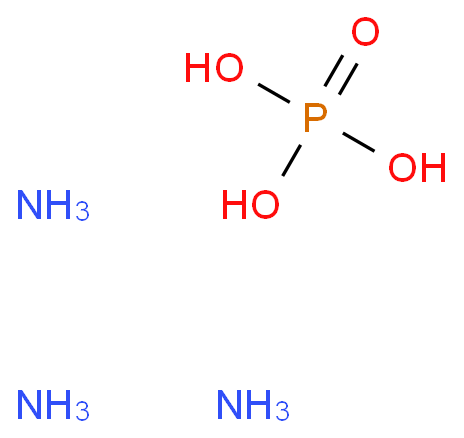
Ammonium polyphosphate (APP, CAS 68333-79-9) is the acid-source backbone of virtually every halogen-free intumescent flame-retardant system in commercial use. With the general formula (NH4PO3)n, it combines phosphorus, which catalyses condensed-phase char formation, with nitrogen, which evolves non-flammable ammonia and dilutes the gas phase, without generating halogen-derived dioxins, furans or corrosive hydrogen halides. Serious procurement now turns on degree of polymerisation, crystal form, water solubility, particle-size distribution and surface treatment rather than on P2O5 content alone.
Demand is pulled forward by regulation rather than by price. The EU Construction Products Regulation and the EN 13501-1 Euroclass system, the POP Regulation and RoHS restrictions on brominated flame retardants, and corporate halogen-free mandates in electronics, rail and e-mobility have turned APP into a specification-listed raw material. Each end-use demands a different grade architecture: a coating grade that performs perfectly in a thin-film epoxy can cake, precipitate or bloom in a polyamide extruded at 260 degrees Celsius.
Supply is geographically concentrated in China, where integrated producers sit on phosphate rock and wet-process phosphoric acid, while European and North American players focus on surface-treated, micronised grades and formulated one-pack systems. This white paper examines APP grade architecture, the 2026 supply-demand picture, the REACH, CLP, TSCA and construction-product perimeter, the ESG case for halogen substitution, and the moisture and dust-safety realities of shipping it.
APP is a white, free-flowing powder assaying 68 to 71 percent P2O5 and 14 to 15 percent nitrogen, with a 10 percent suspension pH between 5.5 and 7.5. Commercial relevance is governed less by assay than by chain length and crystal form. Short-chain Form I grades are markedly more water-soluble and hydrolytically labile; long-chain Form II grades are engineered for very low solubility and high thermal stability. Decomposition begins around 280 to 300 degrees Celsius, evolving ammonia and water and leaving polyphosphoric and ultraphosphate species that are the actual working flame retardant.
Industrial APP is made by neutralising phosphoric acid with anhydrous ammonia to a monoammonium or diammonium phosphate melt, followed by thermal dehydration and polycondensation in an ammonia atmosphere. The controlling variables are ammonia partial pressure, which suppresses reversion to orthophosphate and drives chain growth; peak temperature, typically 250 to 320 degrees Celsius; and residence time in a kneader, tunnel kiln, rotary kiln or continuous belt reactor.
The decisive driver is substitution away from brominated and chlorinated flame retardants. EU POP Regulation 2019/1021 has removed or restricted commercial polybrominated diphenyl ethers, hexabromocyclododecane and short-chain chlorinated paraffins, REACH persists in thinning the halogenated pool, and brand owners apply their own restricted-substance lists. Façade fire-safety reviews have raised demand for intumescent coatings and Euroclass B-s1,d0 and C-s2,d0 products. Electrification adds a third engine, since battery enclosures, charging infrastructure and e-mobility cabling specify halogen-free, low-smoke materials.
Capacity is heavily concentrated in China, where producers in Sichuan, Hubei, Yunnan and Guizhou sit directly on phosphate rock and wet-process phosphoric acid with ammonia integrated upstream, making China the dominant export origin for commodity Form I and general-purpose Form II grades shipped to Europe, Turkey, India, Southeast Asia, the Middle East and South America. European production, centred in Germany, Italy and Belgium, has repositioned toward micronised, surface-treated grades and one-pack intumescent systems. North American and Indian capacity increasingly serves domestic construction and compound demand.
The market is sharply bifurcated. Commodity coating-grade Form I and general-purpose Form II are priced close to raw-material cost and track phosphate rock, sulphur, wet-process phosphoric acid, MAP, DAP and ammonia, all sensitive to Chinese energy policy, export licensing and seasonal fertiliser demand. High-specification grades with water solubility below 0.5 grams per 100 millilitres, tight D98, silane or melamine encapsulation and documented fire-test evidence command substantial premiums under annual contracts. Importers buying only on P2O5 routinely discover that the cheapest tonnage costs most through caking, hydrolysis and recipe requalification.
APP sits at the intersection of chemical-substance law and product law: a shipment may be chemically compliant yet unsellable if the downstream article cannot be CE marked, cannot be classified under EN 13501-1, or contains a candidate-list substance above 0.1 percent by weight. Importers therefore need two parallel dossiers, one proving the substance is lawfully placed on the market and one proving the finished formulation meets sector fire-performance and restricted-substance requirements.
APP carries a strong ESG narrative: it is the principal industrial tool for removing halogenated flame retardants from construction products, cables, transport interiors and electronics, enabling compliance with the POP Regulation, RoHS and corporate restricted-substance lists. That narrative is credible only if the manufacturer documents its own footprint, because thermal polycondensation is energy intensive, wet-process phosphoric acid carries fluoride, heavy-metal and phosphogypsum burdens, and ammonia handling carries safety and nutrient-emission obligations. European tenders increasingly score suppliers on ISO 14001, ISO 45001 and third-party ratings.
The dominant energy load is the condensation stage, which holds a solid bed at 250 to 320 degrees Celsius for extended residence times, plus milling, air classification and drying. Producers are judged on furnace efficiency, waste-heat recovery, electricity source and product carbon footprints built to ISO 14067 or the GHG Protocol with verified Scope 1 and 2 data. EU importers must also watch carbon-leakage exposure: ammonium phosphate precursors shipped under Chapter 31 headings fall within the carbon border adjustment mechanism fertiliser category, whereas finished APP under heading 2835 is outside the current Annex I list, a distinction to confirm per tariff classification.
Responsible sourcing starts at the mine. Phosphate rock is an EU critical raw material, and sedimentary deposits carry naturally occurring radioactive material regulated under the Euratom Basic Safety Standards Directive 2013/59 and national TENORM rules, plus cadmium and uranium that determine usability under the Fertilising Products Regulation 2019/1009. Buyers should require documented rock origin, radiation survey results and heavy-metal analysis, together with ISO 9001 and ISO 14001 certification, Responsible Care commitments and Sedex SMETA or equivalent social audits. Certificates should come from ISO/IEC 17025 accredited laboratories, with retention samples kept from every lot.
APP logistics are a moisture problem before a hazard problem. The product absorbs water from humid air, hydrolyses back toward orthophosphate and cakes into agglomerates that cannot be re-dispersed in a coating or melt. Export planning must therefore combine barrier packaging, humidity-controlled storage, careful container selection and dust-safe handling. Typical shelf life is twelve to twenty-four months unopened, and buyers should manage stock first-expiry-first-out with incoming moisture and solubility testing rather than trusting the stated shelf life.
Standard commercial APP is normally not assigned a United Nations number under ADR, the IMDG Code or the IATA Dangerous Goods Regulations, and is not a marine pollutant. This must be confirmed per grade, because resin-encapsulated variants can show different self-heating and dust-explosibility behaviour, and no shipper should classify without a current test report. Transit protocol requires dust-tight, moisture-barrier packaging; dry, odour-free containers; desiccant sized for the voyage; no co-loading with strong acids, oxidisers or foodstuffs; and humidity logging on long sea legs. Receiving sites need dust-collection unloading and a retained sample drawn at discharge for water-solubility verification before release to production.
Successful exporters treat APP as a performance ingredient, not a phosphate commodity. Advantage comes from holding a defensible grade portfolio, from proving fire performance in the customer's own formulation and test method, and from carrying a dossier that shortens the customer's qualification cycle. Three priorities follow: specification discipline, formulation-level value addition, and documented compliance evidence.
Ammonium polyphosphate has moved from an additive of convenience to a regulatory necessity. As halogenated flame retardants are eliminated under the POP Regulation, REACH and corporate substance policies, and as construction, cable and e-mobility sectors demand documented Euroclass, UL and low-smoke performance, the phosphorus-nitrogen chemistry of APP becomes the default halogen-free answer. Infrastructure renewal, fire-code tightening and electrification reinforce this tailwind well beyond 2026: demand risk is low, execution risk is high.
Winners will control the variables that decide field performance: crystal form and polymerisation degree, water solubility and hydrolytic stability, particle-size distribution and surface treatment, moisture and dust control through the chain, and a dossier satisfying both substance and product law. Buyers should qualify on measured performance rather than P2O5 assay; suppliers should invest in formulation support, fire-test evidence and verified environmental data. Done well, APP ceases to be a commodity tonnage business and becomes a specification-driven franchise.
Powered by Guidechem
This white paper is exclusively compiled by the Guidechem Intelligence Team based on global customs data, regulatory databases, and industry research. Guidechem is a leading global B2B chemical platform, dedicated to connecting global buyers with verified, high-quality manufacturers.
Relying on Guidechem's extensive global database, we have mapped the core participants in the current global Ammonium polyphosphate (APP) supply chain:
Disclaimer: The content of this white paper is compiled based on public market data and regulatory information available as of 2026. Global chemical regulations are subject to dynamic adjustments. In actual export operations, enterprises must consult professional regulatory advisors or relevant competent authorities to obtain the latest compliance guidance.
 |
|
 |
 |
 |
 EN
EN
 Agricultural News
 Food News
 Industrial News
 Cosmetic News
 Pharmaceutical News
 Science News

 1YR
1YR


