-
We detected your language preference as English. Would you like to switch to the English version for a better experience?
Switch to English
Stay here


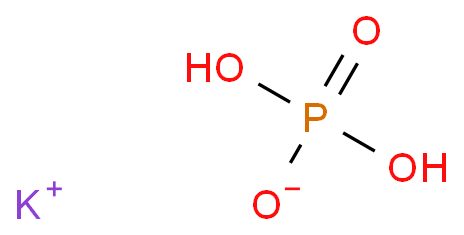
Monopotassium phosphate (CAS 7778-77-0), KH2PO4, also named potassium dihydrogen phosphate and designated E340(i) in European food additive nomenclature, is the acid potassium salt of orthophosphoric acid supplying roughly fifty-two percent phosphorus pentoxide and thirty-four percent potassium oxide equivalents. It is simultaneously a food additive, a pharmacopoeial buffering substance, a high-analysis water-soluble fertiliser and an industrial process chemical, and that multiplicity is what makes the category commercially interesting in 2026. This white paper reviews its production chemistry, its demand engines, the grade-specific regulatory load attached to each outlet, and the logistics and ESG questions that now determine competitive position.
Technically the material is unremarkable, and that is an advantage: high water solubility, negligible hydrolysis sensitivity, a mildly acidic one percent solution near pH 4.5, and a well-characterised conjugate pair with dipotassium phosphate that buffers close to physiological pH. Those properties make it the phosphate-donating and buffering salt of choice wherever sodium must be restricted, since potassium substitutes without altering phosphate behaviour. Process economics are nevertheless complex, because the substance sits at the meeting point of the phosphate rock, potash and chlor-alkali value chains, each carrying distinct cost drivers and regulatory visibility.
Regulatory load is modest compared with controlled or prescription substances, but it is fragmented across sectors. Food-grade material must satisfy Food Chemical Codex or Commission Regulation (EU) 231/2012 purity criteria, pharmacopoeial material must meet USP and Ph.Eur. monograph requirements under appropriate GMP, and fertiliser-grade material placed on the European market must meet the nutrient declaration and contaminant limits of the Fertilising Products Regulation 2019/1009. Buyers therefore purchase grade-specific evidence rather than a generic certificate of analysis, and producers able to hold several qualifications within one plant capture disproportionate share.
A simple salt has no pharmacological mechanism as such, yet its functional behaviour follows directly from acid-base and coordination chemistry, and that behaviour explains every application below. Understanding phosphate speciation is also what allows a producer to run crystallisation at the correct stoichiometry, because drifting toward the hydrogen phosphate or toward an acid adduct changes both crystal habit and downstream performance. The substance is therefore controlled less by exotic analytics than by disciplined speciation management during neutralisation.
Industrial manufacture is a neutralisation and crystallisation business whose economics depend chiefly on the purity and price of two inputs, phosphoric acid and potassium alkali. Route selection therefore starts with acid choice, since furnace-derived acid and purified wet-process acid carry very different impurity burdens, and continues with alkali choice, because potassium hydroxide originating in chlor-alkali electrolysis, potassium carbonate and directly reacted potassium chloride each impose different separation duties on the plant.
Three demand engines now run at different speeds. Food and beverage offtake grows steadily with processed food volumes and with sodium reduction initiatives that substitute potassium salts for sodium phosphates. Agricultural demand remains cyclical, tracking planted and greenhouse area, irrigation modernisation and water-quality rules rather than commodity fertiliser sentiment, because this product competes on solubility and compatibility rather than on nutrient cost alone. Industrial consumption in fermentation, detergency, metal treatment and fire-retardant systems is smaller but steadier, and it rewards consistent specification above all else.
Production concentrates where rock, acid and potash meet. Integrated producers combine phosphoric acid manufacture with potassium neutralisation and crystallisation, choosing either purified wet-process acid or higher-cost furnace acid for premium grades. Asian capacity, with the largest export presence in China, dominates global fertiliser and technical grade volumes through extensive rock-to-acid integration, whereas European producers focus on food, pharmacopoeial and speciality material where qualification and documentation rather than resource cost determine position. North American plants serve domestic agriculture and food processing with short inland logistics. Flows consequently split, with bulk agricultural crystals moving intercontinentally and high-purity grades circulating within qualified supply chains.
Pricing separates clearly by grade, and the gap reflects analysis and certification rather than conversion cost. Fertiliser-grade crystals track phosphoric acid and potash benchmarks with pronounced seasonality around Northern Hemisphere planting and major import tender cycles, while food and pharmacopoeial grades sustain a durable premium supported by tighter limits, documentation obligations and audit frequency. Volatility originates mainly upstream, in phosphate rock pricing, sulphur for acid production, electricity for furnace routes and caustic potash linked to chlor-alkali economics. Freight also matters disproportionately here, because value per tonne is moderate while tonnage is high.
Regulatory exposure here is real but fragmented, and that is the essential point: the same molecule is governed by four rulebooks depending on declared end use. Suppliers failing to segment documentation accordingly experience rejected shipments even though the substance is broadly accepted and of low hazard, so the practical discipline required is grade management rather than hazard management. Competence in matching evidence to intended application therefore matters more than any single registration certificate.
Phosphate products sit near the centre of the phosphorus sustainability debate, and this salt is no exception despite its mild hazard profile. Environmental performance therefore depends largely on waste and impurities generated upstream in acid production, on eutrophication risk from field use, and on the efficiency with which delivered nutrients are actually absorbed, all increasingly scored by customers through ISO 14001 aligned ESG frameworks linked to their own Scope 1-3 Emissions reporting obligations.
Most emissions arise before the salt itself is formed. Wet-process phosphoric acid generates gypsum byproducts with long-term storage obligations, while furnace routes carry very high electricity demand, so both dominate Scope 1 and Scope 2 profiles, whereas the potassium alkali stream, commonly derived from energy-intensive chlor-alkali electrolysis, contributes strongly to Scope 3. Practical responses include cogeneration and low-grade heat recovery feeding crystallisation evaporators, plus partial substitution of mined phosphorus by recovered sources such as struvite harvested from wastewater treatment, reducing both extraction pressure and lifecycle emissions.
Traceability here means knowing the geological and agricultural provenance of each nutrient. Responsible producers document the phosphate rock source together with its cadmium and naturally occurring radionuclide profile, verify that the potash or hydroxide stream meets contaminant expectations, and keep lot-level records linking acid and alkali batches to finished crystals. Downstream, high-analysis soluble nutrients support improved phosphorus use efficiency, so suppliers increasingly provide solubility guarantees and nutrient planning documentation for closed fertigation systems, while food-grade claims such as allergen control and absence of genetically modified inputs are evidenced through the same quality system.
Because the salt is non-dangerous and non-oxidising, supply chain risk lies in physical stability rather than in hazard compliance. The product cakes under repeated humidity cycles, absorbs moisture during long sea voyages, and re-crystallises into hard lumps that disrupt downstream handling and dissolving systems. Design attention therefore belongs on moisture barriers, packaging integrity and stock rotation rather than on dangerous goods declarations.
The substance carries no United Nations number and no dangerous goods documentation under normal transport conditions, which simplifies booking but encourages complacency in bulk handling. Claims arise overwhelmingly from caking, bag rupture and contamination rather than regulatory refusal, so prevention beats insurance. Fertiliser shipments may nevertheless require conformity documentation and, in several markets, import inspection or product registration evidence, while food-grade consignments benefit from documented hygienic handling. Contracts should specify acceptable moisture gain, mandate desiccant arrangements for long voyages, and allocate responsibility for reconditioning when arrival packaging is damaged.
Competitive advantage comes from climbing the grade ladder while defending cost position in agriculture. The priorities below reflect what multinational food, pharmaceutical and horticultural buyers examine when qualifying a phosphate supplier for multi-year agreements.
Monopotassium phosphate demonstrates how a simple inorganic salt sustains a durable business precisely because regulatory exposure is spread across sectors rather than concentrated in one. Demand spans processed food, healthcare formulation, precision agriculture and industrial processing, each with its own specification and purchasing logic, and none is served adequately by undifferentiated commodity supply. Successful participants therefore treat grade discipline, upstream purification and evidence as core competence rather than as overhead. Because the molecule itself is broadly accepted and low hazard, competition resolves around reliability, nutrient form and documentation quality.
Looking across 2026 and beyond, three trends will shape position. Phosphorus sustainability will intensify, moving recovered nutrients and verified low-cadmium rock from marketing language into purchasing criteria. Sodium reduction in processed food will continue favouring potassium phosphates where formulation permits. Traceability expectations will tighten across food and pharmaceutical chains, rewarding producers holding ISO 9001 quality governance, ISO 14001 environmental management and quantified Scope 1-3 Emissions reporting. Organisations investing now in these capabilities will defend margin even as global capacity expands.
Powered by Guidechem
This white paper is exclusively compiled by the Guidechem Intelligence Team based on global customs data, regulatory databases, and industry research. Guidechem is a leading global B2B chemical platform, dedicated to connecting global buyers with verified, high-quality manufacturers.
Relying on Guidechem's extensive global database, we have mapped the core participants in the current global Monopotassium phosphate supply chain:
Disclaimer: The content of this white paper is compiled based on public market data and regulatory information available as of 2026. Global chemical regulations are subject to dynamic adjustments. In actual export operations, enterprises must consult professional regulatory advisors or relevant competent authorities to obtain the latest compliance guidance.
|
 |
 |
 |
 EN
EN
 Agricultural News
 Food News
 Industrial News
 Cosmetic News
 Pharmaceutical News
 Science News

 2YRS
2YRS

