-
We detected your language preference as English. Would you like to switch to the English version for a better experience?
Switch to English
Stay here


Ethyl cellulose (CAS 9004-57-3) is the most commercially successful water-insoluble cellulose ether, and it lives a genuinely dual commercial life. In its pharmaceutical persona it is a functional excipient — a controlled-release matrix former, film former and taste-masking agent governed by the USP/NF and Ph.Eur. monographs. In its industrial persona it is a thermoplastic binder and film-forming resin: printing inks, industrial coatings, hot-melt adhesives, ceramic green bodies and electronic pastes. Buyers approaching these two worlds face very different qualification costs, and treating them as a single business is the most common commercial error in this market.
Technically, everything reduces to two numbers: ethoxyl content, which fixes solubility behaviour and thermoplasticity, and viscosity, which fixes mechanical and release performance. Producers control both during etherification, and their profitability depends on hitting narrow windows repeatedly. Because dissolving pulp varies season to season, batch control rather than reaction chemistry separates premium suppliers from commodity ones.
In 2026 three pressures shape the trade. Excipient customers increasingly require third-party verification such as IPEC EXCiPACT certification rather than accepting a supplier's own GMP statement. European buyers ask for forest-risk due diligence on the pulp supplying a wood-based cellulose chain. And makers are being asked to document less obvious parameters — nitrite carryover relevant to nitrosamine risk assessments, residual solvent, elemental impurities — that were traditionally left unstated on industrial certificates.
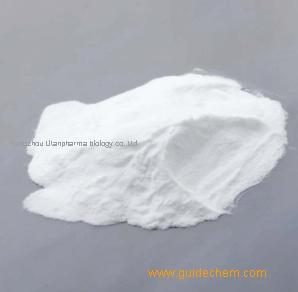
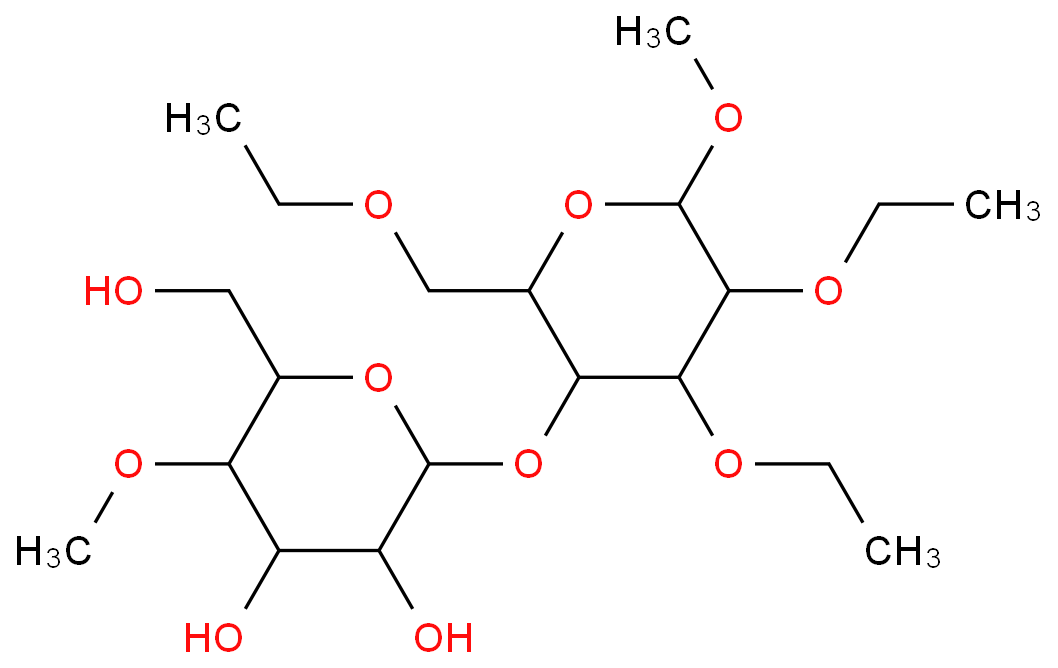
Ethyl cellulose is the ethyl ether of cellulose, presented as a free-flowing white to pale tan powder or granule that is odourless and insoluble in water but freely soluble in aromatic hydrocarbons, chlorinated solvents, esters, ketones and alcohol/hydrocarbon blends. It is thermoplastic, softening typically between roughly 135 and 165 °C depending on substitution level, which allows it to be extruded, calendered or used in hot-melt systems. Films from it are tough, flexible, low in water vapour transmission and stable across a broad pH range. Each anhydroglucose unit offers three hydroxyls, so the theoretical maximum degree of substitution is three; commercial grades sit below that ceiling but high enough to render the polymer hydrophobic.
All commercial product follows the same chemistry: purified cellulose is converted to alkali cellulose, then etherified. What differs between producers is the washing and purification train, the solvent recovery loop and the control of substitution uniformity, and it is in those unit operations — not in the reaction — that producer quality separates itself.
Demand is being pulled in two directions. Generic pharmaceutical production, particularly in India and China, continues to grow and pulls volume toward compendial excipient grades, while traditional printing ink demand softens in mature markets as packaging shifts toward digital and waterborne systems. The fastest growth sits in electrical applications: electronic pastes for multilayer ceramic capacitors, photovoltaic metallisation and sensor substrates consume small tonnage at very high purity and margin. Suppliers face a portfolio decision — chase industrial tonnage at commodity return, or invest in the discipline needed for pharma and electronics.
Capacity sits where cellulose ether has historically clustered: Chinese plants concentrated in Shandong and neighbouring provinces serving domestic ink, coating and construction markets while increasingly exporting compendial grades; Indian producers coupled to the domestic formulation industry; and European, Japanese and North American specialists holding pharma and electronics positions built on formulation support. Because industrial buyers are price-led while pharma buyers are documentation-led, Asian material increasingly satisfies industrial demand while Western-qualified material serves regulated applications.
Pricing is best understood as three tiers separated by qualification cost. Industrial resin is priced against other film formers and against dissolving pulp and caustic input costs, with thin margins. Compliant pharma excipient carries a premium reflecting audit readiness, validated change control and compendial documentation. Electronics grades add more for low metal content, controlled ash and clean packing. Switching sources within a tier is a commercial decision; switching between tiers requires a full development programme and should never be assumed from a matching certificate of analysis.
The molecule itself is comparatively benign; the compliance work lies in proving which grade it is and what it was made from. Three regimes matter most, and one — the interface between excipient expectations and food additive rules — is where most exporters either over-certify or quietly under-deliver.
As a polymer made from a renewable feedstock, ethyl cellulose enjoys a favourable starting position in sustainability assessments. Two things nevertheless attract scrutiny: the energy intensity of drying and milling, and fibre origin — specifically whether the dissolving pulp comes from responsibly managed forest or from cotton linters with their own water and pesticide footprint.
Carbon accounting for ethyl cellulose is dominated downstream of the reaction: washing, solvent recovery, drying and micronising consume most plant energy, so the highest-impact improvements are usually utilities — mechanical vapour recompression, heat integration on dryers and efficient solvent recovery. Credible cradle-to-gate figures combine Scope 1 combustion, Scope 2 electricity and Scope 3 contributions from purchased dissolving pulp and caustic, and should record the biogenic carbon stored in the polymer backbone using standard bio-based carbon determination.
Chain-of-custody certification such as FSC or PEFC is routinely requested for wood-derived pulp, and cotton-linter routes must answer questions about pesticide and water use in the growing region. ISO 9001 and ISO 14001 certification is the entry ticket; pharma customers add IPEC EXCiPACT evaluation and ISO/IEC 17025 accredited testing. The strongest suppliers maintain segregated campaigns for food, pharma and industrial grades, documented line-cleaning between them, and traceability linking each lot back to a specific pulp batch — exactly the evidence needed when a customer's responsible sourcing questionnaire arrives.
Ethyl cellulose ships as a free-flowing solid, which encourages the belief that it can be handled like any other powder. It can to a point, but its combustibility, its sensitivity to heat and moisture history and its tendency to develop static charge during pneumatic conveying all demand specific handling discipline.
Ethyl cellulose is normally transported as a non-hazardous solid, so the dangerous goods provisions of the UN Model Regulations generally do not apply and no IMDG class, ADR class or IATA packing instruction attaches to the polymer — with the qualification that shipment and storage must follow controls appropriate to a combustible dust. In practice this means a current sectioned safety data sheet with every consignment, temperature-moderated containers during hot-season transit, sealed palletised units protected from water, and transfer by trained operators using earthed equipment. Bulk consignments move by sea in bags or octabins, where the practical risks are container condensation and heat build-up rather than regulatory classification.
Because the reaction chemistry is mature and widely understood, competitive advantage in ethyl cellulose comes from qualification, consistency and raw-material security rather than from process novelty. Three strategies follow.
2026 finds ethyl cellulose in a quietly favourable position. Demand from generic pharmaceuticals is structurally growing, electrical applications offer genuine margin expansion, and sustainability conversations favour a renewable-sourced polymer with an established regulatory history. The threats are equally clear: pulp and energy cost volatility, erosion of traditional ink markets, and rising qualification expectations that few industrial producers are structured to meet.
For buyers, the discipline is to specify ethoxyl content and viscosity tier together, then insist on structural and functional data alongside compendial compliance, with contractual change-control notification attached. For sellers, the defensible position pairs a verified excipient quality system with documented responsible fibre sourcing and low-metal capability, converting a substitutable industrial resin into a qualified material customers are reluctant to re-source. Batch-to-batch identity is easy to claim and hard to prove; producers who can prove it will take share.
Powered by Guidechem
This white paper is exclusively compiled by the Guidechem Intelligence Team based on global customs data, regulatory databases, and industry research. Guidechem is a leading global B2B chemical platform, dedicated to connecting global buyers with verified, high-quality manufacturers.
Relying on Guidechem's extensive global database, we have mapped the core participants in the current global Ethyl cellulose supply chain:
Disclaimer: The content of this white paper is compiled based on public market data and regulatory information available as of 2026. Global chemical regulations are subject to dynamic adjustments. In actual export operations, enterprises must consult professional regulatory advisors or relevant competent authorities to obtain the latest compliance guidance.
|
 |
 |
 |
 |
 EN
EN
 Agricultural News
 Food News
 Industrial News
 Cosmetic News
 Pharmaceutical News
 Science News

 13YRS
13YRS

