-
We detected your language preference as English. Would you like to switch to the English version for a better experience?
Switch to English
Stay here


Alkyd resins have been the workhorse of the protective coatings industry for nearly a century, and they still represent one of the most cost-effective and forgiving binder technologies available to a formulator. Yet confusion persists around oil length, drying chemistry, and how alkyds compare with modern acrylics and epoxies. Selecting the wrong oil length or drier package leads to slow through-dry, poor gloss, wrinkling, or premature film failure — problems that are expensive to discover after a coating has shipped. This guide distills the fundamentals of alkyd resin technology, from the polyesterification reaction itself to formulation, regulatory, and VOC compliance strategy, so that coatings technologists can specify and formulate with confidence.

Figure 1: Generalized structure of an alkyd resin — a polyester backbone bearing pendant fatty acid side chains.
| Attribute | Function | Target Applications | Key Specifications | Compliance Status |
|---|---|---|---|---|
| Long oil alkyd | Air-drying binder for brushed architectural and maintenance coatings | Exterior house paints, trim enamels, structural steel primers | >60% fatty acid content; high brushability; solvent-borne in mineral spirits | Subject to EU Directive 2004/42/EC and US EPA VOC limits; REACH registered |
| Short oil alkyd | Fast-drying, hard, glossy industrial binder (often baking or force-dried) | Primer surfacers, machinery enamels, coil and general industrial coatings | <40% fatty acid content; higher phthalic content; aromatic-solvent soluble | GHS/CLP labeling for flammable liquids; HAPS and VOC rules apply |
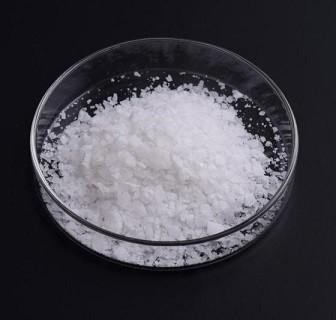
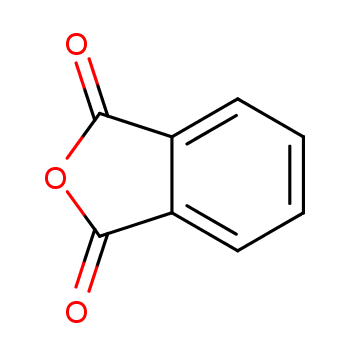
An alkyd is, by definition, a polyester resin modified with fatty acids. It is produced by heating three building blocks together: a polyol (typically glycerol or pentaerythritol, CAS 115-77-5), a dibasic acid or anhydride (most commonly phthalic anhydride, CAS 85-44-9, or isophthalic acid), and a fatty acid source such as linseed, soybean, or tall oil fatty acids. The esterification reaction proceeds stepwise, splitting out water at each ester link, and is driven to high conversion by removing that water from the kettle.
Two commercial processes dominate. In the fatty acid process, all components (polyol, dibasic acid, and free fatty acids) are charged at once and cooked directly; it offers precise control over molecular weight and acid number. In the alcoholysis (monoglyceride) process, refined triglyceride oil is first transesterified with the polyol to form monoglycerides, after which the phthalic anhydride is added and polyesterification proceeds. Water formed during the cook is removed azeotropically with a small amount of xylene in most modern kettles.

Figure 2: Representative alkyd segment showing the ester linkages of the polyester backbone.
The defining behavior of a drying alkyd is autoxidation: the same chemistry that causes oils to cure. After application, atmospheric oxygen attacks the doubly allylic methylene groups (–CH=CH–CH2–CH=CH–) of unsaturated fatty acid side chains, forming hydroperoxides (ROOH). Cobalt, manganese, and zirconium drier salts catalyze the decomposition of these hydroperoxides into peroxy and alkoxy radicals, which then propagate crosslinking through radical combination and peroxide bridge formation. Over hours to days, the film converts from a liquid to a tack-free, insoluble network — effectively a low-temperature, air-activated cure. Because the crosslinks form only in the fatty acid chains, oil length and fatty acid iodine value directly govern dry time and film flexibility.

Figure 3: Oxidative crosslinking sites along the fatty acid side chains of an alkyd.
The same oxidative chemistry continues slowly for the life of the coating. Residual radicals and hydroperoxides eventually attack the polymer backbone, causing embrittlement, chalking, and yellowing — the classic long-term aging signature of alkyds. Short oil alkyds with highly aromatic backbones yellow more in interior service; UV exposure accelerates chalk. Formulators counteract this with UV absorbers, hindered amine light stabilizers, and by selecting semi-drying oils (soybean, safflower) for maximum exterior durability, or by blending with silicone or acrylic modifiers.
Alkyds are classified along two axes: oil length (the weight percentage of fatty acid in the resin) and oil type (drying, semi-drying, or non-drying, based on iodine value). These two variables explain almost every practical difference between commercial grades.
Prepared from drying oils such as linseed or tung, long oil alkyds dissolve readily in aliphatic hydrocarbons (mineral spirits), brush beautifully, and air-dry to flexible films. They are the standard vehicle for exterior house paints, trim enamels, and maintenance coatings. Their high fatty acid content gives excellent wetting over chalky or marginally prepared surfaces — a key advantage over latex binders. The trade-off is slower dry, lower hardness, and poorer chemical and stain resistance.
The general-purpose middle ground, medium oil alkyds balance drying speed, hardness, and flexibility. They are used in maintenance enamels, implement finishes, and refinish primers, and they can be force-dried or baked at moderate temperatures (60–120 °C) to shorten cure cycles substantially.
With a high phthalic anhydride content, short oil alkyds require aromatic solvents, dry fast to hard, glossy films, and are rarely used as sole air-dry binders. Their primary role is in industrial baking systems — primers, surfacers, and enamels cured with amino resins (melamine or urea-formaldehyde) at 120–160 °C. Non-drying-oil short oil alkyds (coconut-type) serve as flexible plasticizing polyols in two-component polyurethane and nitrocellulose lacquer systems.
Several modifications extend alkyd performance or compliance: acrylic-modified alkyds (vinyl monomers grafted or copolymerized into the backbone) improve color retention and exterior durability; silicone alkyds (10–30% silicone midblock) boost gloss retention and heat resistance for maintenance topcoats; uralkyds replace part of the dibasic acid with a diisocyanate, delivering polyurethane-like abrasion resistance in a one-pack air-dry floor coating; and water-reducible alkyds use pendant carboxyl groups neutralized with amines to emulsify the resin in water, dramatically cutting VOC content.

Figure 4: Effect of oil length on resin solubility and film properties.
| Binder Type | Key Raw Material (CAS) | Solvent System | Dry / Cure Mechanism | Strengths | Limitations |
|---|---|---|---|---|---|
| Long oil alkyd | Phthalic anhydride (85-44-9) | Aliphatic mineral spirits | Air dry, autoxidative | Brushability, substrate wetting, gloss, cost | Slow dry, yellowing, VOC load |
| Short oil baking alkyd | Isophthalic acid (121-91-5) | Aromatics (xylene, toluene) | Stove cure with melamine, 120–160 °C | Hardness, hardness-to-dry speed, gloss | Not air-dry; higher bake energy |
| Water-reducible alkyd | Trimellitic anhydride (552-30-7) | Water + coalescing glycol ether | Air dry, autoxidative | Low VOC, easy cleanup | Pot-life/viscosity instability, slower dry |
| Uralkyd | Isophorone diisocyanate (4098-71-9) | Mineral spirits | Air dry, autoxidative | Abrasion resistance, toughness | Higher raw material cost |
| Silicone alkyd | Silicone intermediate blend | Mineral spirits | Air dry, autoxidative | Gloss and color retention, heat resistance | Price; recoat window sensitivity |
| Acrylic latex | Butyl acrylate (141-32-2) | Water | Coalescence | Very low VOC, fast dry, color stability | Poor adhesion to chalky surfaces, low-temperature blocking |
| Epoxy ester | Epoxidized soybean oil (8013-07-8) | Mineral spirits / aromatics | Air dry, autoxidative | Chemical resistance, adhesion | Chalks outdoors; cost |
A typical air-drying white exterior alkyd enamel illustrates the practical use of these resins. The pigment is dispersed directly in the alkyd vehicle using a high-speed disperser, driers and antisettling agents are let down under agitation, and the coating is adjusted to application viscosity with mineral spirits.
| Component | Typical Level (wt%) | Function |
|---|---|---|
| Long oil soya alkyd (70% solids) | 55–65 | Binder / vehicle |
| Rutile titanium dioxide | 25–32 | Pigment / hiding |
| Mineral spirits | 5–12 | Reduction / application viscosity |
| Cobalt octoate (6% Co) | 0.3–0.6 | Surface drier |
| Zirconium octoate (6% Zr) | 0.5–1.0 | Through drier |
| Calcium octoate (5% Ca) | 0.5–1.0 | Wetting / loss-of-dry inhibition |
| Methyl ethyl ketoxime | 0.1–0.3 | Anti-skinning agent |
Because conventional alkyds are solvent-borne, VOC legislation is the dominant compliance driver worldwide. The table below summarizes the key frameworks a coatings manufacturer must navigate.
| Jurisdiction | Framework | Status / Requirements for Alkyd Coatings |
|---|---|---|
| United States — EPA | 40 CFR Part 59 (Architectural Coatings); National VOC emission standards | Flat interior alkyd paints limited to 250 g/L VOC; quick-dry enamels 350 g/L; most mineral-spirit-borne long oil alkyds require exemption categories or reformulation to high-solids |
| United States — OSHA | Hazard Communication (29 CFR 1910.1200); ACGIH TLV for mineral spirits 100 ppm TWA | GHS-aligned SDS and labeling for flammable liquid alkyd paints |
| European Union | Directive 2004/42/EC (Decopaint); Regulation (EC) No 1907/2006 (REACH); CLP 1272/2008 | Gloss trim coatings (water-based) 130 g/L, solvent-based 300 g/L limits drove widespread shift to water-reducible and high-solids alkyds; all monomers and intermediates REACH registered |
| China | GB 18581/18582 standards for limit of harmful substances in coatings | Solvent-borne wood and architectural coatings subject to benzene, VOC, and heavy metal limits; cobalt drier content monitored |
| Test methods (international) | ASTM D2369 VOC content; ASTM D1640 drying stages; ISO 3251 solids; ISO 2811 density | Standard methods cited to demonstrate regulatory conformity of finished alkyd coatings |
Oil length is the percentage of fatty acid in the finished resin. Long oil alkyds (>60%) are soluble in mineral spirits, brush well, and air-dry to flexible films for architectural use. Medium oil alkyds (40–60%) balance dry and hardness for maintenance enamels. Short oil alkyds (<40%) dissolve only in aromatics, dry hardest, and are used mainly in industrial baking finishes with amino crosslinkers.
Primary driers such as cobalt and manganese are redox-active: they catalyze the decomposition of fatty acid hydroperoxides into radicals that crosslink the film. Secondary driers (zirconium, calcium) are not redox-active but improve through-dry and keep the primary drier available by coordinating to pigment surfaces. The metals are typically supplied as octoates or naphthenates at 5–10% metal concentration.
Yes, through several routes: high-solids alkyds (70–85% solids) reduce solvent demand; water-reducible alkyds cut VOC below 250 g/L while retaining alkyd application character; and uralkyds deliver durable, low-odor floor coatings near 340 g/L. Conventional 30–40% solids long oil enamels increasingly fall outside the strictest architectural categories in the EU and US.
Yellowing is a side reaction of ongoing autoxidation — conjugated chromophores form as the fatty acid chains keep oxidizing after cure, especially in the dark and on high-linolenic oils. Specifying low-linolenic oils (soybean, safflower) or non-drying coconut fatty acids, adding hindered amine stabilizers or UV absorbers, and choosing short oil or acrylic-modified grades all reduce discoloration.
|
 |
 |
 |
|
|
 EN
EN
 Agricultural News
 Food News
 Industrial News
 Cosmetic News
 Pharmaceutical News
 Science News

 3YRS
3YRS


