-
We detected your language preference as English. Would you like to switch to the English version for a better experience?
Switch to English
Stay here


Formulators, salon professionals and increasingly consumers alike ask the same question when a shampoo is judged too harsh, too flat or too fast-fading: what is the best pH for shampoo? The answer sits at the intersection of hair biology and surfactant chemistry. Healthy scalp skin is protected by an acid mantle at roughly pH 4.5–5.5, and the keratin fiber itself has an isoelectric point near pH 3.67. Push a formula above that comfort zone and the cuticle lifts, friction climbs, colorants leach out and the preservative system can quietly fail. In this guide, we break down the science of shampoo pH, the chemistries used to control it, and the formulation and compliance practices that separate a balanced, salon-grade cleanser from a commodity soap bar in a bottle.
| Function | Target Applications | Key Specifications | Compliance Status |
|---|---|---|---|
| Acid-balanced daily cleanser: surfactant cleaning with cuticle alignment, reduced friction and color protection | Daily family shampoo, color-treated hair, sensitive-scalp and salon professional lines | pH 4.5–5.5 at 25°C; anionic/amphoteric surfactant blend; citric or lactic acid adjusted | EU 1223/2009 CPSR; CIR-reviewed surfactants; MoCRA facility registration (US) |
| Clarifying / sebum-control cleanser: stronger sebum and buildup removal with scalp rebalancing | Oily scalp, clarifying pre-treatment, anti-dandruff systems | pH 5.0–6.5; higher active anionic content; optional chelants (EDTA) and ZPTO actives | Anti-dandruff drug claims: US OTC monograph or EU CPNP notification required |
Human hair is a composite keratin fiber covered by overlapping cuticle cells, much like roof shingles. The surface chemistry of those cells is dominated by ionizable side chains — carboxyl and amino groups — whose charge state changes with the hydrogen ion concentration of everything the hair touches. Below the isoelectric point of keratin (approximately pH 3.67), the fiber carries a net positive charge; above it, the fiber becomes increasingly negatively charged. Because like charges repel and opposite charges attract, this surface charge governs how the cuticle lies, how conditioning polymers deposit and how much friction the hair exhibits when wet.
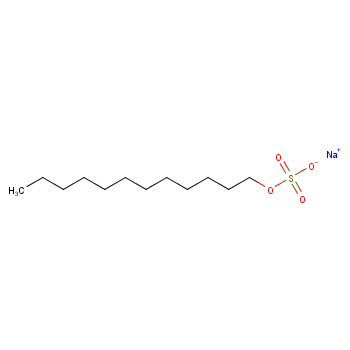
When a shampoo with a high (alkaline) pH contacts the fiber, three things happen in quick succession. First, the cuticle cells swell and lift: the cortex absorbs water, the scales open, and the surface roughness measured as combing friction rises sharply. Second, the more negative surface potential repels the very cationic conditioning agents — Polyquaternium-7, Polyquaternium-10, guar hydroxypropyltrimonium chloride — that are supposed to smooth the fiber. Third, alkalinity destabilizes the electrostatic and hydrogen-bond interactions that keep dye molecules trapped inside the cortex, accelerating color washout on dyed hair. Conversely, a mildly acidic formula keeps the cuticle tight, leaves the acid mantle of the scalp intact and lets anionic surfactants such as sodium lauryl sulfate or sodium laureth sulfate clean effectively without stripping barrier lipids.
Performance is not the only casualty of sloppy pH control. Preservation, viscosity and even fragrance perception are pH-dependent. Weak-acid preservative boosters such as benzoic, sorbic and dehydroacetic acid are only active in their undissociated form below roughly pH 5.0–5.5, and the electrolyte response used to build viscosity in anionic systems shifts as the pH moves. A shampoo that looks identical in the bottle can behave completely differently on the head purely because of one number on the quality control sheet. For a deeper treatment of how these systems interact, see the Guidechem hair care formulation resource.
Bringing a surfactant base into the 4.5–5.5 window is rarely accidental — it is engineered with a small set of acidifying, alkalizing and buffering agents, each with distinct trade-offs in cost, feel and regulatory pedigree.
Citric acid is the industry default: inexpensive, food-grade, globally accepted and multi-functional (pH adjustment plus chelation of trace metal ions that catalyze rancidity and preservative breakdown). Lactic acid offers a slightly gentler titration curve and a skin-identical narrative (it is a component of the natural moisturizing factor), which makes it popular in sensitive-scalp and dermo-cosmetic lines. Gluconic acid and gluconolactone round out the family as mild, hygroscopic options.
Phosphoric acid is used where a strong, non-volatile acid is needed at low cost, typically in industrial or professional clarifying products. It demands careful handling and accurate metering because it drops pH very quickly, and over-titration below pH 4 can actually irritate the scalp — proof that "more acidic" is not automatically "hair friendlier".
Neutralization runs both ways. Surfactant pastes and amide foam boosters frequently arrive over-acidic, and formulators walk pH upward with sodium hydroxide (dilute solutions), triethanolamine (TEA) or aminomethyl propanol. TEA is prized because it neutralizes without the sting of free mineral alkali, but it carries residual-amine impurity specifications that must be verified with the supplier for EU compliance.
A single acid addition gives a pH value; a buffer gives pH stability. Sodium citrate — the conjugate base pair of citric acid — locks the formula against drift caused by CO2 ingress, ingredient hydrolysis or packaging leachables. Arginine, a basic amino acid, is increasingly used in "no-tears" and scalp-care systems because it buffers in the mild range while contributing a conditioning feel. Together these agents form the backbone of what quality teams call pH robustness, and additional background is available in the Guidechem cosmetic pH adjustment encyclopedia entry.
| Ingredient (INCI) | CAS Number | Role in Shampoo | Typical Use Level | Formulation Notes |
|---|---|---|---|---|
| Citric Acid | 77-92-9 | Acidifier + chelant | 0.05–0.5% | Default choice; pairs with sodium citrate for buffering |
| Lactic Acid | 79-33-4 | Mild acidifier | 0.05–0.3% | Skin-identical story; excellent for sensitive-scalp claims |
| Phosphoric Acid | 7664-38-2 | Strong acidifier | qs to pH | Fast pH drop; strictly controlled dosing to avoid over-acidification |
| Sodium Hydroxide | 1310-73-2 | Alkalizer | qs to pH | Used as dilute solution to lift over-acidified bases |
| Triethanolamine | 102-71-6 | Neutralizing amine | qs to pH | Gentle titration; verify diethanolamine impurity limits for EU |
| Sodium Citrate | 6132-04-3 | Buffer | 0.1–0.5% | Locks pH against drift; standard in stable premium lines |
| Arginine | 74-79-3 | Amino acid buffer | 0.1–1.0% | Mild-range buffering plus conditioning feel in no-tears formats |
The following prototype illustrates a standard acid-balanced daily shampoo built around an anionic/amphoteric surfactant pair and finished with a citric-acid pH adjustment. Percentages are by weight.
| Phase | Ingredient (INCI) | % w/w | Function |
|---|---|---|---|
| A | Aqua (Water) | qs to 100 | Carrier |
| A | Sodium Laureth Sulfate (and) Sodium Lauryl Sulfate blend | 12.0 | Primary cleansing system |
| A | Cocamidopropyl Betaine | 4.0 | Co-surfactant, mildness and foam quality |
| A | Cocamide MEA | 1.5 | Foam booster, viscosity aid |
| B | Polyquaternium-10 | 0.3 | Cationic conditioning polymer |
| B | Sodium Chloride | 0.8–1.2 | Electrolyte viscosity builder |
| C | Preservative (phenoxyethanol-based system) | 1.0 | Microbial protection |
| C | Citric Acid (50% solution) + Sodium Citrate | qs to pH 4.5–5.5 | pH adjustment and buffer |
| C | Fragrance, Colorant | 0.5 / qs | Aesthetics |
Processing sequence: charge water and begin moderate agitation; add the anionic surfactant blend and mix until homogeneous; incorporate cocamidopropyl betaine and cocamide MEA; pre-disperse the Polyquaternium-10 in warm water before addition to avoid "fish-eyes"; cool below 35°C; add preservative, fragrance and color; adjust viscosity with the sodium chloride curve; and only then titrate pH with the 50% citric acid solution, confirming the final value on a calibrated meter at 25°C after 24 hours of equilibration.
No major cosmetics regulation prescribes a numerical pH limit for shampoos — the requirement is safety, and pH is one of the physico-chemical parameters the safety assessor must justify. The table below summarizes how the key frameworks treat the issue. Sourcing quality matters too: every pH-adjuster lot should come with a certificate of analysis, and reliable citric acid suppliers routinely provide pharmacopoeia-grade documentation.
| Jurisdiction / Body | Framework | Status Relevant to Shampoo pH |
|---|---|---|
| European Union | Regulation (EC) No 1223/2009 | No numeric pH limit; final pH must be justified in the Cosmetic Product Safety Report and notified via CPNP. SCCS Notes of Guidance govern the safety assessment approach. |
| United States | MoCRA (2022) / FDA; OTC monograph for anti-dandruff | Cosmetic shampoos: safety substantiation and facility registration; drug-claim dandruff shampoos: pH-compatible active (e.g., zinc pyrithione) under the OTC monograph. |
| United States (ingredients) | CIR (Cosmetic Ingredient Review) | SLS/SLES, cocamidopropyl betaine, citric acid and its salts assessed as safe in rinse-off use in present practices of use and concentration. |
| International GMP | ISO 22716:2007 | Requires documented in-process pH control, calibrated instrumentation and batch-record specifications. |
| ASEAN / China / Japan | ASEAN Cosmetic Directive; CSAR; JSQI | Follow EU-style safety dossiers; regional pH norms for rinse-off hair products cluster around 4.0–8.0 with mild-acid positioning preferred in premium tiers. |
For the broadest population and hair types, formulators target pH 4.5–5.5, matching the scalp's acid mantle and keeping the keratin cuticle closed. Within that window, color-treated and damaged hair benefit from the lower end (4.5–5.0) because a tighter cuticle retains dye and improves deposition of cationic conditioners, while normal-to-oily hair tolerates the upper end (5.5). Values above 7 should be reserved for technically justified specialty products such as chelating or clarifying treatments, and always followed by an acidifying conditioner.
Alkalinity raises the net negative charge of the fiber above its isoelectric point (about pH 3.67), causing cuticle scales to swell and lift. Opened cuticles increase wet-combing friction, expose the cortex to water and aggressive actives, and allow dye molecules to diffuse out — which is why color fades faster after alkaline washing. Repetitive swelling also fatigues the cuticle cells mechanically, leading over time to split ends, porosity and breakage, even though a single wash may not show visible harm.
Yes, critically. Weak organic acid preservatives and boosters (benzoic, sorbic, dehydroacetic acid) are active only in their undissociated form, which dominates below roughly pH 5. If a formula drifts upward, the preservative can silently lose efficacy even though the analytical assay still detects the molecule. This is a core reason quality teams insist on buffered systems and stability-station pH checks: preservative failure in a rinse-off product is a safety event, not merely a performance one.
No. "Sulfate-free" describes the surfactant platform (typically isethionates, taurates, glucosides or sarcosinates), not the pH. A sulfate-free formula built on soap-like saponified surfactants can still be alkaline and cuticle-aggressive, while a conventional SLES-based shampoo adjusted to pH 5 with a citrate buffer can outperform it on hair feel and color retention. Judge the product by its declared pH range and ingredient system together, never by the sulfate claim alone.
 |
 |
 |
 |
 |
 EN
EN
 Agricultural News
 Food News
 Industrial News
 Cosmetic News
 Pharmaceutical News
 Science News

 1YR
1YR

