We detected your language preference as English. Would you like to switch to the
English
version for a better experience?
Switch to English
Stay here
EN
En
Es
JP
Category
Encyclopedia
Dictionary
Database & Tools
CN Chemical Plant Database
CN Chemical Capacity Database
Cosmetic ingredients
Supplier
GuideTrends
GuideView
News
Industry News
Agricultural News
Food News
Industrial News
Cosmetic News
Pharmaceutical News
Science News
Exhibition News
Chemical Policy
Articles
Trends
Application
Research
Property
History
Trades
HOT RFQ
Featured Suppliers
TradeShow
FAQ
Structure Search
About Us
News
Industry News
Exhibition News
Chemical Policy
Articles
Trends
Application
Research
Property
History
Trades
HOT RFQ
Featured Suppliers
FAQ
Visit Guidechem
EN
En
Es
JP
Guideview
>
Articles
> Food
Food
Discover Guideview's Food articles! Stay informed about the latest news, policies, and scientific insights relevant to the food industry.
HOT Topics
Comparison
Distilled water
Iodized salt
Guar guar gum vs Xanthan gum: Complete Comparison & Procurement Guide
Guar gum
Xanthan gum
Comparison
Compare guar guar gum vs xanthan gum: definitions, functional roles, specification language and documentation each side must carry. Compare structure, applications, COA checkpoints and procurement guidance before ordering.
Soda ash vs Baking soda: Complete Comparison & Procurement Guide
Soda ash (sodium carbonate)
Baking soda (sodium bicarbonate)
Comparison
Compare soda ash vs baking soda: CAS 497-19-8 (CNa2O3, 105.988 g/mol) against CAS 144-55-8 (CHNaO3, 84.007 g/mol) for research and industrial purchasing. Compare structure, applications, COA checkpoints and procurement guidance before ordering.
Brewer's Yeast vs Nutritional Yeast: What Buyers Should Know
Brewer's yeast
Nutritional yeast
Comparison
Brewer's yeast vs nutritional yeast: beer-brewing byproduct versus fortified food-grade flakes. Compare bitterness, B-vitamin content, processing, allergen control and label claims when sourcing in bulk.
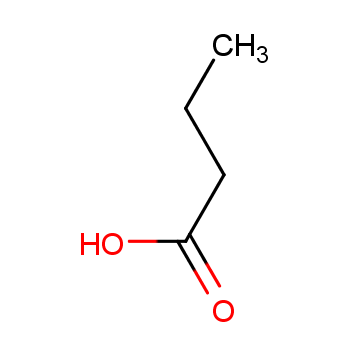
Butyric Acid in Food & Beverage Products: Technical Guide to Function, Formulation, Stability and Regulatory Compliance
Butyric Acid
Propionic Acid
Caproic Acid
Butyric acid is a short-chain fatty acid with molecular formula C4H8O2, molar mass 88.106 g/mol and CAS 107-92-6. Its principal value is an authentic buttery and cheesy flavor contribution delivered at very low use levels.
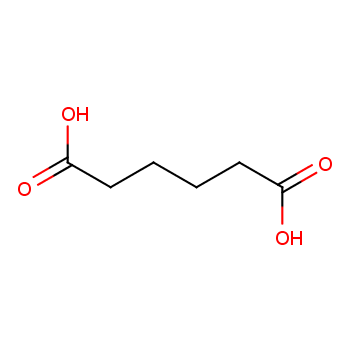
Adipic Acid in Food and Beverage Products: A Technical Guide for Formulation Chemists
Adipic Acid
Adipic acid is the least acidic of the common food acidulants, but its defining advantage is non-hygroscopicity: it absorbs very little moisture compared with tartaric acid or cream of tartar.
Acetic Acid in the Food Industry: Technical Guide to Function, Formulation and Regulatory Compliance
Acetic Acid
Acetic acid is a multifunctional food additive whose value lies in a combination of properties: it supplies a sharp sour taste and a pungent vinegary note, it lowers pH and thereby extends shelf life.
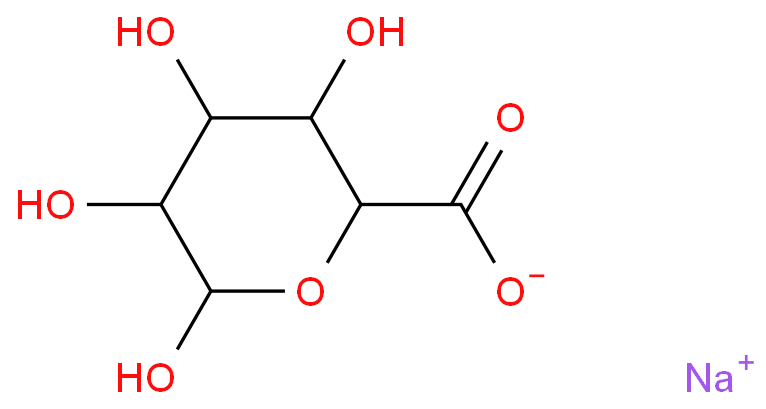
Alginates in Food and Nutrition: A Technical Guide to Seaweed-Derived Gelling, Thickening and Encapsulation Agents
Alginates
Alginate is a linear, unbranched copolymer of beta(1-4)-linked D-mannuronic acid (M) and alpha(1-4)-linked L-guluronic acid (G) residues, supplied commercially as sodium (CAS 9005-38-3), potassium.
Texturized Soy Protein in the Food Industry: Technical Guide to Function, Formulation, Texture and Regulatory Compliance
Texturized Soy Protein
Texturized soy protein is a textured plant-protein ingredient whose value lies in a combination of complete protein containing all nine essential amino acids, water binding, swelling, gelling and fat emulsification functions.
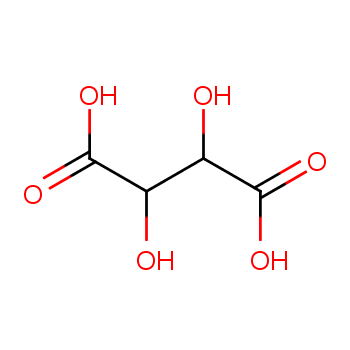
Tartaric Acid in Food and Beverage Products: A Technical Guide to Acidulant, Leavening and Stabilizer Applications
Tartaric Acid
Tartaric acid is a diprotic, water-soluble organic acid (CAS 87-69-4 for the L(+)-isomer; MW 150.09 g/mol; formula C4H6O6) whose two pKa values, 2.98 and 4.34, let it buffer effectively in the pH ranges typical of beverages, confectionery and jams.
Iron Ammonium Citrate in Food & Nutrition: Technical Guide to Function, Fortification and Regulatory Compliance
Iron Ammonium Citrate
Ferric ammonium citrate of formula C6H11FeNO7, molecular weight 265.00 g/mol and CAS 1185-57-5, is a water-soluble iron-citrate complex with a density of about 1.06 g/cc, a pH of 6 to 8 at 100 g/L and a solubility of roughly 1.
< Pre
1
...
23
24
25
26
27
28
29
...
35
Next >
Articles Archives
Hot Articles
Distilled vs Deionized water: Complete Comparison & Procurement Guide
Light molasses vs Dark molasses: Complete Comparison & Procurement Guide
Cleaning with apple cider vinegar vs White: Key Differences & Buyer Guide
Pure cane vs Granulated sugar: Complete Comparison & Procurement Guide
Sodium chloride vs Salt: Complete Comparison & Procurement Guide
Chinese star anise vs Japanese star anise: Key Differences & Buyer Guide
Potassium bicarbonate vs Baking soda: Complete Comparison & Procurement Guide
Distilled water vs Di water: Complete Comparison & Procurement Guide
Related Exhibition
All Categories
Agri & Industry
Cosmetic
History
Laboratory
Pharmaceutical




 EN
 Agricultural News
 Food News
 Industrial News
 Cosmetic News
 Pharmaceutical News
 Science News

