We detected your language preference as English. Would you like to switch to the
English
version for a better experience?
Switch to English
Stay here
EN
En
Es
JP
Category
Encyclopedia
Dictionary
Database & Tools
CN Chemical Plant Database
CN Chemical Capacity Database
Cosmetic ingredients
Supplier
GuideTrends
GuideView
News
Industry News
Agricultural News
Food News
Industrial News
Cosmetic News
Pharmaceutical News
Science News
Exhibition News
Chemical Policy
Articles
Trends
Application
Research
Property
History
Trades
HOT RFQ
Featured Suppliers
TradeShow
FAQ
Structure Search
About Us
News
Industry News
Exhibition News
Chemical Policy
Articles
Trends
Application
Research
Property
History
Trades
HOT RFQ
Featured Suppliers
FAQ
Visit Guidechem
EN
En
Es
JP
Guideview
>
Articles
> Food
Food
Discover Guideview's Food articles! Stay informed about the latest news, policies, and scientific insights relevant to the food industry.
HOT Topics
Comparison
Distilled water
Iodized salt
Tricalcium Phosphate in Food and Nutrition: Technical Guide to Function, Fortification, Formulation and Regulatory Compliance
Tricalcium Phosphate
Calcium phosphate
Tricalcium phosphate is an inorganic calcium phosphate with molecular formula Ca3(PO4)2, molecular weight about 310.18 g/mol, CAS 7758-87-4 and food additive codes E 341(iii) and INS 341(iii).
Quercetin in Nutraceuticals and Supplements: Technical Guide to Function, Bioavailability, Formulation and Regulatory Compliance
Quercetin
Quercetin is a pentahydroxyflavone of formula C15H10O7, molecular weight 302.24 g/mol and CAS 117-39-5, with a melting point of about 316.5 degrees C and solubility below 1 mg/mL in water.
Aluminum Silicate in Food & Nutrition: Technical Guide to Function, Production, Formulation and Regulatory Compliance
Aluminum Silicate
Aluminum silicate covers compounds derived from aluminum oxide, Al2O3, and silicon dioxide, SiO2, and occurs both naturally and synthetically. The Al2SiO5 composition has molecular weight 166.077 g/mol.
Calcium Carbonate in Food and Nutritional Products: Technical Guide to Function, Formulation and Compliance
Calcium Carbonate
Tricalcium Phosphate
Calcium Citrate
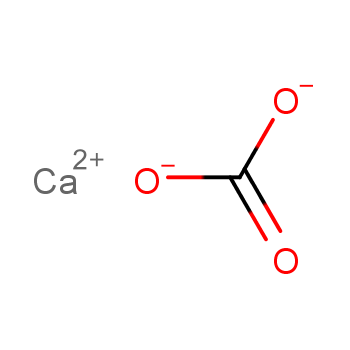
Calcium carbonate is an inorganic salt with molecular formula CaCO3, molar mass 100.0869 g/mol and CAS 471-34-1. For food formulation, its principal values are a concentrated and economical source of dietary calcium.
Glucono Delta-Lactone in Food Products: Technical Guide to Function, Formulation, Safety and Regulatory Compliance
Glucono Delta-Lactone
Gluconolactone
Citric Acid
Lactic Acid
Glucono delta-lactone is a slow-acting acidulant with formula C6H10O6, molecular weight 178.140 g/mol, CAS 90-80-2 and E number E 575. For food formulation, its principal value is controlled.
Trisodium Phosphate (TSP) in Food & Nutrition: Technical Guide to Function, Formulation, Safety and Regulatory Compliance
Trisodium Phosphate
Disodium Phosphate
Sodium Citrate
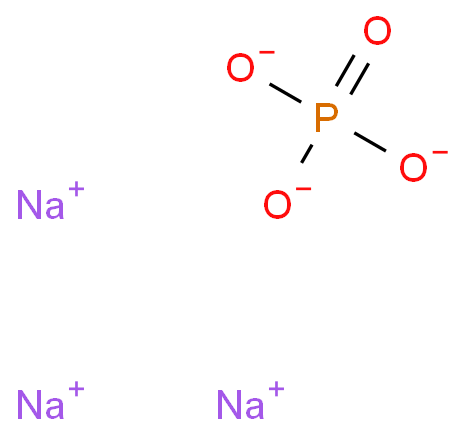
Trisodium phosphate is an alkaline inorganic salt with the formula Na3PO4, a molecular weight of 163.94 g/mol, CAS 7601-54-9, EC 231-509-8, INS 339(iii) and E 339(iii).
Citric Acid in Food and Nutrition Products: Technical Guide to Function, Formulation, Quality and Regulatory Compliance
Citric Acid
Citric acid is a triprotic weak acid of formula C6H8O7, molecular weight 192.12 g/mol and CAS 77-92-9, with a 5 percent aqueous pH of about 1.86 and solubility above 500 g/L in water at 20 degrees C.
Monocalcium Phosphate as a Food Ingredient: Technical Guide to Leavening Function, Formulation and Regulatory Compliance
Monocalcium Phosphate
Monocalcium phosphate is an acidic calcium phosphate with the formula CaH4P2O8 and CAS 7758-23-8. Its principal value in food formulation is a fast-acting leavening acid that helps deliver a fine.
Fructooligosaccharides in Food and Nutrition: Technical Guide to Function, Formulation, Safety and Regulatory Compliance
Fructooligosaccharides
Fructooligosaccharides are short-chain fructan oligosaccharides with CAS 308066-66-2 and a molecular weight range of about 1000 to 5000 Da. For food formulation.
Sorbitol in Food Products: Technical Guide to Function, Formulation, Safety and Regulatory Compliance
Sorbitol
Xylitol
Erythritol
Sorbitol is a six-carbon sugar alcohol with molecular formula C6H14O6, CAS 50-70-4, EC 200-061-5, INS 420 and E 420. For food formulation, its principal value is the combination of bulk with sweetness at roughly 50 to 60 percent of sucrose.
< Pre
1
...
25
26
27
28
29
30
31
...
35
Next >
Articles Archives
Hot Articles
Distilled vs Deionized water: Complete Comparison & Procurement Guide
Light molasses vs Dark molasses: Complete Comparison & Procurement Guide
Cleaning with apple cider vinegar vs White: Key Differences & Buyer Guide
Pure cane vs Granulated sugar: Complete Comparison & Procurement Guide
Sodium chloride vs Salt: Complete Comparison & Procurement Guide
Chinese star anise vs Japanese star anise: Key Differences & Buyer Guide
Potassium bicarbonate vs Baking soda: Complete Comparison & Procurement Guide
Distilled water vs Di water: Complete Comparison & Procurement Guide
Related Exhibition
All Categories
Agri & Industry
Cosmetic
History
Laboratory
Pharmaceutical





 EN
 Agricultural News
 Food News
 Industrial News
 Cosmetic News
 Pharmaceutical News
 Science News

