-
We detected your language preference as English. Would you like to switch to the English version for a better experience?
Switch to English
Stay here


Citric acid is a naturally occurring weak organic acid found in citrus fruits such as lemons and oranges, and it is widely used in the food industry for its tart taste, pH control and preservative action. It also plays a central role in human metabolism through the citric acid cycle, which generates energy in the mitochondria of cells.
For product developers, the key questions are not simply whether citric acid acidifies a formula, but how its triprotic dissociation and chelating behaviour shape flavour, colour, texture and shelf life, how the choice between anhydrous and monohydrate forms changes dosing, and how its use is bounded by category-specific limits. This guide consolidates those considerations into a practical B2B framework.
| Function | Suitable Users | Core Technical Indicators | Compliance Framework |
|---|---|---|---|
| Acidulant and pH control | Beverage, confectionery and canned product developers who need precise acidity and tartness | Triprotic acid with a 5 percent aqueous pH of 1.86; adjusts pH for flavour, preservation and texture | GRAS in the US; E 330 in the EU, with category-specific maximum levels such as 3,000 mg/l in fruit juices |
| Preservative and antioxidant support | Producers of canned, jarred and chilled products seeking to extend shelf life without synthetic preservatives | Creates an acidic environment that inhibits bacteria, moulds and yeasts, and augments other antioxidants | Regulated as an additive or processing aid depending on category and market |
| Chelating agent | Developers of canned fruits, beverages and sauces who need to control metal-driven discolouration | Binds metal ions to prevent oxidation and discolouration and to maintain colour and appearance | May be labelled as a sequestrant or acidifier depending on the market and function declared |
| Coagulant and nutrient enhancer | Cheese, paneer and tofu makers, and nutrition brands targeting mineral bioavailability | Drives acid coagulation; chelation can improve iron and calcium absorption and utilisation | Nutrient-enhancement positioning must be substantiated against the target market's claim rules |
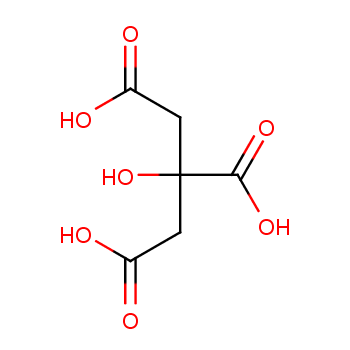
Citric acid is a weak organic acid with the formula C6H8O7 and is classified as a tricarboxylic acid because it carries three carboxyl groups. When dissolved in water it forms hydronium ions and citrate ions. It is a triprotic acid, meaning it has three acidic hydrogens that react with water to produce hydronium ions, and its three dissociation constants together make it a weak rather than a strong acid.
That weak, triprotic character matters more than the headline pH. Because the three protons are released across a range of pH values, citric acid provides buffering as well as acidification, which makes it useful where a formulator needs to hold a target pH rather than simply lower it. The partial dissociation also produces the sharp, fast-onset sourness that distinguishes citric acid from slower, fuller acids.
Beyond its technical function in food, citric acid is a metabolite central to aerobic life. It is an intermediate in the citric acid cycle, also called the Krebs cycle or tricarboxylic acid cycle, in which citric acid is converted into other compounds and energy is released as ATP. That biological role is one reason the acid is metabolised and excreted efficiently by the body.
Explore the citric acid technical encyclopedia for additional chemical and application information.
| Parameter | Specification / Description |
|---|---|
| IUPAC name | 2-hydroxypropane-1,2,3-tricarboxylic acid |
| Molecular formula | C6H8O7 |
| Molecular weight | 192.12 g/mol |
| CAS number | 77-92-9 |
| EC number | 201-069-1 |
| Food additive numbers | E 330; INS 330; JECFA 218; FEMA 2306 |
| Appearance | Colorless crystals or powder; odorless with a strongly acidic taste |
Citric acid performs its several roles through three interlinked mechanisms: acidification and buffering, metal chelation, and the biological inhibition of spoilage organisms. Understanding them explains why a single acid can enhance flavour, stabilise colour and extend shelf life at the same time.
Citric acid lowers pH and provides buffering across a broad range, which is why it regulates the desired acidity for preservation, flavour and texture. Its taste is tart and acidic, commonly described as sour like lemon or lime, with a sudden onset of sourness and a refreshing, tangy quality. That sharp onset is what makes it effective at balancing sweetness in beverages and confections.
Citric acid binds metal ions through its carboxyl and hydroxyl groups, preventing the metal-catalysed oxidation and discolouration that would otherwise degrade colour and flavour. It also augments the activity of other antioxidants; in one study it improved the antioxidant activity of 4-hydroxybenzyl isothiocyanate in soybean oil to prevent lipid oxidation, and in water chestnuts it extended shelf life and prevented discolouration.
By creating an acidic environment, citric acid inhibits the growth of bacteria, moulds and yeasts and extends the shelf life of canned and processed foods. It also acts as a coagulant in acid-based coagulation, used in cheese, paneer and tofu, and as an acidulant that reacts with bases in leavened foods such as cake to increase volume and give a fluffy, smooth texture.
Citric acid occurs naturally in a wide range of fruits and vegetables. The richest sources are citrus fruits such as lemons, limes, oranges and grapefruits, with lemon reported at about 73.9 g/L and lime at about 61.5 g/L. Other fruits including strawberries, raspberries, pineapple, kiwi, grapes, apples, mangoes, papaya, cranberries and tomatoes also contain citric acid, which contributes to their tangy flavour, acidity and freshness.
Despite the name, commercial citric acid is seldom produced from citrus fruit because that route is cost-inefficient. The dominant industrial method is fermentation of carbohydrates by selected strains of mould, bacteria or yeast, with Aspergillus niger the classic organism. Sugar sources such as molasses or corn syrup are fermented in large-scale industrial fermenters, after which the resulting citric acid is purified for use across its many applications.
The range of producing organisms is broad. Bacteria such as Bacillus licheniformis, Bacillus subtilis and Arthrobacter paraffinens, fungi including several Aspergillus species and Penicillium janthinellum, and yeasts such as Yarrowia lipolytica and various Candida species have all been described as citric-acid producers. The choice of organism and substrate influences yield, by-product profile and the impurities that downstream purification must remove, and buyers should confirm the production route against their specification and any market-specific requirements for the fermentation organism.
Citric acid belongs to the family of tricarboxylic acid cycle intermediates and food-grade organic acidulants. Within a formulation, the practical comparison is between the hydrate forms in which it is supplied and between citric acid and the alternative acidulants that perform overlapping roles with different sensory and buffering profiles.
Anhydrous citric acid contains no water of crystallisation, so a given mass delivers more acid equivalents than the monohydrate. It is the preferred form where dry-weight efficiency and stability in dry blends matter, and where the formulation must avoid introducing additional water.
Monohydrate citric acid carries one water molecule per citric acid molecule and is a white crystalline powder commonly used in food and beverage products. Because of the associated water, dosing must be adjusted on an acid-equivalent basis when substituting one form for the other, and the two are not interchangeable by simple mass.
Other organic acids deliver different sensory and buffering behaviour. Malic acid gives a longer, smoother sourness, tartaric acid provides sharper acidity, and lactic acid is milder and less volatile in flavour. The choice between them shapes the taste profile and the pH curve, so the acidulant should be selected against the sensory target rather than on cost alone.
| Parameter | Citric Acid | Malic Acid | Lactic Acid |
|---|---|---|---|
| Acid type | Triprotic tricarboxylic acid | Diprotic hydroxy acid | Monoprotic hydroxy acid |
| Taste profile | Sharp, fast-onset sourness like lemon or lime | Longer, smoother and more persistent sourness | Milder, softer acidity |
| Buffering | Buffers over a broad pH range due to three constants | Narrower buffering range | Limited buffering capacity |
| Chelation | Strong metal binding; prevents oxidation and discolouration | Weaker chelation | Weak chelation |
| Primary food use | Beverages, canned goods, jams, cheese and effervescent systems | Confectionery and fruit-flavoured products | Dairy, bakery and savoury products |
| Key limitation | Incompatible with alkalis and strong oxidisers; decomposes above 175 degrees C | Less effective as a chelating agent | Weaker acidification per unit mass |
| Property | Typical Value / Description |
|---|---|
| Physical form and appearance | Crystals or powder; colorless and odorless |
| pH at 5 percent aqueous | 1.86 |
| Density at 20 degrees C | 1.665 g/cm3 |
| Melting point | 153 degrees C |
| Solubility | Above 500 g/L in water at 20 degrees C; soluble in acetone, alcohol, ether, ethyl acetate and DMSO |
| Partition coefficient | logP -1.64 |
| Thermal stability | Decomposes above 175 degrees C with loss of carbon dioxide and water |
| Storage | Cool, dry, away from moisture and light; avoid high humidity and elevated temperature to prevent caking |
| Claims (product specific) | Natural, halal, kosher, plant-based and vegan |
| Function | Typical Product Examples | Key Formulation Objective |
|---|---|---|
| Flavouring agent | Fruit-flavoured beverages, sports and energy drinks, hard-boiled candies, chewing gums, gummies | Deliver a refreshing tartness that balances sweetness |
| Acidulant and pH control | Canned fruits and vegetables, pickles, sauces, marinades, jams and jellies | Set the pH needed for preservation, flavour and texture |
| Coagulant | Cheese, paneer, tofu and other acid-coagulated products | Trigger protein coagulation at a controlled rate |
| Emulsifier and stabiliser | Salad dressings, mayonnaise, sauces and condiments | Stabilise and blend oil- and water-based ingredients |
| Preservative | Processed meat and seafood, canned goods, infant formula and baby foods | Inhibit microbial growth and extend shelf life |
Citric acid is used across dairy, savoury, frozen dessert, convenience, beverage, snack, meat and seafood, confectionery, infant food and nutraceutical categories. In dairy it supports cheese, paneer and yogurt; in alcohol it finds use in wine and beer; and in nutraceuticals it appears in gummies, tablets, lozenges and suspensions. The breadth of these applications reflects the fact that acidity and chelation are relevant in almost every food system.
Start with the pH the product needs for preservation and stability, then match the acidulant to the sensory target. Citric acid gives a sharp, fast-onset sourness, so where a smoother or longer acidity is wanted, a blend with malic or lactic acid may be more appropriate. Dosage typically ranges from 0.5 to 2 percent or more depending on the application.
Choose between anhydrous and monohydrate citric acid on an acid-equivalent basis. The anhydrous form delivers more acid per unit mass and adds no water, while the monohydrate is the white crystalline powder most commonly specified for foods and beverages. Substituting one for the other by equal mass will shift the delivered acidity.
Citric acid interacts with alkalis and strong oxidising agents, so alkaline or strongly oxidising systems require verification. It also decomposes above 175 degrees C, which means baking, extrusion or high-temperature processing can change its contribution. Assess the delivered acidity after the process rather than relying on the addition level.
Store citric acid in a cool, dry place away from moisture and light, and avoid high humidity and elevated temperatures that promote caking. Handle it with standard safety measures, including gloves and eye protection, because it can irritate skin and eyes.
The formulations below are illustrative technical examples drawn from published sources rather than universal commercial recipes. Actual ingredient levels must be recalculated against the target taste, texture and destination-market requirements of each project.
| Ingredient | Illustrative Quantity | Technical Role |
|---|---|---|
| Citric acid | 49.3 percent | Acidulant that reacts with bicarbonate to effervesce and delivers tartness |
| Mannitol | 35.0 percent | Non-hygroscopic bulk sweetener and tableting diluent |
| Fixed flavours | 8.1 percent | Defines the beverage taste profile |
| Aspartame | 3.1 percent | High-intensity sweetener for a sugar-free system |
| Potassium bicarbonate | 3.7 percent | Base that releases carbon dioxide when it meets the acid |
| Cloud, color, vitamins and buffers | 0.4 percent each component | Appearance, nutrition and pH balance of the tablet |
A second illustrative system is a processed cheese in which citric acid at 5 percent is used alongside sodium citrate at 2 percent and sorbic acid at 2 percent within a blend of Parmesan, mozzarella and cheddar. Here the citric acid contributes acidity and emulsifying salt behaviour, while sorbic acid supplies preservation and the cheese blend delivers the flavour and body expected of the finished product.
Regulatory treatment of citric acid depends on its declared function and on the intended product category, since the same substance may be regulated as an additive, a processing aid or a nutrient. Because maximum levels are set by category in some markets, a formulation should be checked against the specific permitted level rather than a single global figure.
| Market / Framework | Technical Relevance | Compliance Action |
|---|---|---|
| US FDA | Citric acid is classified as generally recognised as safe when used per good manufacturing practice and in the amounts needed for its intended purpose; material from fruit juice or from Candida or Aspergillus niger fermentation is approved. | Confirm the production route and use level against the applicable GRAS provision and any relevant standard of identity. |
| European Union | Citric acid is approved under Regulation (EC) No 1333/2008 and listed as E 330, with limits that are quantum satis in most categories but defined in others, such as 3,000 mg/l in fruit juices. | Verify the current permitted category and maximum level, and confirm the labeling convention for E 330. |
| JECFA / Codex | The JECFA acceptable daily intake for citric acid is not limited, and Codex GSFA provisions set permitted categories and maximum levels. | Use the GSFA provisions as a reference where Codex alignment supports export positioning. |
| National authorities | Requirements for acidulant use and for related claims differ across markets, and additional provisions may apply to infant and young-child categories. | Verify current requirements for each destination, since permitted categories and labeling rules change by jurisdiction. |
| EFSA | Citric acid is assessed by the European Food Safety Authority and its scientific evaluations underpin the safety basis for authorised uses. | Treat scientific opinions as risk-assessment guidance and apply the current legal framework that they support. |
| ISO 22000 / HACCP | Food-safety management systems support control of contamination, traceability and caking or moisture hazards for a hygroscopic food acid. | Maintain supplier qualification, batch traceability, microbiology controls and cool, dry storage. |
In terms of toxicity, citric acid is generally considered safe for consumption and is metabolised and excreted by the body without accumulating in tissues. It carries a not-limited acceptable daily intake from JECFA and is approved as a food additive in the European Union and as GRAS in the United States, which together support its use across a very wide range of products.
Citric acid is also reported to have positive health associations. Dietary citric acid may increase the activation of the defence system and thereby contribute to lower oxidative stress, and studies indicate that citrate decreases lipid peroxidation and downregulates inflammation. Its chelating action has been reported to improve iron absorption by about 54 percent and to increase the resorption of potassium and calcium.
Reported health effects should not be converted into product claims without substantiation. For food manufacturers, the important principle is to separate the technical functions of acidification, chelation and preservation from any implied therapeutic benefit, and to substantiate every claim against the rules of the target market and product category.
| Application Context | Typical Use Level | Formulation Note |
|---|---|---|
| General acidulation | 0.5 to 2 percent or more | Set the dose to the target pH and taste in the actual matrix. |
| Canned fruits and vegetables | Quantum satis in the EU | Chelation protects colour and prevents metal-driven discolouration. |
| Fruit juices | Up to 3,000 mg/l in the EU | Balance tartness against the natural acidity of the juice. |
| Fruit nectars | Up to 5,000 mg/l in the EU | Higher limit reflects the lower solids relative to juice. |
| Marmalade and preserves | About 1 percent | Supports pectin set alongside a high sucrose level. |
These use levels are illustrative formulation references and should not be interpreted as universal legal maximums. Product developers should use the current permitted levels and regulatory limits applicable to the intended market, product category and population.
Citric acid acts as a flavouring agent, acidulant and pH control agent, coagulant, preservative, chelating agent, emulsifier and nutrient enhancer. It provides a tart, fast-onset sourness, inhibits microbial growth, chelates metal ions that cause oxidation and discolouration, and can improve the bioavailability of minerals such as iron and calcium.
It depends on the requirement. Anhydrous citric acid has no water of crystallisation and delivers more acid per unit mass, while the monohydrate carries one water molecule per citric acid molecule and is the white crystalline powder widely used in foods and beverages. Substitute between them on an acid-equivalent basis rather than by equal mass.
Most commercial citric acid is produced by fermenting carbohydrate sources such as molasses or corn syrup with Aspergillus niger or selected yeast strains in large-scale fermenters, followed by purification. Despite the name, only a small share is extracted directly from citrus fruit because that route is cost-inefficient.
Citric acid is generally recognised as safe by the US FDA and is approved as E 330 in the European Union under Regulation (EC) No 1333/2008. The JECFA acceptable daily intake is not limited, and it is metabolised and excreted without accumulating in tissues. Requirements change by jurisdiction, so formulators should verify the current provisions of each intended market.
| Identifier | Value | Resource |
|---|---|---|
| CAS number | 77-92-9 | Chemical dictionary |
| Food additive number | E 330 / INS 330 | Technical encyclopedia |
| Product lookup | citric acid | Supply search |
| Supplier / trade search | citric acid monohydrate | Supplier search |
1. U.S. Food and Drug Administration. Code of Federal Regulations Title 21 Section 184.1033 on citric acid as a generally recognized as safe substance.
2. European Commission. Regulation (EC) No 1333/2008 on food additives, listing citric acid as E 330.
3. JECFA. Chemical and technical evaluations of citric acid, including the not-limited acceptable daily intake.
4. EU Food and Feed Portal. Food additive details for citric acid.
5. ResearchGate. HPLC organic acid analysis in different citrus juices, providing concentrations by species.
6. Wiley Online Library. Food Science and Nutrition article on organic acid production.
7. ScienceDirect. Food science and food microbiology articles on acidulant behaviour and preservation.
8. PubMed Central. Studies on citric acid antioxidant effects, mineral bioavailability and food additive health outcomes.
 |
 |
 |
 |
 |
 EN
EN
 Agricultural News
 Food News
 Industrial News
 Cosmetic News
 Pharmaceutical News
 Science News

 3YRS
3YRS

