-
We detected your language preference as English. Would you like to switch to the English version for a better experience?
Switch to English
Stay here


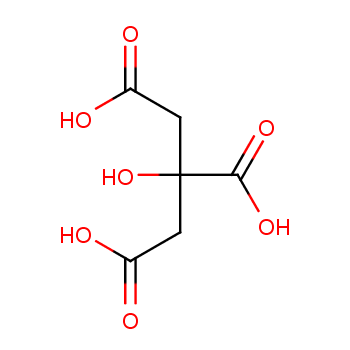
Citric acid (CAS 77-92-9), 2-hydroxypropane-1,2,3-tricarboxylic acid, is the highest-volume organic acid produced worldwide and a foundational building block across the food, beverage, pharmaceutical, detergent, and industrial sectors. With global annual production exceeding 2.3 million metric tons, it functions simultaneously as an acidulant, preservative, chelating agent, buffer, and flavor enhancer, making it one of the most universally specified ingredients in the B2B chemical marketplace. Its manufacture is dominated by submerged fermentation of carbohydrate feedstocks by Aspergillus niger, a mature bioprocess that has steadily improved in yield, titer, and sustainability profile over decades of industrial refinement.
This white paper analyzes citric acid as a bulk fermentation-derived commodity whose market dynamics are shaped by feedstock economics, regional capacity expansion in China, and tightening environmental and food-safety regulation. We examine its chelation and acidification chemistry, the fermentation and recovery train that defines producer competitiveness, and the broad application matrix that insulates demand from cyclical downturns in any single end market. The analysis further addresses the compliance divergence between food-grade, pharmaceutical-grade, and technical-grade specifications and the documentation discipline required to move material across regulated borders.
For procurement and commercial leaders in 2026, the strategic landscape is defined by overcapacity in Asian fermentation hubs, pressure on Western marginal producers, and a rising premium on low-carbon, traceable, food- and pharma-grade supply. The following sections provide an actionable framework for qualifying suppliers, managing price and ESG risk, and exploiting the structural growth driven by clean-label food preservation, biodegradable chelation in detergents, and pharmaceutical excipient demand.
Citric acid is a tricarboxylic acid with the molecular formula C6H8O7 and molar mass 192.12 g/mol, existing as an anhydrous form and a monohydrate that crystallizes below about 36.5 degrees Celsius. It is a white, odorless, strongly acidic crystalline powder highly soluble in water and ethanol, with a dissociation profile spanning three pKa values near 3.1, 4.7, and 6.4 that makes it an exceptional buffering agent across the mild-acidity range encountered in foods and pharmaceuticals. Anhydrous citric acid melts at approximately 153 degrees Celsius, while the monohydrate loses water of crystallization upon warming and is preferred for certain effervescent and granular applications.
Virtually all commercial citric acid is manufactured by aerobic submerged fermentation using the filamentous fungus Aspergillus niger fed on carbohydrate feedstocks such as cane or beet molasses, corn steep liquor, or hydrolyzed starches, a process that has wholly displaced the historical citrus-fruit-extraction route on cost and scale. Modern continuous and fed-batch fermenters operate at high sugar concentration and tightly controlled pH and aeration to drive the organism's overflow metabolism toward near-stoichiometric citric acid accumulation, after which the broth is separated, purified, and crystallized to the desired grade.
Demand growth is structurally supported by three independent engines: the global shift toward processed and convenience foods requiring safe acidification, the substitution of phosphate and synthetic chelants by biodegradable citric acid in detergents under environmental legislation, and steady pharmaceutical and personal-care consumption. Clean-label and "natural-origin" positioning further favors citric acid over mineral acids in premium food segments, while the energy-transition and battery-recycling industries are emerging as novel, smaller outlets for its chelating chemistry.
China dominates global citric acid capacity and exports, supplying the large majority of internationally traded volume from large integrated fermentation complexes in Shandong and other eastern provinces that benefit from scaled molasses sourcing and low-cost energy. The European Union and United States retain significant but higher-cost domestic production tied to regional food and pharma demand, while India and Southeast Asia are expanding fermentation capacity to serve domestic and export markets. Export corridors run predominantly from East Asia to Europe, North America, and increasingly Africa and Latin America, with ocean freight of bagged or bulk material constituting the principal logistics mode.
Pricing is closely coupled to carbohydrate feedstock costs, energy prices, and Chinese environmental-enforcement cycles that periodically curtail output and tighten supply. The market is bifurcated between commodity technical grade traded on thin margins and differentiated food and pharma grades carrying quality and documentation premiums; antidumping measures in the EU and periodic trade-defense actions against Chinese origin material introduce tariff volatility that buyers manage through origin diversification and forward contracting.
Citric acid traverses multiple regulatory regimes depending on intended grade and use, and market-access teams must align specifications to the correct monograph and authorization pathway while maintaining chemical-substance registrations for the industrial material. Its natural metabolic origin and GRAS status lower food-safety barriers relative to synthetic additives, but documentation discipline around purity, microbial load, and residue limits remains exacting for regulated buyers.
Citric acid production is energy- and feedstock-intensive, and its fermentation-derived, biodegradable character is increasingly weighed against the carbon and water footprint of molasses sourcing and the gypsum byproduct stream. Leading producers now pursue Scope 1-3 emissions accounting and product-carbon-footprint disclosure aligned with ISO 14067 to satisfy brand-owner ESG mandates and to pre-empt carbon-border-adjustment exposure in European and other regulated markets.
Life-cycle improvement centers on shifting fermentation energy to renewable power, optimizing sugar-to-acid yield to reduce feedstock intensity, and valorizing the calcium-sulfate gypsum coproduct as construction material or soil amendment rather than landfilling it. Circular-economy models recover and recycle process water, capture fermentation carbon dioxide, and increasingly integrate biorefinery thinking in which mycelial biomass and spent liquor become animal feed or bioenergy, lowering both emissions and waste-treatment cost while improving the producer's ESG scorecard for multinational customers.
Traceability expectations require documented feedstock origin, confirmation of non-deforestation and responsible agricultural sourcing where relevant, and transparent reporting of the fermentation organism and any processing aids used. Digital lot-level traceability linking the Certificate of Analysis to fermentation batch and recovery campaign supports rapid quality investigations and recall readiness, and ISO 14001 environmental management plus third-party audits have become baseline requirements for suppliers serving regulated Western food, detergent, and pharmaceutical brands navigating green-procurement criteria.
Citric acid supply chains benefit from broad global production but remain exposed to feedstock-price shocks, Chinese environmental curtailments, and ocean-freight disruption, so resilient buyers maintain multi-origin sourcing and buffer inventory for critical food and pharma lines. As a non-hazardous but moisture-absorbing solid, logistics emphasize dry containment and contamination control rather than dangerous-goods protocols, though dust-management remains a handling consideration.
Citric acid is not classified as a dangerous good under GHS transport rules and ships as non-hazardous general cargo by sea, rail, or road, reducing documentation burden and freight cost relative to reactive chemicals, though carriers may apply fiber-dust or moisture-sensitivity handling notes. Transit risk is dominated by humidity ingress and container condensation, so shippers should specify lined, dehumidified, and clean dry-van or container conditions, verify seals on arrival, and protect against contamination that could compromise food or pharma grade integrity during long-haul intercontinental movement.
Expansion in the citric acid market rewards scale, feedstock access, and grade differentiation rather than mere price competition, and participants should anchor strategy on compliance maturity, sustainability credentials, and application technical support to defend margin in a commoditizing environment.
Citric acid's unmatched versatility as acidulant, chelant, buffer, and preservative secures its position as a structurally growing bulk chemical whose demand is insulated by diversification across food, pharmaceutical, detergent, and industrial markets. The decisive competitive variables in 2026 are sustainable fermentation economics, grade integrity, and the documentation discipline required to clear increasingly exacting global compliance barriers.
Producers and distributors that combine low-carbon manufacturing, robust traceability, and multi-grade qualification will capture durable share as buyers consolidate supply around trusted, ESG-compliant partners. Guidechem's supplier ecosystem mapping enables global procurement teams to identify verified citric acid manufacturers capable of meeting the exacting standards of the modern regulated marketplace.
Powered by Guidechem
This white paper is exclusively compiled by the Guidechem Intelligence Team based on global customs data, regulatory databases, and industry research. Guidechem is a leading global B2B chemical platform, dedicated to connecting global buyers with verified, high-quality manufacturers.
Relying on Guidechem's extensive global database, we have mapped the core participants in the current global Citric acid supply chain:
Disclaimer: The content of this white paper is compiled based on public market data and regulatory information available as of 2026. Global chemical regulations are subject to dynamic adjustments. In actual export operations, enterprises must consult professional regulatory advisors or relevant competent authorities to obtain the latest compliance guidance.
|
 |
 |
 |
 |
 EN
EN
 Agricultural News
 Food News
 Industrial News
 Cosmetic News
 Pharmaceutical News
 Science News

 3YRS
3YRS

