-
We detected your language preference as English. Would you like to switch to the English version for a better experience?
Switch to English
Stay here


Calcium carbonate is a naturally occurring inorganic salt found in limestone, marble, chalk, shells and pearls, and it is one of the most widely used functional ingredients in the food and nutrition industries. A single material serves as a firming agent, anti-caking agent, white colourant, bulking agent, thickener, stabiliser, acidity regulator, dough regulator, raising agent, yeast nutrient and dietary calcium source.
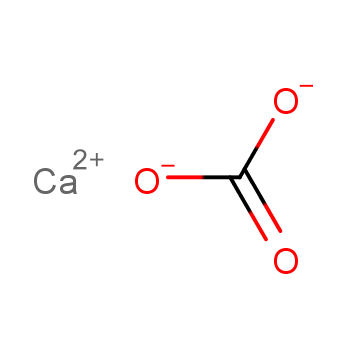
For product developers, the technical question is not simply whether calcium carbonate supplies calcium, but how its alkaline chemistry, low water solubility, particle form and crystalline polymorph interact with the acidity, texture, colour and regulatory framework of each product. This guide consolidates those considerations into a practical B2B framework.
| Function | Suitable Users | Core Technical Indicators | Compliance Framework |
|---|---|---|---|
| Calcium source and fortificant | Supplement, beverage and dairy-alternative producers fortifying products to meet calcium targets | CAS 471-34-1; molar mass 100.0869 g/mol; about 40% elemental calcium; solubility 15 mg/L at 25 °C; density 2.711 g/cm3 | GRAS under 21 CFR 184.1(b)(1); EU additive E170 with quantum satis |
| Firming and stabilising agent | Canned fruit and vegetable processors maintaining structure through heat treatment and storage | Calcium ions cross-link pectin in plant tissue, strengthening the cell wall and preserving texture | Category-specific Codex provisions, often GMP |
| Anti-caking and bulking agent | Powder, spice, baking powder and premix producers controlling flow and reducing clumping | High water-absorption capacity and fine, free-flowing particles prevent bridging between powder grains | Must remain within the maximum for the specific category where a limit applies |
| Acidity regulator and raising agent | Bakery and fermentation processors needing pH control and controlled carbon dioxide release | Mild base that raises pH and reacts with acid to neutralise and release CO2; pKa about 9.0 | Baking, yeast-nutrient and dough-conditioning uses are generally recognised |
Calcium carbonate is an ionic compound with the formula CaCO3, composed of calcium cations and planar triangular carbonate anions. It is a carbonic acid salt of calcium and occurs abundantly in the earth's crust as limestone, marble, calcite and aragonite, and in biological materials such as shells, eggshells and pearls. Because it is so widespread, it can be mined or quarried at low cost, and it can also be produced synthetically by controlled precipitation.
Physically, food-grade calcium carbonate is a fine white powder that is odourless, has a slightly chalky taste and is very sparingly soluble in water at about 15 mg/L at 25 °C. Its density is about 2.711 g/cm3, its refractive index about 1.6583, and it decomposes rather than cleanly melting, with decomposition reported in the region of 750 to 825 °C. Its low solubility is a defining feature: it is stable in neutral systems but reacts readily when acid is present.
From a formulator's viewpoint, the importance of calcium carbonate is its combination of low cost, high calcium content and multifunctionality. At higher concentrations it imparts a white colour and adds bulk without contributing significant calories or altering taste, while its alkalinity and acid reactivity allow it to regulate pH and generate carbon dioxide in leavened systems. It is a concentrated source of calcium for supplements and fortification.
Explore the calcium carbonate technical encyclopedia for additional chemical and application information.
| Parameter | Specification / Description |
|---|---|
| Chemical name | Calcium carbonate |
| Common names | Calcium carbonate, chalk, calcite, E170 |
| Molecular formula | CaCO3 |
| Molar mass | 100.0869 g/mol |
| CAS Number | 471-34-1 |
| EC Number | 207-439-9 |
| INS / E number | INS 170; E170 |
Calcium carbonate is a multifunctional inorganic ingredient rather than a single-purpose additive. Its technical value derives from three interacting behaviours: the supply of calcium and carbonate ions, the alkaline buffering and acid-neutralising reaction, and the physical character of its particles. Together these explain its presence across canned goods, powders, baked products and supplements.
When calcium carbonate is present in a food matrix, the calcium it releases can interact with pectin in plant cell walls, forming calcium-pectin cross-links that strengthen tissue and preserve firmness. This is the basis of its firming action in canned fruits and vegetables, where heat treatment would otherwise soften the product. In nutritional products, the same calcium is bioavailable as a source of the mineral essential for bone, muscle, nerve and cardiac function.
Calcium carbonate has a mild basic character, with a pKa of about 9.0, and reacts with free hydrogen ions to raise the pH of the system. In the presence of acid it neutralises and releases carbon dioxide, which is why it functions both as an acidity regulator and as a raising agent, and why it is used in antacids. The same reactivity makes it incompatible with strong acids.
Because calcium carbonate is only sparingly soluble, much of its functional value comes from its physical form. Fine, free-flowing particles absorb water and prevent bridging between powder grains, giving the anti-caking effect, while the high water-absorption capacity supports thickening and stabilising. At higher concentrations the white particles impart colour and add bulk without contributing appreciable calories or altering taste.
Calcium carbonate is obtained principally by mining or quarrying limestone, marble and other calcareous rock, which is then crushed, ground and classified to the required particle size. A substantial amount is also produced downstream from natural sources including seashells and eggshells, with eggshells gaining popularity for nutraceutical applications because about 95 percent of dry eggshell and seashell material is calcium carbonate.
Calcium carbonate can also be produced synthetically by carbonation or precipitation to give a controlled particle size and crystal form. For food-grade material, buyers should confirm assay, identity and polymorph, particle-size distribution, whiteness, loss on ignition, heavy-metal limits such as lead and arsenic, and microbiological quality, matching each batch certificate against the approved purchasing specification. Source material matters for traceability.
From a formulation perspective, the most relevant comparison is among the common calcium salts used for fortification and texture, because they deliver the same mineral but differ in solubility, taste, calcium content and reactivity. Grouping them correctly is essential, because a specification and a use level written for one salt do not transfer directly to another.
Calcium carbonate offers the highest calcium content per unit weight among the common calcium salts at about 40 percent elemental calcium, and it is the most economical. Its low solubility means it needs stomach acid to be absorbed efficiently, which is why it is taken with food in supplement applications, and its mild alkalinity makes it useful both as a mineral source and as a buffer or antacid.
Calcium phosphates such as tricalcium phosphate and monocalcium phosphate supply both calcium and phosphorus and are often chosen where a particular pH or baking function is required. Tricalcium phosphate is also used as an anti-caking agent, while monocalcium phosphate acts as an acid leavening agent, so the choice reflects the intended function rather than calcium content alone.
Calcium lactate and calcium citrate are more water-soluble than calcium carbonate and are often selected for clear beverages or where solubility rather than cost is decisive. They carry less calcium per unit weight, so a higher mass is needed to deliver the same mineral load, which can matter in tablets and concentrated premixes.
| Parameter | Calcium Carbonate | Tricalcium Phosphate | Calcium Citrate |
|---|---|---|---|
| CAS number | 471-34-1 | 7758-87-4 | 813-94-5 |
| Elemental calcium | About 40%, the highest among common salts | About 38% | About 21% |
| Water solubility | 15 mg/L at 25 °C; very sparingly soluble | Very low; similar to carbonate | Moderately soluble |
| Primary role | Calcium source, firming, anti-caking and buffering | Calcium and phosphorus source, anti-caking | Soluble calcium for clear beverages |
| Acid reactivity | Reacts with acid to release CO2 | Reacts more slowly with acid | Reacts with acid but with buffering effect |
| Formulation advantage | Lowest cost per unit of calcium | Dual mineral and anti-caking function | Soluble and less dependent on stomach acid |
| Key limitation | Insoluble and reactive in acid; chalky taste at high load | Adds phosphorus, which may be regulated | Lower calcium density and higher cost |
| Property | Typical Description |
|---|---|
| Physical form | Fine white powder or solid, depending on grade |
| Odor | Odorless, with a slightly chalky taste |
| Density | About 2.711 g/cm3 |
| Refractive index | About 1.6583 |
| Melting / decomposition | Melting point about 825 °C; decomposes around 750 °C |
| pKa | About 9.0 |
| Solubility | 15 mg/L in water at 25 °C |
| Crystalline forms | Calcite (hexagonal), aragonite (orthorhombic) and vaterite, in order of decreasing stability |
| Shelf life and storage | About 60 months when stored at 5 to 30 °C under prescribed conditions |
| Function | Product Examples | Technical Objective |
|---|---|---|
| Firming and stabilising | Canned fruits and vegetables, jellies | Preserve structure and texture through heat treatment and storage |
| Anti-caking and bulking | Baking powder, powdered mixes, cereals, spices | Prevent clumping and provide bulk without adding calories or taste |
| Colourant and thickener | Confectionery, sauces, soups | Impart white colour and adjust texture and consistency |
| Dough regulator and raising agent | Bread, cake, cookies | Maintain dough texture and volume and release CO2 during baking |
| Yeast nutrient and acidity regulator | Fermented products, beverages | Support yeast growth and hold pH within the intended range |
| Dietary calcium and excipient | Supplements, tablets, fortified beverages and plant-based milks | Deliver calcium and support tablet stability and controlled release |
Calcium carbonate appears in bakery products, convenience and powdered mixes, beverages, confectionery, dairy products and nutrition products such as supplements and nutrient premixes. In bread, addition of calcium softens the crumb, making it less firm and easier to chew, and it also favours crumb elasticity and particle integration, which illustrates how the mineral contribution and the physical effect operate together.
Begin by identifying whether calcium carbonate is present to supply calcium, to firm texture, to prevent caking, to colour or to buffer, because each objective implies a different grade, particle size and use level. Typical dosages fall between 0.5 and 2 percent and vary by product and formulation, so the level should be justified by the target function rather than copied from an unrelated product.
Verify assay, identity and crystalline polymorph, particle-size distribution, whiteness, loss on ignition, heavy-metal limits and microbiological quality against the approved purchasing specification. Because particle form drives the anti-caking and thickening behaviour, specify the grade that matches the intended function and match each batch certificate to that specification.
Because calcium carbonate raises pH and reacts with acid to release carbon dioxide, model its effect on the acid-base balance of the system before scale-up. In acidic products, confirm that its consumption does not compromise pH targets or create unwanted gassing, and where it acts as a raising agent confirm that the acid source and the carbonate are balanced to release the intended volume of gas.
Calcium carbonate has a slightly chalky taste and imparts white colour at higher loads, so taste the finished product and assess appearance rather than relying on theoretical addition. Where it is used as a calcium source, confirm the delivered elemental calcium per serving and account for the vitamin D that is needed for efficient calcium absorption.
Firming, caking, colour and leavening behaviour all depend on the rest of the formulation and on processing conditions, so confirm performance through pilot-scale trials. For canned goods, evaluate firmness after heat treatment; for powders, check flow and clumping; for baked goods, measure volume and crumb. Finished-product testing determines the practical result.
The following formulations are illustrative technical examples rather than universal commercial recipes. Actual ingredient levels must be recalculated according to the target texture, pH, mineral profile and destination-market requirements.
| Bread Ingredient | Illustrative Quantity | Technical Role |
|---|---|---|
| Wheat flour | 100 parts | Structure-forming base supplying gluten |
| Inulin | 6.5 parts | Fibre and crumb-texture modifier |
| Fresh yeast | 3 parts | Leavening through fermentation |
| Calcium carbonate | 1.8 parts | Calcium source softening the crumb and supporting elasticity |
| Sodium chloride | 2 parts | Flavour and gluten-strengthening electrolyte |
In a published sugar-free centre-filled chewing gum, the centre fill combined calcium carbonate at about 50 percent with flavour and high-intensity sweetener, showing how the material can serve as a bulking carrier in a confectionery core. In the bread example, the calcium softens the crumb and improves elasticity, showing how the same mineral functions differently depending on the matrix and processing route.
Regulatory treatment of calcium carbonate depends on both its identity as a mineral salt and the intended use of the finished product. A supplier's statement that a material is food grade does not by itself establish compliance in every destination market, and provisions are frequently set for specific food categories rather than for the additive as a whole.
| Market / Framework | Technical Relevance | Compliance Action |
|---|---|---|
| United States FDA | Calcium carbonate is generally recognised as safe, and under 21 CFR 184.1(b)(1) it may be used in food without limitations other than current good manufacturing practice. | Confirm the intended use and labelling and verify current provisions before launch. |
| European Union | Calcium carbonate is authorised as food additive E170, with a maximum level generally specified as quantum satis in the permitted categories. | Check the applicable additives annex for the precise category and confirm that quantum satis applies to the intended use. |
| Codex Alimentarius | Codex provisions cover many categories including fermented milks, cream, pasta, fish products, salt and infant foods, mostly at good manufacturing practice levels, with dried whey products set at 10,000 mg/kg. | Match the product category to the Codex provision and confirm whether GMP or a numerical maximum applies. |
| EFSA and nutrition frameworks | Calcium is an essential nutrient with a recommended daily allowance of about 1,000 to 1,200 mg depending on age, and calcium carbonate is a recognised source for fortification and supplementation. | Confirm nutrient-content and health-claim rules for the intended market and label the delivered calcium accurately. |
| EU REACH | Obligations depend on the substance, the manufacturer or importer and the tonnage, and some naturally occurring substances have specific registration provisions. | Verify the exact REACH status for the supply chain rather than assuming food use removes every industrial-chemical obligation. |
| Heavy-metal limits | Because calcium carbonate is mined, trace heavy metals such as lead and arsenic are a defined quality parameter and limits vary by grade and market. | Specify and verify heavy-metal limits on every batch certificate, with tighter limits for infant and supplement applications. |
| ISO 22000 / HACCP | Food-safety management systems support control of contamination, traceability and manufacturing hazards throughout production and packing. | Maintain supplier qualification, batch traceability and validated quality procedures for the finished product. |
Calcium carbonate is generally considered safe by major food-safety organisations including the U.S. Food and Drug Administration and the European Food Safety Authority when used appropriately, and it is approved as a food additive with quantum satis maximum levels in the EU. Its principal safety consideration is not acute toxicity but the cumulative intake of calcium, because the nutrient is essential but can cause adverse effects when consumed far in excess of requirements.
For manufacturers, the most important safety principle is to keep the additive within its authorised use and to avoid nutrition or health claims that exceed permitted nutrient-content and health-claim rules. Calcium carbonate is a mineral source and functional additive, not a therapeutic agent, and any statement about its effects should be traceable to a current regulatory or expert-panel position. Where the material is mined, heavy-metal testing is essential to safeguard the consumer.
| Reference Point | Illustrative Value |
|---|---|
| Typical use level in food | About 0.5% to 2%, varying by product and function |
| Elemental calcium content | About 40% by weight |
| Recommended daily allowance of calcium | About 1,000 to 1,200 mg depending on age |
| Codex provision for dried whey products | 10,000 mg/kg |
| EU additive maximum level | Quantum satis in permitted categories |
These values are illustrative references drawn from published sources and should not be interpreted as universal legal maximums. Product developers should use the current category-specific limits applicable to the intended market and should account for total calcium from all sources in the finished product.
It is used as a firming agent, anti-caking agent, white colourant, bulking agent, thickener, stabiliser, acidity regulator, dough regulator, raising agent, yeast nutrient and dietary calcium source. Its combination of low cost, high calcium density and multifunctionality keeps it in bakery, beverage, confectionery, dairy and supplement applications.
It is the same chemical substance that occurs in limestone, marble, chalk, shells and pearls, but food-grade calcium carbonate is refined and specified for purity, particle size and heavy-metal limits. The geological material is not directly interchangeable with a food-grade specification.
The calcium it releases cross-links pectin in plant cell walls, strengthening the tissue and helping to preserve firmness through heat treatment and storage. This firming action is why it is used in canned fruits and vegetables, where without it the product would soften considerably during retorting.
The CAS Registry Number is 471-34-1, the EC number is 207-439-9 and the INS food-additive number is 170, corresponding to EU additive E170. These identifiers should be verified against current regulatory listings before use in a specific food category or supplement application.
| Identifier | Value | Resource |
|---|---|---|
| Chemical name | Calcium carbonate | Technical encyclopedia |
| CAS Number | 471-34-1 | Chemical dictionary |
| CAS product lookup | 471-34-1 | Supply search |
| Supplier / trade search | 471-34-1 | Supplier search |
1. U.S. Food and Drug Administration. Code of Federal Regulations Title 21, 21 CFR 184.1(b)(1): Calcium carbonate, direct food substances affirmed as GRAS.
2. European Parliament and Council. Regulation (EC) No 1333/2008 on food additives: calcium carbonate E170 and quantum satis provisions.
3. Codex Alimentarius Commission. General Standard for Food Additives: provisions for calcium carbonate across food categories.
4. European Food Safety Authority. Re-evaluation of calcium carbonate (E 170) as a food additive, EFSA Journal.
5. Food Standards Agency. Calcium and bone health: nutrient reference values and dietary guidance.
6. Harvard Health Publishing. Choosing a calcium supplement: calcium content and absorption of common salts.
7. ScienceDirect. Effect of calcium addition on crumb softening and elasticity in bread systems.
8. Google Patents. Sugar-free centre-filled chewing gum composition incorporating calcium carbonate as a bulking agent.
9. PubChem. Calcium carbonate: compound summary, physical and chemical properties.
|
|
 |
 |
|
 |
 EN
EN
 Agricultural News
 Food News
 Industrial News
 Cosmetic News
 Pharmaceutical News
 Science News

 1YR
1YR

