-
We detected your language preference as English. Would you like to switch to the English version for a better experience?
Switch to English
Stay here


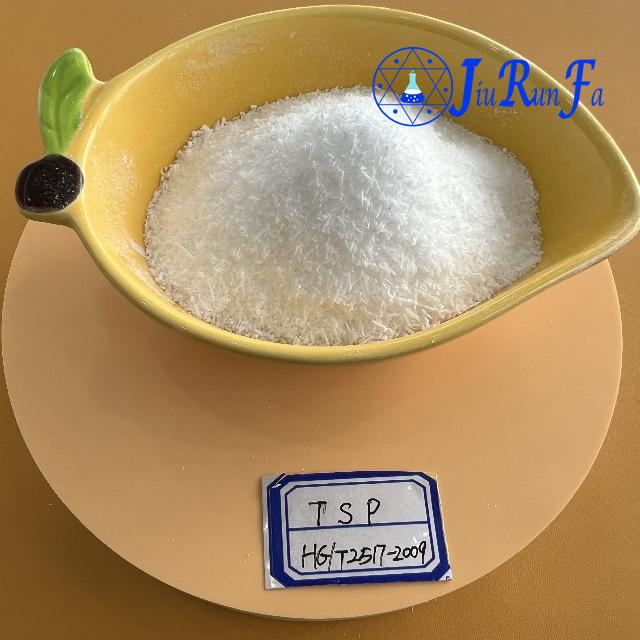
Trisodium phosphate, commonly abbreviated TSP, is a common food additive that helps regulate pH, emulsify ingredients and stabilize food products. It is a white, crystalline powder that is highly soluble in water, and it can also be called trisodium orthophosphate or simply sodium phosphate. Its alkaline character and its ability to bind metal ions underpin most of its technical value.
For product developers, the key technical questions are not simply whether TSP can be added to a formula, but how its high pH interacts with proteins and other ions, which hydrate form will dissolve at the intended point in the process, at what level it remains compliant with phosphorus intake limits, and how it behaves across dairy, meat, bakery and beverage systems. This guide consolidates those considerations into a practical B2B formulation framework.
| Function | Suitable Users | Core Technical Indicators | Compliance Framework |
|---|---|---|---|
| Acidity regulator and stabilizer | Formulators of beverages and convenience foods who must hold a target pH and prevent spoilage-related drift | CAS 7601-54-9; pH 11.5–12.5 as a 1% aqueous solution; highly soluble; molecular weight 163.94 g/mol | FDA GRAS per good manufacturing practice; permitted EU food additive under Regulation (EU) No 1130/2011 |
| Emulsifying salt | Processed cheese manufacturers who need a stable, flowable melt with controlled texture and calcium balance | Phosphate anions form bridges between protein molecules; alters hardness, gumminess and elasticity | Subject to the JECFA phosphorus intake limit of 70 mg/kg body weight expressed as P |
| Sequestrant and water softener | Bakery and beverage developers working with hard water or formulations sensitive to metal-catalyzed oxidation | Binds calcium and magnesium; prevents oxidative color degradation by sequestering metal cations | Category-specific maximum levels apply for sodium phosphates under EU rules |
| Moisture retention in meat and seafood | Processed meat and seafood processors who need to preserve texture, firmness and yield through cooking | Maintains moisture content; improves firmness and texture; used as an antimicrobial surface treatment agent | Typical dosage 0.05–1.5% depending on application and desired effect |
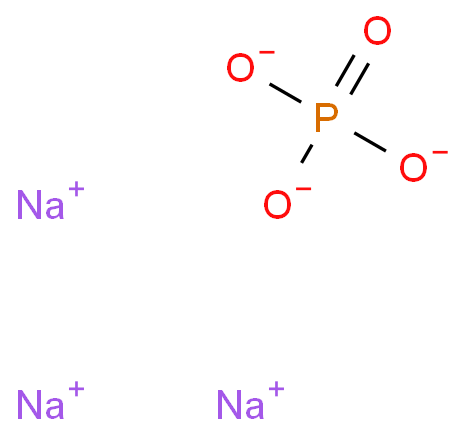
The chemical structure of trisodium phosphate consists of three sodium ions (Na+) and one phosphate ion (PO43−), in which the phosphate ion comprises one phosphorus atom bonded to four oxygen atoms. TSP is a strong base with a high pH, typically around 12, and it is often partially hydrated, ranging from anhydrous Na3PO4 to the dodecahydrate Na3PO4·12H2O.
This range of hydration states matters commercially. Different hydrated forms of trisodium phosphate typically have differing solubilities, making each useful for specific applications, so the hydrate chosen is a genuine formulation variable rather than a purchasing detail. The anhydrous form occurs when water is removed from hydrated salts, and because anhydrous forms can absorb water and be converted into a hydrated form, they can also serve as drying materials.
In food systems, the practical consequence of the high pH is that TSP can shift a formulation's acidity quickly and strongly, and the practical consequence of the phosphate ion is that it can bind calcium and other metals that would otherwise interfere with protein structure or catalyze oxidation. Both effects are useful, and both must be controlled.
Explore the trisodium phosphate technical encyclopedia for additional chemical and application information.
| Parameter | Specification / Description |
|---|---|
| IUPAC name | Trisodium phosphate |
| Common names | TSP, trisodium orthophosphate, sodium phosphate |
| Molecular formula | Na3PO4, from anhydrous to the dodecahydrate Na3PO4·12H2O |
| Molecular weight | 163.94 g/mol |
| CAS Number | 7601-54-9 |
| EC number | 231-509-8 |
| Food additive numbers | E 339(iii) (EU); INS 339(iii) (Codex) |
| Appearance at 25 °C | Colorless crystals or powder; odorless |
Trisodium phosphate is a multifunctional food additive, and its effects can be traced to three distinct behaviors: alkaline pH control, ion sequestration and interfacial activity at protein surfaces. Understanding each behavior helps formulators predict where TSP will help and where it will cause difficulty.
TSP helps to control the acidity or alkalinity of food products, which is important for maintaining their stability, texture and flavor. Because it is a strong base with a pH typically around 12, relatively small additions produce significant pH shifts, so it is normally used at low dosage and in combination with a buffering partner rather than as a bulk ingredient.
TSP can bind to metal ions and prevent them from reacting with other ingredients in the food, which is particularly useful in preventing oxidation and maintaining the color and freshness of certain products. Hard water contains high levels of minerals such as calcium and magnesium that can negatively impact food quality, and TSP acts as a water softener by binding these minerals and preventing them from interfering with processing. This is especially important in baking, where hard water can affect the texture and rise of baked goods.
TSP works as an emulsifier by altering the electrostatic interactions and by adsorption of ions at the interface, which helps create a stable emulsion and prevents oil and water separation. In processed cheese, this emulsifying effect is associated with its interaction with paracasein, so that phosphate anions form bridges between protein molecules. The same interaction improves the product's ability to flow, owing to the difference in calcium complexion, and it affects hardness, gumminess and elasticity.
Trisodium phosphate can be synthetically produced through several means. One process involves neutralizing phosphoric acid using sodium carbonate, which produces disodium hydrogen phosphate; the disodium hydrogen phosphate is then reacted with sodium hydroxide to form trisodium phosphate and water. This two-step neutralization gives the manufacturer close control over the final sodium-to-phosphate ratio.
Another method uses carboxamide and phosphoric acid in a ratio of about 1.06 to 1. The concentrate is heated to 60 to 80 °C, and a phosphorus-ammonium compound intermediate is obtained in the reaction. That intermediate is then reacted with sodium hydroxide in a ratio of about 0.95 to 3, and the mixture is cooled and subjected to crystallization to obtain trisodium phosphate.
For formulators, the important qualification points are the hydrate form, the assay and the absence of residual impurities from the neutralization route. Because the hydrate determines solubility and the effective alkaline strength per unit mass, buyers should specify the hydrate rather than purchase a generic sodium phosphate and assume equivalent behavior.
From a formulation perspective, the most useful comparison is among trisodium phosphate and the other sodium phosphates it substitutes for or is blended with, rather than among unrelated chemical families. The three commonly discussed categories are the trisodium salts, the disodium and monosodium phosphates, and non-phosphate alternatives.
Within the E 339(iii) designation, the meaningful distinction is between the anhydrous form and the higher hydrates. Different hydrated forms typically have differing solubilities, making each useful for specific applications, and the anhydrous form can be used as a drying material because it absorbs water and converts to a hydrated form.
The lower sodium phosphates share the phosphate functionality but deliver a lower pH. Formulators choose among them to tune acidity independently of the sequestration effect, and they are frequently blended to create a buffered phosphate system rather than relying on a single salt.
Where a formulation must reduce total phosphorus intake, citrate and other sequestrants may partially replace phosphates, though the emulsifying action in processed cheese is difficult to reproduce exactly. Any substitution should be validated against texture, melt behavior and shelf life rather than assumed to be equivalent.
| Parameter | Trisodium Phosphate | Disodium Phosphate | Sodium Citrate |
|---|---|---|---|
| CAS number | 7601-54-9 | 7558-79-4 | 68-04-2 |
| Chemical type | Strongly alkaline sodium phosphate; pH about 12 | Mildly alkaline sodium phosphate; intermediate pH | Sodium salt of citric acid; buffered near neutral |
| Primary role | Alkaline pH control, sequestration and cheese emulsification | Buffering at moderate pH with some sequestration | Buffering, chelation and flavor contribution |
| Emulsifying action | Strong; phosphate bridging with paracasein | Moderate; used in blends to tune melt | Limited; primarily a buffering salt |
| Phosphorus content | Contributes to total phosphorus intake | Contributes to total phosphorus intake | Phosphorus-free |
| Key limitation | Very high pH; incompatible with acids and oxidizers | Less alkaline strength per unit mass | Cannot replicate phosphate-protein bridging |
| Property | Typical Description |
|---|---|
| Physical form | Crystals or powder |
| Color and odor | Colorless and odorless, with no peculiar taste |
| Molecular weight | 163.94 g/mol |
| pH (1% aqueous solution) | 11.5–12.5 |
| Density | 2.54 g/cm3 |
| Dielectric constant | 1.6 |
| Melting point | 1583 °C, with decomposition above 75 °C in practical processing |
| Solubility and storage | Freely soluble in water; store at 15–25 °C in a tightly sealed container |
| Product Type | Typical Examples | Key Formulation Objective |
|---|---|---|
| Dairy and dairy alternatives | Cheese and cheese analogs | Emulsify the melt, control flow and reduce the need for salt |
| Convenience foods | Canned soups, cereals and cereal bars | Stabilize pH and texture through retorting and storage |
| Bakery | Cakes and cookies | Counter hard-water minerals and protect texture and rise |
| Beverages | Flavored beverages, acidic beverages and milk-based beverages | Hold a target pH and sequester trace metals that promote oxidation |
| Meat and seafood | Processed meat products and treated seafood | Retain moisture, improve firmness and control surface spoilage organisms |
The functional roles that TSP plays across these categories are consistent. It helps control acidity or alkalinity, binds metal ions to prevent oxidation and preserve color, maintains stability and enhances appearance, softens water by binding calcium and magnesium, and alters electrostatic interactions to create stable emulsions. One study demonstrated that adding TSP and other antioxidants improved the color stability of ground beef, and phosphates have also been used as antimicrobial surface treatment agents to decrease populations of pathogens and extend the shelf life of fresh poultry. In a further study, TSP helped maintain the quality of apples during storage.
Because different hydrated forms have differing solubilities, choose the hydrate according to where in the process dissolution must occur. In processed cheese manufacture, for example, hydrated forms can dissolve faster in the aqueous phase of the cheese mixture, which can be advantageous during the cook.
Typical dosage runs from 0.05 to 1.5 percent depending on the application and the desired effect. Because TSP is a strong base, most systems use it alongside a buffering partner so that the target pH is held rather than overshot, and the final pH should be confirmed by measurement.
TSP is not compatible with strong acids, strong oxidizing agents or metal nitrates. Sequence the addition so that TSP is diluted before contact with acidic streams, and confirm that equipment surfaces and gaskets are compatible with a high-pH solution.
Because TSP contributes to total phosphorus intake, category-level compliance and realistic dietary exposure should be assessed together. Confirm the applicable maximum level for the product category and consider cumulative phosphorus from all additives in the finished formulation.
The following examples are illustrative technical formulations drawn from published compositions, not universal commercial recipes. Actual ingredient levels must be recalculated according to the texture, stability and labeling requirements of each project.
| Ingredient (Processed Cheese) | Illustrative Quantity | Technical Role |
|---|---|---|
| Cheddar cheese | 81–83% | Base protein and fat structure providing body and flavor |
| Skim milk | 7.5% | Adds non-fat solids and moisture for melt behavior |
| Buttermilk | 7.5% | Contributes dairy flavor and assists emulsion formation |
| Salt | 1.0% | Flavor and functional effect on protein hydration |
| Trisodium phosphate | 2.5% | Emulsifying salt that bridges protein molecules and controls flow |
| Sorbic acid | 0.1% | Preservative controlling mold and yeast |
Sodium phosphates are used in processed cheese partly to reduce salt content, since the hydrated forms can dissolve faster in the aqueous phase of the cheese mixture during manufacture. A sausage example illustrates the same moisture-binding logic: 40 percent pork shoulder, 35 percent pork backfat and 25 percent ice are combined with 1.8 percent nitrite curing salt, 0.89 percent trisodium phosphate, 0.5 percent sugar, 0.2 percent white pepper, 0.05 percent ascorbic acid, 0.05 percent glutamate, 0.025 percent coriander and 0.025 percent cardamom. Here TSP supports water retention and texture development alongside the curing system.
Regulatory treatment of trisodium phosphate depends on the intended use and the region, and it is governed by two distinct concepts: the permission to use the additive and the total phosphorus intake that results. A supplier's statement that a material is food grade does not by itself establish compliance in every destination market.
| Market / Framework | Technical Relevance | Compliance Action |
|---|---|---|
| United States FDA | Trisodium phosphate is considered generally recognized as safe (GRAS) as per the U.S. FDA when used in accordance with good manufacturing practice. | Confirm the finished product is used at GMP levels and that labeling is accurate for the intended category. |
| European Union | Trisodium phosphate is a permitted food additive per Commission Regulation (EU) No 1130/2011 and other applicable additive regulations. | Verify the current Annex status and the category-specific maximum levels for sodium phosphates before commercialization. |
| JECFA / Codex intake limit | The maximum tolerable daily intake set by JECFA is 70 mg per kg body weight expressed as phosphorus from all sources. | Assess cumulative phosphorus exposure across all additives rather than evaluating TSP in isolation. |
| EU category maxima | Maximum levels for sodium phosphates include 1000 mg/kg in infant formula and follow-on formula, processed cereal-based foods and baby foods, other foods for young children and dietary foods for infants for special medical purposes, and 12600 mg/kg in casings and coatings and decorations for meat. | Treat these as reference points and confirm the current entry for the specific product category. |
| Use in additives and processing aids | TSP is also permitted as a food additive approved for use in food additives, food enzymes, food flavorings and nutrients, with limits of 50000 mg/kg in enzyme preparations and 40000 mg/kg in color E 163 preparations. | Distinguish carrier and processing-aid uses from direct additive uses, because the applicable limits differ. |
In terms of toxicity, TSP is considered to have low acute toxicity, and ingestion of small amounts is unlikely to cause significant harm. This benign acute profile is one reason the material has been used so broadly in food processing, but it should not be confused with the separate question of total phosphorus intake over time.
Phosphorus is a naturally occurring mineral in various foods, including beans, milk, meats, eggs, fish and nuts, and it is crucial for bone health and cell repair, muscle and nerve function and other processes within the human body. A few studies report exercise performance enhancement due to sodium phosphate supplementation, with results indicating that TSP promotes improvements in the efficiency of the cardiorespiratory system during exercise in a hypoxic environment. Such findings describe a physiological effect under specific conditions and should not be read as a general health claim for the additive.
For product developers, the most important principle is to evaluate TSP within the whole diet context. The JECFA limit of 70 mg per kg body weight expressed as phosphorus from all sources applies to total intake, not to a single product, so cumulative exposure from multiple phosphate-containing foods should be considered when a formulation sits in a high-consumption category.
Trisodium phosphate is used as a functional food additive rather than as an active, so its recommended use depends on the physical and chemical role it must play in the formulation.
| Application Area | Typical Use Level | Functional Objective |
|---|---|---|
| Processed cheese | Around 2.5% | Emulsification, melt flow and salt reduction |
| Processed meat | Around 0.9% | Water retention and texture development |
| Bakery | 0.05–1.5% | Water softening and texture control |
| Beverages | Within category maximum | pH regulation and metal sequestration |
Note: The levels above are drawn from published formulation examples and technical references and are provided as a practical orientation only. They are not regulatory maxima and should be verified against current requirements for each market and product category.
It acts as an emulsifying salt, and its effect is associated with interaction with paracasein so that phosphate anions form bridges between protein molecules. This improves the product's ability to flow and affects hardness, gumminess and elasticity. Sodium phosphates are also used in processed cheese to reduce salt content.
Hard water contains high levels of minerals such as calcium and magnesium, which can negatively impact the quality of food products. TSP acts as a water softener by binding these minerals and preventing them from interfering with food processing, which is particularly important in baking where hard water can affect the texture and rise of baked goods.
Yes. TSP can improve the color stability of food products by sequestering metal cations and preventing oxidative color degradation. One study demonstrated that adding TSP and other antioxidants improved the color stability of ground beef, which illustrates the practical value of the sequestration mechanism.
Phosphates have been used as antimicrobial surface treatment agents to decrease populations of pathogens, prevent the growth of spoilage microorganisms and extend the shelf life of fresh poultry, and TSP has also helped maintain the quality of apples during storage. These effects are surface- and application-specific rather than universal.
| Identifier | Value | Resource |
|---|---|---|
| Chemical name | Trisodium phosphate | Technical encyclopedia |
| CAS Number | 7601-54-9 | Chemical dictionary |
| CAS product lookup | 7601-54-9 | Supply search |
| Supplier / trade search | 7601-54-9 | Supplier search |
1. U.S. Food and Drug Administration. GRAS status of trisodium phosphate for use in food.
2. European Commission. Commission Regulation (EU) No 1130/2011 on food additives.
3. Joint FAO/WHO Expert Committee on Food Additives. Evaluation of sodium phosphates and phosphorus intake.
4. PubChem. Compound information for trisodium phosphate.
5. NCBI. Study on phosphate use in emulsified meat products.
6. Journal of Food Science. Phosphate antimicrobial surface treatment of fresh poultry.
7. Codex Alimentarius. General Standard for Food Additives, sodium phosphates entries.
8. Academic review articles on trisodium phosphate applications and properties.
|
 |
 |
 |
 |
 |
 EN
EN
 Agricultural News
 Food News
 Industrial News
 Cosmetic News
 Pharmaceutical News
 Science News

 2YRS
2YRS

