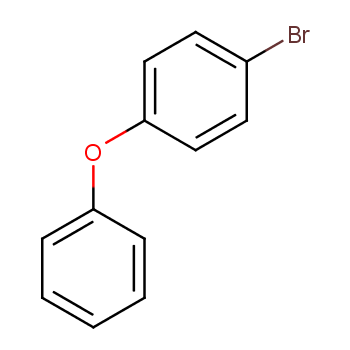
This article discusses research on the ultraviolet photodegradation reaction of 4-bromodiphenyl ether, aiming to provide theoretical references for the environmental behavior of 4-bromodiphenyl ether and studies on ultraviolet photolysis control techniques.
Background:
4-Bromodiphenyl ether is a persistent organic pollutant, which is a brominated derivative of polybrominated diphenyl ethers (PBDEs). PBDEs, as important brominated flame retardants, are widely used in commercial and household products. As additive flame retardants, PBDEs can easily leach from polymer matrices into the environment during production, use, and disposal, leading to contamination of the atmosphere, water bodies, sediments, soil, and the biosphere.
Ultraviolet Photodegradation Reaction:
Currently, research on the degradation of PBDEs mainly focuses on zero-valent iron degradation, pyrolysis, photodegradation, and biodegradation. Due to the direct photolysis caused by the absorption of sunlight by chemical pollutants in the environment and the indirect photolysis in the presence of photosensitizers, many scholars have conducted relevant research on the photodegradation of PBDEs in recent years.
Liu Qingqing et al. selected 4-bromodiphenyl ether as the research object and investigated its photodegradation characteristics in three different organic solvents: n-hexane, methanol, and acetone. They analyzed the influence of ultraviolet light source and initial concentration of the solution on its photodegradation rate. The specific experiments are as follows:
(1) Photolysis Experiment:
The photodegradation reaction device for 4-bromodiphenyl ether adopts the XPA-7 type photochemical reactor produced by Nanjing Xujiang Electromechanical Factory. The device structure is as shown in the figure, with the light source placed in a dedicated quartz trap, cooled by cooling water, and the sample rotating uniformly around the light source to receive uniform illumination. The distance between the sample tube and the ultraviolet lamp is 5.75 cm. The light sources used in the photolysis experiments are low-pressure mercury lamp (10 W), medium-pressure mercury lamp (300 W), and high-pressure mercury lamp (500 W), among which the low-pressure mercury lamp is purchased from Heraeus, Germany (model GPH212T5L/4), and the medium and high-pressure mercury lamps are purchased from Nanjing Xujiang Electromechanical Factory. The radiation intensity of the light source is measured using a UV-M four-channel UV radiometer (purchased from Guangzhou Yihong Electronic Co., Ltd.).

Firstly, a 20 mg/L solution of 4-bromodiphenyl ether is prepared in n-hexane, and before the photolysis experiment, the corresponding organic solvent is used to dilute the mother liquor of 4-bromodiphenyl ether to a concentration of 100 g/L reaction solution, which is then placed in a stoppered quartz tube and placed on the sample rotation device of the XPA-7 type photochemical reactor for the experiment. Before the reaction starts, the ultraviolet lamp is preheated for 10 minutes, and timing starts when the light source is stable. Sampling points are determined based on pre-experiments (non-equidistant sampling), and samples are taken at different illumination times for analysis using gas chromatography.
(2) Analysis Method:
4-Bromodiphenyl ether is quantitatively analyzed using a Varian 450-GC gas chromatograph (equipped with an electron capture detector). The chromatographic analysis conditions are as follows: the chromatographic column is CP-SIL 5CB (15 m × 0.25 mm × 0.25 m), the injection port and detector temperatures are 280°C and 300°C, respectively; no split injection, injection volume is 1 μL; high-purity nitrogen is used as the carrier gas, with a constant flow of 1.0 mL/min; the temperature program is as follows: initial temperature 70°C held for 1 min, increased by 20°C/min to 160°C, held for 1 min, then increased by 5°C/min to 200°C, held for 1 min, and finally increased by 20°C/min to 280°C, held for 5 min.
The ultraviolet absorption spectra of 4-bromodiphenyl ether in different solvents are determined using a DR5000 UV-Vis spectrophotometer from Hach Company, USA.
(3) Results:
The ultraviolet photodegradation of 4-bromodiphenyl ether in organic solvents conforms to quasi-first-order kinetics. Under 300 W mercury lamp irradiation, there are significant differences in the photodegradation rates of 4-bromodiphenyl ether in different organic solvents. Its degradation rates in n-hexane and methanol are similar, at 1.22 min-1 and 1.20 min-1, respectively, while the photodegradation rate in acetone is significantly lower, at only 0.0082 min-1. The higher the light intensity, the faster the degradation rate of 4-bromodiphenyl ether. The initial concentration of the solution also affects the photodegradation reaction of 4-bromodiphenyl ether due to competitive light absorption, with higher initial concentrations resulting in slower degradation rates.
References:
[1] Shi Wenyang, Tang Liang, Wu Wenjing, et al. Study on electron beam degradation mechanism of 4-bromodiphenyl ether [C]. Proceedings of the 2009 Academic Annual Conference of the Chinese Nuclear Society. 2009:4973-4977.
[2] Liu Qingqing, Fang Lei, Zhang Yan. Research on ultraviolet photodegradation reaction of 4-bromodiphenyl ether [J]. Science and Technology Bulletin, 2014(11):206-210. DOI:10.3969/j.issn.1001-7119.2014.11.049.



 EN
EN
 Agricultural News
 Food News
 Industrial News
 Cosmetic News
 Pharmaceutical News
 Science News

 6YRS
6YRS

