Chlorinated paraffin (CP) is a common organic compound, and as its usage increases, the environmental and biological risks of chlorinated paraffin pollution become more apparent. This article primarily explores the transformation and degradation processes of chlorinated paraffins in the environment.
Background:
Chlorinated paraffins (CPs) are mixtures of chlorinated derivatives of n-alkanes with the formula CnH2n+2-xClx, with chlorine content ranging from 30% to 70%. Depending on the carbon chain length, CPs can be classified into short-chain chlorinated paraffins (SCCPs, C1–13), medium-chain chlorinated paraffins (MCCPs, C14–17), and long-chain chlorinated paraffins (LCCPs, C18–30). CPs possess chemical stability, flame retardancy, and low volatility, making them suitable for various applications such as metalworking lubricants, plasticizers, flame retardants, coating additives, leather fat liquors, and sealants.
A significant amount of CPs inevitably enters water, air, soil, and various organisms during production and use. CPs undergo transformation and degradation in the environment, producing a variety of degradation products with potentially higher toxicity, posing significant environmental impacts.
Degradation Studies:
CPs undergo environmental behaviors such as photodegradation, thermochemical conversion, and biotransformation, which require careful attention regarding their processes and impacts.
1. Photodegradation
CPs exhibit poor absorption of ultraviolet (UV) radiation due to the sp3 hybridized structure within their molecules, making direct photolysis reactions difficult. However, under the catalytic action of some photosensitizers, indirect photolysis reactions can be initiated, achieving degradation rates of up to 95%. The final products include environmentally less harmful substances such as H2O, CO2, and HCl. The photodegradation process of CPs follows first-order kinetics, with chlorination reactions typically occurring irregularly near the chlorinated carbon atoms adjacent to dehydrogenated carbons. Photocatalytic methods for CP degradation demonstrate feasibility, and the development of more efficient, safe, and environmentally friendly catalysts holds promising prospects.
2. Biotransformation
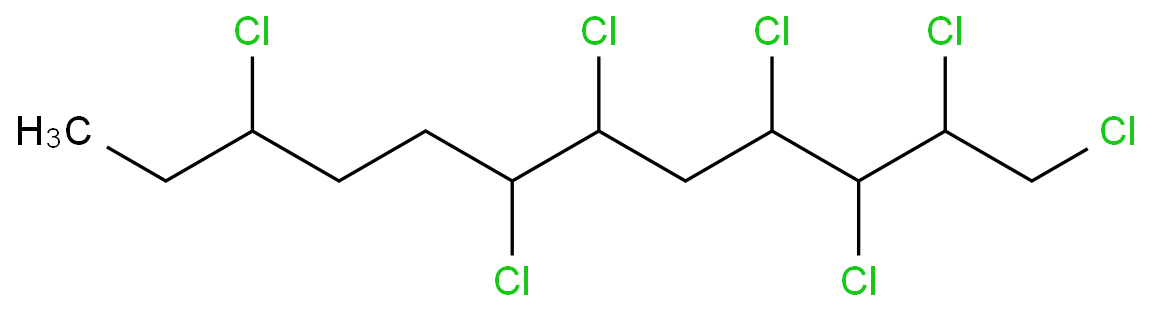
Plants can absorb CPs from soil or water through roots, or from the atmosphere through leaves. Studies have shown that pumpkins and soybeans, as model plants, can transport 1,2,5,5,6,9,10-heptachlorodecane bidirectionally between roots and shoots, and under plant action, undergo processes such as carbon chain cleavage, dechlorination, and chlorine ion rearrangement, yielding low-chlorinated decanes. Another study confirmed the decomposition of 1,1,1,3,12,13-hexachlorotridecane into dodecane under plant-mediated conditions. The degradation of CPs depends on their degree of chlorination, with SCCPs being more readily degraded in plants. After 10 days of hydroponic exposure, the content of 1,1,1,3,8,10,10,10-octachlorodecane (67.9% chlorination) was about three times that of 1,2,5,6,9,10-hexachlorodecane (23.6% chlorination).
Certain microorganisms have the capability to degrade small amounts of CPs, although there are limitations for certain CPs and microbial species. In plants like pumpkins and soybeans, CPs are mainly metabolized through three pathways: dechlorination, chlorine rearrangement, and carbon chain cleavage, leading to the formation of low-chlorinated CPs. However, the transformation and degradation of CPs in animal bodies are relatively limited, and the conversion mechanisms within organisms are not yet clear. MCCPs and LCCPs can be converted to SCCPs in vitro, which should be considered when regulating these compounds.
3. Thermochemical Conversion
CPs and their products may release into the environment through thermochemical processes during production, use, and disposal. When subjected to heat, CPs and their products undergo reactions such as carbon chain cleavage and dehydrogenation, transforming into low-chlorinated compounds. At high temperatures, they may generate more persistent and toxic chlorinated aromatic hydrocarbons such as PCBs and PCNs. However, the disposal of CP-containing waste inevitably involves various metal components, such as Cu and Fe, which have been shown to catalyze the formation of dioxins during the thermal treatment of organic solid waste, posing threats to human health and environmental safety. Research on the thermal decomposition products and molecular mechanisms of CPs is of great significance for assessing the environmental risks of such products, providing an important basis for pollution reduction and control efforts.
References:
[1] He YQ, Xin SZ, Wang DL, et al. Research Progress on Environmental Occurrence and Transformation and Degradation of Chlorinated Paraffins [J]. Environmental Science & Technology, 2023, 46(04): 37-50. DOI:10.19672/j.cnki.1003-6504.2101.22.338.
[2] Chen SS, Geng NB, Cao R, et al. Research Progress on Toxicokinetics of Chlorinated Paraffins [J]. Journal of Ecotoxicology, 2022, 17(04): 47-58.


 EN
EN
 Agricultural News
 Food News
 Industrial News
 Cosmetic News
 Pharmaceutical News
 Science News

 1YR
1YR

