-
We detected your language preference as English. Would you like to switch to the English version for a better experience?
Switch to English
Stay here


Ensuring adequate shelf life is one of the most persistent challenges in skin care and cosmetic formulation, since no consumer wants to open a product and find mould or experience it going off within a couple of months. Benzoic acid and its derivatives offer strong antibacterial and antifungal properties, making them a popular choice where a formulator needs reliable preservation within an acidic product matrix.
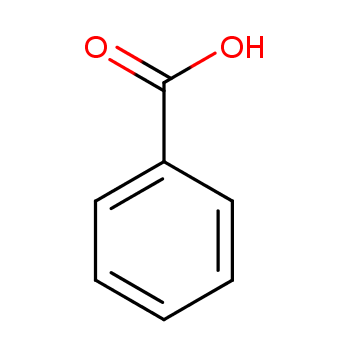
For product developers, the key technical questions are not simply whether benzoic acid preserves effectively, but how its undissociated-acid mechanism, its pH dependence, and its incompatibility with oxidisers and alkaline systems shape a finished formulation. This guide examines its chemistry, production, applications, and the formulation and regulatory parameters that determine its practical use.
| Function | Suitable Users | Core Technical Indicators | Compliance Framework |
|---|---|---|---|
| Preservative | Skincare and cosmetic formulators | Undissociated-acid activity; pH dependence; 0.5 % max as acid | EU Cosmetics Directive 76/768/EEC; GRAS |
| pH adjuster | Leave-on and rinse-off product developers | pH 4 in 1 % aqueous solution; buffering behaviour | Category use-level caps apply |
| Antifungal / antibacterial | Topical antifungal and hygiene product producers | Inhibition of bacteria and moulds at acidic pH | Standard cosmetic preservative rules |
| Moisture retention aid | Skin barrier and moisturising product developers | Potential reinforcement of skin barrier function | Claims regulation per market |
Benzoic acid is a white, crystalline organic compound and a member of the carboxylic acid family. It is also known by the synonyms benzenecarboxylic acid, carboxybenzene, and benzoate. Its reactivity comes from the single carboxyl group attached to an aromatic ring, which gives it acidic character and makes its preservative behaviour strongly pH dependent.
It is widely used in the manufacture of cosmetics, dyes, and plastics, as well as in topical antifungals and insect repellents. It also serves as a food preservative because it effectively inhibits the growth of bacteria and moulds in foods with an acidic pH, an application that shares the same mechanism exploited in personal care.
While some people have an allergy to benzoic acid, it is generally well tolerated when used topically at appropriate concentrations. Most chemists nonetheless recommend using it in combination with other preservatives for best performance, since a single preservative rarely covers the full microbial spectrum across a product's shelf life.
For a broader reference on nomenclature and identity data, see the encyclopedia entry at Guidechem chemical Encyclopedia.
| Chemical name | Benzoic acid |
| CAS number | 65-85-0 |
| EC number | 200-618-2 |
| Molar mass | 122.12 g/mol |
| Appearance | White crystals; odourless or with a slight benzaldehyde odour |
Benzoic acid is most effective as a preservative in its undissociated form, which can cross microbial cell membranes and disrupt internal pH balance. As the product pH rises, a greater proportion of the molecule dissociates into the less active benzoate ion, which is why preservative efficacy falls sharply in neutral and alkaline formulations.
The carboxyl group donates protons and buffers the formulation in the acidic range, with a pH of about 4 in a 1 % aqueous solution. This makes benzoic acid useful as a product stabiliser that helps regulate pH and protect the integrity of other ingredients while simultaneously maintaining the conditions under which its own preservative action works best.
Topical application of benzoic acid may play a role in reinforcing skin barrier function, thereby promoting the skin's ability to retain moisture. This secondary benefit aligns with its use in leave-on formats where the primary purpose is preservation but a moisture-retention contribution is welcome.
Benzoic acid occurs naturally in gum benzoin, a resin found in the bark of trees in the genus Styrax, and this resinous source is what gave the compound its historical name. Nostradamus first described it in the sixteenth century while explaining the dry distillation of gum benzoin.
Today, however, most benzoic acid is produced synthetically through the air oxidation of toluene. This industrial route is favoured because it avoids the problem of product contamination associated with harvesting from natural resins, and it delivers a consistent, high-purity material at the scale required by the cosmetics and food industries.
The choice of production route matters less to the finished formulation than the resulting purity and the absence of residual contaminants, but it is worth noting that natural and synthetic benzoic acid are chemically identical in structure and function.
Benzoic acid sits within the family of aromatic carboxylic acids, and its salts and esters extend its utility across preservation and flavouring applications. Understanding the family is important because the choice of free acid or salt is often the single most practical decision a formulator makes.
The parent compound, providing the strongest preservative action because it supplies the undissociated acid form directly. Its main limitation is limited water solubility, which constrains how high a level can be dissolved in an aqueous formula.
A water-soluble salt obtained from benzoic acid, with solubility roughly 200 times higher than the free acid. Some formulators prefer it for its ease of incorporation, even though the undissociated free acid is inherently more effective for preservation, because the salt will shift toward the active form at acid pH.
Esters of benzoic acid are used in cosmetic preservation and related applications, where the esterification changes the solubility and sensory profile relative to the parent acid.
Structure-function relationship: the aromatic ring stabilises the carboxyl group and lowers the pH at which a useful fraction remains undissociated, while the carboxyl group itself is what crosses the microbial membrane. Because activity depends on the undissociated fraction, the product pH and the choice of free acid versus salt are the two variables that control preservative performance.
Benzoic acid and sodium benzoate are frequently presented as interchangeable, but their solubility and activity differ in ways that matter. The table below compares them on the parameters most relevant to personal care formulation.
| Parameter | Benzoic Acid | Sodium Benzoate |
|---|---|---|
| Water solubility | Slightly soluble in water; freely soluble in ethanol | About 200 times more water-soluble than the free acid |
| Preservative activity | Higher; supplies the active undissociated acid form directly | Lower in isolation, but shifts toward active form at acid pH |
| Ease of incorporation | Limited by solubility in aqueous systems | Preferred by some formulators for its solubility |
| Regulatory basis | Maximum 0.5 % calculated as acid under the EU directive | Same acid-equivalent limit generally applied |
| Appearance at 25 °C | White crystals |
| pH (1 % aqueous) | About 4 |
| Molar mass | 122.12 g/mol |
| Viscosity | 60-75 cps at 25 °C |
| Melting point | 122 °C |
| Boiling point | 249 °C |
| Shelf life | 24-36 months |
Benzoic acid and its derivatives are used across hair care, skin care, colour cosmetics, and bath products. The table below maps its functions to representative applications and the objective each serves.
| Function | Typical Applications | Key Formulation Objective |
|---|---|---|
| Preservative | Shampoos, conditioners, styling products, cleansers, lotions, creams | Inhibit bacterial and fungal growth within the 0.5 % acid-equivalent limit |
| pH adjustment | Toners, gels, hand soaps, sunscreens, aftersun products | Regulate pH and protect the integrity of other ingredients |
| Moisture retention | Leave-on creams, lotions, and gels | Reinforce skin barrier function and support moisture retention |
| Antifungal support | Topical antifungals and hygiene products | Inhibit fungal growth in acidic formulations |
| Preservation of wipes and bath products | Foundations, mascaras, powders, wipes, shower gels, bubble baths | Maintain microbiological quality across a wide range of water activities |
When these three properties, preservation, pH adjustment, and moisture retention, are combined, benzoic acid is well equipped to improve overall product quality rather than serving a single isolated function. Its use spans rinse-off and leave-on formats, though the permissible concentration differs between them.
Establish the target pH before selecting the preservative level, since benzoic acid's activity depends on the undissociated fraction. If the product must be near neutral or alkaline, benzoic acid alone will underperform and a different preservation strategy is needed.
Decide based on solubility and activity. Use the free acid where maximum preservative potency is needed, or sodium benzoate where higher water solubility is required, remembering that the salt will only deliver the active form once the product pH is acidic.
Apply the maximum of 0.5 % calculated as acid for preservative use, or the higher limits permitted for non-preservative purposes: 2.5 % in rinse-off cosmetics, 1.7 % in oral care, and 0.5 % in leave-on products.
Exclude oxidisers and extremely alkaline systems from the formula, keep the material away from alkaline materials, strong bases, strong acids, oxoacids, epoxides, caustics, ammonia, amines, and isocyanates, and store it in sealed containers in a cool, dry, well-ventilated place away from heat and ignition sources.
The example below illustrates a shampoo formulation that incorporates benzoic acid in a preservation phase alongside phenoxyethanol. It is a starting-point example shown to demonstrate how the preservative sits within a full multiseries system and should be adapted to local specifications rather than copied unchanged.
| Ingredient | Illustrative Quantity | Technical Role |
|---|---|---|
| Deionized water | 64.59 % | Aqueous base of the shampoo |
| Sodium Hyaluronate | 0.05 % | Humectant and sensory conditioning aid |
| Hydrolyzed Wheat Protein | 0.20 % | Conditioning agent improving hair feel |
| Rosmarinus officinalis Extract + Glycerine | 0.50 % | Antioxidant and astringent botanical active |
| Coco Glucoside | 18.00 % + 4.00 % | Primary mild nonionic surfactant, added in two phases |
| Citric Acid | 0.26 % | pH adjuster setting the acidic range for preservation |
| Phenoxyethanol | 0.50 % | Co-preservative broadening the antimicrobial spectrum |
| Benzoic Acid | 0.20 % | Preservative active in the acidic shampoo matrix |
Benzoic acid is widely accepted, but its preservative status carries specific concentration limits and its hazard classification imposes storage and disposal duties. The overview below is for orientation only and should not be interpreted as a substitute for the current legal text. Always verify current requirements with the competent authority before commercialising.
| Market / Framework | Technical Relevance | Compliance Action |
|---|---|---|
| EU Cosmetics Directive 76/768/EEC | Preservative use limited to a maximum of 0.5 % calculated as acid | Calculate the acid-equivalent level and confirm it against the limit |
| US FDA and GRAS | GRAS listed; included in the FDA Inactive Ingredients Database across many dosage forms | Confirm the intended route and dosage form and label accurately |
| UK and Canada listings | Included in nonparenteral medicines licensed in the UK and the Canadian list of acceptable non-medicinal ingredients | Verify the listing in each target market before marketing |
| ECHA hazard classification | Organ damage on prolonged or repeated exposure; serious eye damage and skin irritation | Apply appropriate handling controls and hazard communication |
| Environmental and waste rules | NOAA notes potential environmental damage if released; some states require containment and hazardous-waste disposal | Follow containment, spill, and disposal requirements for the jurisdiction |
At low concentrations benzoic acid is considered non-toxic, and the US Environmental Protection Agency classifies it as noncarcinogenic. It is generally well tolerated when applied topically at appropriate concentrations, although some individuals are allergic to it and should avoid products containing it.
Significant exposure, however, can cause a variety of health issues. The European Chemicals Agency has stated that benzoic acid causes damage to organs through prolonged or repeated exposure and can cause serious eye damage and skin irritation, which is why workplace handling requires appropriate controls rather than casual contact.
Environmental considerations also apply. The National Oceanic and Atmospheric Administration has noted that benzoic acid has the potential for environmental damage if released, so it should be stored in sealed containers in a cool, dry, well-ventilated place away from heat, ignition sources, and all incompatible substances. Certain jurisdictions may additionally require that it be contained and disposed of as hazardous waste.
| Reference Point | Value / Guidance |
|---|---|
| Preservative maximum | 0.5 % calculated as acid |
| Non-preservative, rinse-off cosmetics | Up to 2.5 % |
| Oral care products | Up to 1.7 % |
| Leave-on products | Up to 0.5 % |
| pH of 1 % solution | About 4 |
| Storage | Sealed containers, cool, dry, well-ventilated, away from heat and ignition |
Note: the values above are reference points for orientation and vary with product type and jurisdiction. Confirm all figures against current official sources before use in a commercial formulation.
Why does benzoic acid lose effectiveness at higher pH?
It works best in its undissociated form, which can cross microbial membranes. As pH rises, more of the molecule converts into the inactive benzoate ion, so preservative potency drops sharply in neutral and alkaline systems. Keep the product acidic for best performance.
Should I use benzoic acid or sodium benzoate?
The free acid delivers the active undissociated form directly and preserves more effectively, while sodium benzoate is about 200 times more water-soluble and easier to incorporate.
Can benzoic acid be used alone as a preservative?
It can, but most chemists recommend combining it with other preservatives for best performance. A single preservative rarely covers the full microbial spectrum, and pairing benzoic acid with a complementary agent both broadens coverage and provides redundancy against interactions.
What are the most important incompatibilities to check?
Benzoic acid is incompatible with oxidisers, including chlorates, nitrates, peroxides, permanganates, perchlorates, and halogens, where contact can cause fire or explosion. It is also unsuitable in extremely alkaline systems such as hair colour and perming formulations, and should be kept away from strong bases, epoxides, amines, and isocyanates.
The following identification data supports specification writing, incoming-goods verification, and supplier sourcing for benzoic acid.
| Identifier | Value | Lookup Resource |
|---|---|---|
| CAS number | 65-85-0 | Dictionary entry |
| Supplier listings | Cosmetic and food grades; free acid and sodium salt | Supply channel |
| Verified suppliers | Regional and global chemical distributors | Supplier directory |
|
 |
 |
|
 |
 |
 EN
EN
 Agricultural News
 Food News
 Industrial News
 Cosmetic News
 Pharmaceutical News
 Science News

 3YRS
3YRS

