-
We detected your language preference as English. Would you like to switch to the English version for a better experience?
Switch to English
Stay here


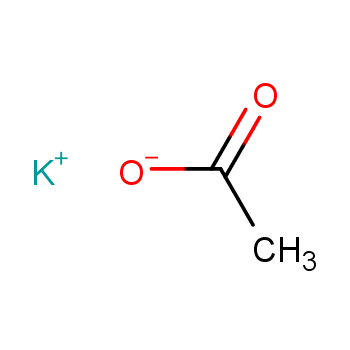
Potassium acetate, as an essential chemical compound, finds widespread applications in laboratories and industrial production. Its preparation involves principles of chemical reactions and practical skills, which are crucial for both learning chemistry and developing practical abilities. This article will delve into the methods and steps of making potassium acetate, providing detailed instructions to help readers understand the process and conditions of chemical reactions.

Potassium acetate, known as an effective deicer, can substitute sodium, magnesium, and calcium chloride. It has minimal corrosive effects on soil, metals, concrete, and reinforced concrete. Potassium acetate is safe for humans and animals, making it the most cost-effective and efficient deicing agent, widely used in preventing icing on airport runways.
The known production method of potassium acetate involves reacting potassium hydroxide solution with acetic acid. Potassium hydroxide solution is poured into acetic acid, with the medium's pH maintained at 8.3-8.6 at a temperature not exceeding 75°C. The solution is then treated with activated carbon, filtered, and crystallized in the presence of tartaric acid, with a quantity of 0.005-0.025 by weight. However, this method's drawback lies in the uncontrolled initial reaction due to the exothermic reaction, leading to reduced product yield.
Given the significant global demand for potassium acetate, finding new and improved production methods is an urgent matter.
The chemical structure of potassium acetate is simple, and it can be easily prepared through a simple acid-base neutralization reaction. The raw materials that can be used to prepare potassium acetate include potassium hydroxide, potassium carbonate, and potassium bicarbonate, all of which react directly with acetic acid to yield potassium acetate.
How to make potassium acetate? Using excess glacial acetic acid as the solvent, add potassium hydroxide directly to initiate the reaction. Potassium acetate precipitates from the reaction mixture when the temperature drops to room temperature, followed by refining the precipitated product through refluxing in anhydrous ethanol. The refined product is then dried and ground to obtain potassium acetate powder. This method is cost-effective, with low energy consumption and high product quality.
Specific steps include adding 3 kg of glacial acetic acid to a 5-liter four-necked flask, stirring evenly, and gradually adding 1 kg of flake potassium hydroxide. Once the reaction starts, the reaction mixture quickly heats up and then naturally cools to 26°C, resulting in a large amount of white solid precipitate. After centrifugal separation, the white solid is subjected to refluxing in 2 liters of anhydrous ethanol, with continuous stirring for 1 hour until the temperature drops to 28°C, followed by centrifugal separation again. The obtained solid is refluxed again in 2 liters of anhydrous ethanol, with continuous stirring for 1 hour, and then cooled to 26°C before centrifugal separation. Finally, the solid is dried in an oven at 150°C for 8 hours to obtain potassium acetate. The dried potassium acetate powder is ground, resulting in 1028 grams of potassium acetate powder (yield 58.8%, sodium content 0.02%).
There are two common methods for drying potassium acetate:
(1) Recrystallization:
Dissolve potassium acetate in hot water (close to boiling) until the solution is saturated.
Filter the solution to remove any impurities.
Cool the filtrate to room temperature.
Potassium acetate crystals will precipitate from the solution.
Filter the crystals and wash with cold water.
Dry the crystals in a desiccator until constant weight.
(2) Spray Drying:
Spray the potassium acetate solution into fine mist.
Spray the mist into a chamber of hot air.
The solvent evaporates rapidly, leaving behind dried potassium acetate powder.
The choice between these methods depends on your specific needs. If high-purity potassium acetate is required, recrystallization is the better option. If rapid drying of a large quantity of potassium acetate is needed, spray drying is preferable. Here are some additional tips for drying potassium acetate:
Using a vacuum dryer can reduce the drying temperature, thereby reducing the risk of potassium acetate decomposition. During the drying process, potassium acetate exposed to air will absorb moisture, so be sure to store it in airtight containers.
A stock solution is a solution prepared and stored in bulk in the laboratory, from which people who need the solution can take a certain amount and prepare the required working solution.
(1) 8M Potassium Acetate:
Dissolve 78.5 grams of potassium acetate (molecular weight = 98.14) in 80 mL of water. Add H2O to make the solution's total volume 100 mL. Filter sterilize through a 0.22 μm filter. Store at room temperature indefinitely.
(2) 5 M Potassium Acetate:
To prepare a 5 M potassium acetate stock solution, measure 49.07 g of potassium acetate and dissolve it in 70 mL of distilled water. When all the potassium acetate salt is completely dissolved, adjust the volume of the solution to 100 mL. Sterilize the original solution in an autoclave for 15 minutes, and you can use it for your laboratory experiments.
Another laboratory method for preparing this solution is to dissolve 294.42 g of potassium acetate in 100 mL of water. Now add glacial acetic acid to adjust the solution's pH to 4.6. About 40 - 50% of the total volume should be glacial acetic acid. Once your pH is set, adjust the volume to 1 liter (assuming 1 liter is your final volume). To prepare accurate solutions, your measurements should be precise, and you should set the pH of the solution appropriately.
Potassium acetate is generally considered a safe substance, but it is best to handle chemical substances with caution. Here are some safety precautions to take when working with potassium acetate:
Wear personal protective equipment, including safety glasses, gloves, and lab coat.
Work in a well-ventilated area to prevent inhalation of any dust or potassium acetate fumes.
Avoid contact with skin and eyes. Potassium acetate can irritate the skin and eyes. If potassium acetate comes into contact with your skin or eyes, rinse the area with water for at least 15 minutes.
Do not eat or drink around potassium acetate. This could lead to accidental ingestion.
Thoroughly wash hands after handling potassium acetate.
Here are some additional tips for handling potassium acetate: Store potassium acetate in a cool, dry place; Keep potassium acetate away from incompatible substances such as strong acids and oxidizers; Clearly label containers of potassium acetate. If you have any concerns about handling potassium acetate, consult the Safety Data Sheet (SDS) or a qualified professional. The SDS provides detailed information on the potential hazards of a chemical and how to handle it safely.
Through detailed steps and experimental procedures in this article, we have explored the methods and practical operations of making potassium acetate. Potassium acetate, as an important chemical compound, has widespread applications in laboratories and industrial production. The process of preparing potassium acetate not only familiarizes us with the procedures of chemical experiments but also enhances our understanding of chemical reactions and the properties of chemical substances. It is hoped that through the study of this article, readers will gain a deeper understanding of the preparation of potassium acetate and acquire more experience and skills in experimental operations.
[1]https://cshprotocols.cshlp.org/content/2006/1/pdb.rec10291
[2]https://haveylab.horticulture.wisc.edu/wp-content/uploads/sites/66/2016/05/Stock-solutions.pdf
[3]https://depts.washington.edu/younglab/MediaSolutions%28htm%29/stocks.htm
[4]https://www.vedantu.com/chemistry/potassium-acetate
[5] Wuxi Yangshan Biochemical Co., Ltd. A drying equipment for potassium acetate production. 2020-12-01.
[6] Liaoning Yaolian Pharmaceutical Co., Ltd. A preparation method of potassium acetate. 2017-12-05.
[7]https://patents.google.com/patent/RU2605695C1/en
 |
 |
 |
 EN
EN
 Agricultural News
 Food News
 Industrial News
 Cosmetic News
 Pharmaceutical News
 Science News


 1YR
1YR


