-
We detected your language preference as English. Would you like to switch to the English version for a better experience?
Switch to English
Stay here


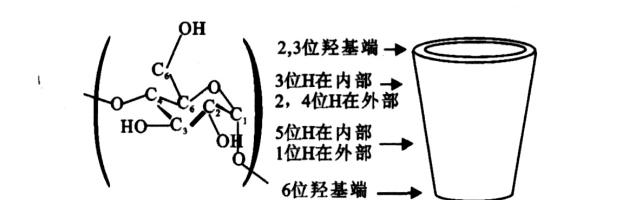
Hydroxypropyl beta cyclodextrin (HPβCD) is a hydrophilic derivative formed by the condensation of beta-cyclodextrin with 1,2-epoxypropane. It is amorphous and highly soluble in water, featuring a unique structure with one "inward hydrophobic, outward hydrophilic" cavity that can encapsulate drugs. It forms inclusion complexes with various compounds, enhancing their water solubility, stability, antioxidant and photostability, or achieving sustained release and stereochemical separation effects. After forming complexes with drugs, HPβCD alters their physical and chemical properties, reducing toxicity and improving solubility and stability, thus serving as carriers and diluents. HPβCD is also used in the preparation of controlled-release and targeted formulations. Therefore, HPβCD has found widespread applications in fields such as food, pharmaceuticals, cosmetics, agriculture, and analytical chemistry. The most common method for preparing HPβCD involves the condensation reaction of beta-cyclodextrin with epichlorohydrin under alkaline conditions, followed by concentration and drying to obtain the product.
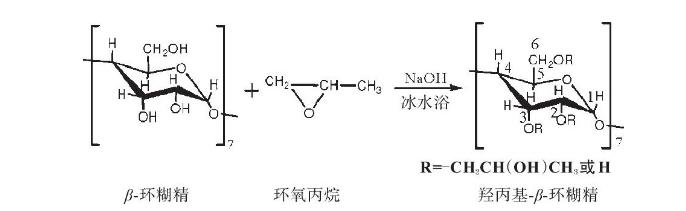
Hydroxypropyl beta cyclodextrin is typically supplied as a crystalline solid. The preparation of stock solutions involves dissolving HPβCD in selected solvents under inert gas purging. Hydroxypropyl beta cyclodextrin solubility in water is very high. It is soluble in organic solvents such as ethanol, DMSO, and dimethylformamide. The hydroxypropyl beta cyclodextrin solubility in ethanol and similar solvents is approximately 30 mg/ml.
Generally, HPβCD exhibits higher solubility at neutral and alkaline pH values (pH 7-14) compared to acidic environments.
Like most solutes, the solubility of HPβCD increases with rising temperature.
The solubility of HPβCD follows the general principle that as solute concentration increases, the solution tends towards saturation, with further additions leading to precipitation.
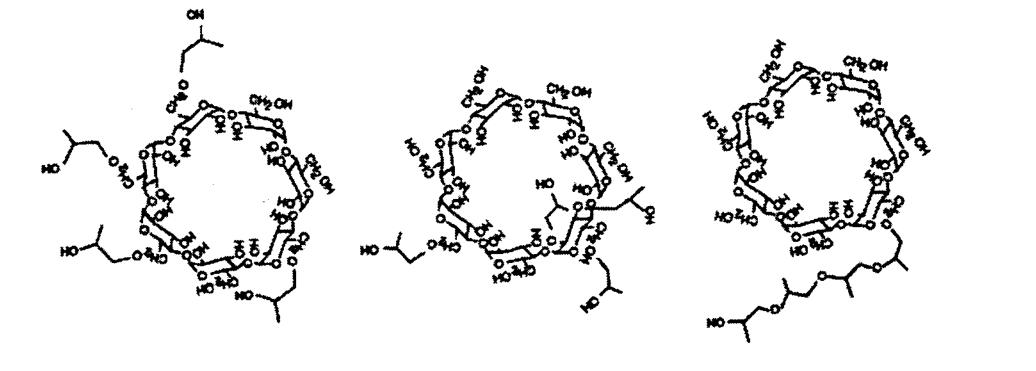
HPβCD is a derivative of beta-cyclodextrin (β-CD) where the hydroxyl groups at C2, C3, and C8 positions are substituted with hydroxypropyl groups. Apart from lacking reducing properties, it is stable in alkaline media and can be decomposed by strong acids. It exhibits molecular inclusion properties and is non-toxic to humans, similar to β-CD, but differs in several aspects, such as:
(1) High water solubility at room temperature, usually exceeding 50%, preventing crystallization in aqueous-alcohol solutions.
(2) Different selectivity towards inclusion of certain substances compared to β-CD, altering the proportion of molecules included.
(3) It is essentially not metabolized in the human body and is mostly excreted in feces after oral administration; non-intestinal administration results in almost complete excretion in urine.
(4) It facilitates rapid release of included substances in biological systems.
(5) It has lower surface activity and hemolytic activity compared to β-CD and other derivatives, making it safer for use.
HPβCD is highly soluble in water, with solubility exceeding 50% (w/v) at room temperature and potentially over 75% (w/v). At concentrations below 40%, it exhibits good flow properties and is non-viscous. When traditional methods fail to effectively increase the solubility of poorly soluble drugs, using HPβCD for solubilization becomes a viable method. For example, voriconazole, a triazole antifungal drug, exhibits low water solubility, but after complexation with HPβCD, its solubility in water significantly increases. This process demonstrates a linear relationship where drug solubility increases with increasing HPβCD concentration, meeting the requirements for injection formulations. Studies by Liu et al. showed that the inclusion complex of HPβCD with voriconazole hydrochloride increased its solubility by 226.4 ± 3.0%. Similarly, to enhance the water solubility of the oral hypoglycemic drug gliclazide, Yang et al. studied the solubilizing effect of HPβCD. Results indicated that as the concentration of HPβCD increased, the solubility of gliclazide also increased. At a concentration of 24.0 x 10⁻² mol/L of HPβCD, the solubility of gliclazide was 8.63 times higher than its original solubility. In another study, HG Choi et al. used HPβCD to include nimodipine, a calcium channel blocker, and found a linear increase in its solubility in water. Additionally, Shao et al. used HPβCD to include baicalin, increasing its solubility in water from 0.112 mg/mL to 2.743 mg/mL, an increase of 24.5 times. HPβCD enhances the solubility of highly lipophilic drugs, reducing irritation and improving stability, and has been incorporated as a solubilizer in injection formulations included in the European Pharmacopoeia (4th edition, supplement). However, the solubilizing effect of HPβCD is conditionally limited and significant solubilization is observed only when the solution pH ranges from 4.5 to 4.8.
Due to its excellent solubility, HPβCD is a high-quality ingredient aimed at enhancing the performance of cosmetics and personal care products. This characteristic brings numerous advantages to formulations. For instance, HPβCD enables the incorporation of hydrophobic ingredients (such as essential oils and certain vitamins) into water-based products. This allows the creation of refined emulsions, creams, and shampoos containing these beneficial ingredients.
The role of HPβCD extends beyond initial formulations. It forms complexes with various ingredients, thereby enhancing their stability and shelf life. This is particularly crucial for light- and heat-sensitive active ingredients (such as certain antioxidants and retinoids). By encapsulating these ingredients, HPβCD prevents their degradation, ensuring their efficacy throughout the product's lifecycle.
Accurate determination of HPβCD solubility is essential across various applications. Several experimental techniques can achieve this goal, including high-performance liquid chromatography (HPLC) for precise quantification and phase solubility studies to evaluate the impact of other excipients on HPβCD solubility. Obtaining reliable solubility data is critical for formulation development to ensure optimal functionality of drug delivery systems.
The solubility of HPβCD is a complex and important research topic with extensive applications in drug delivery and biological separation. By further investigating its solubility characteristics, we can better understand its behavior under different environmental conditions and develop more effective application strategies, thereby providing new opportunities for advancement in pharmaceutical and biological sciences.
[1] Song Gengshen, Feng Li, Pei Lijuan, et al. Overview of the pharmaceutical excipient hydroxypropyl-β-cyclodextrin. China Pharmacy, 2011, 22 (45): 4292-4294.
[2] Cai Shuangshuang, Huang Hua, Chen Li. Development of hydroxypropyl-β-cyclodextrin applications. China Pharmaceutical Industry, 2008, (10): 78-79.
[3] https://procure-net.com/
[4] https://cdn.caymanchem.com/cdn/insert/16169.pdf
[5] Tao Tao. Characteristics and pharmaceutical applications of hydroxypropyl beta cyclodextrin. Chinese Pharmaceutical Industry Journal, 2002, (06): 46-50.
 |
|
 |
 EN
EN
 Agricultural News
 Food News
 Industrial News
 Cosmetic News
 Pharmaceutical News
 Science News
